



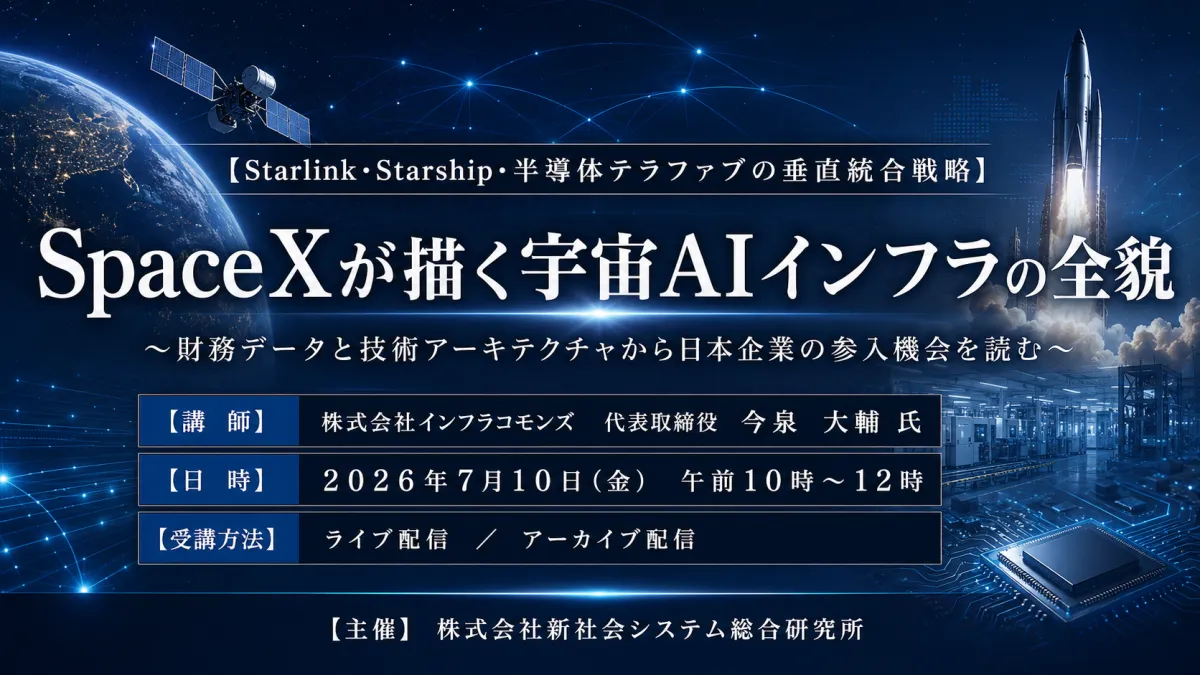
Unveiling SpaceX's Vision for a Revolutionary Space AI Infrastructure
SpaceX's Ambitious Plans for Space AI Infrastructure
Overview
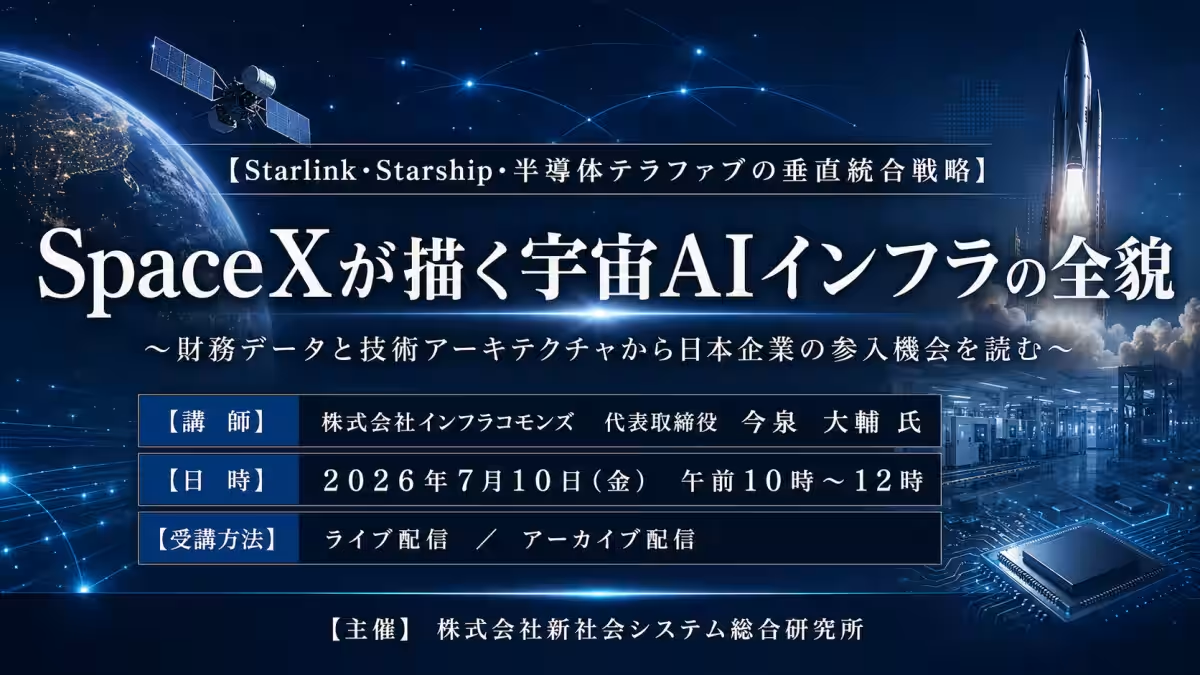
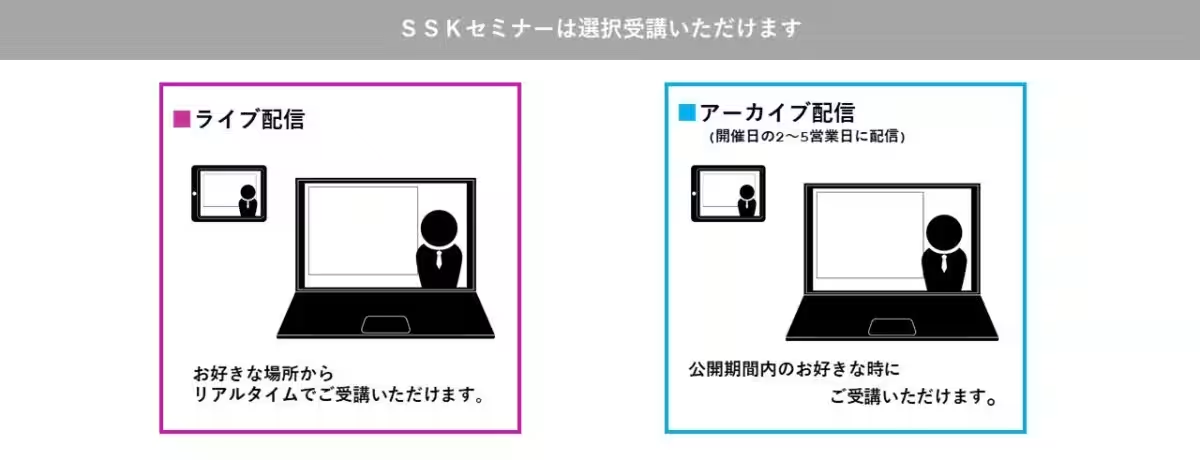
On July 10, 2026, a seminar titled "Unveiling SpaceX's Vision for a Revolutionary Space AI Infrastructure" will be conducted by Daisuke Imaizumi, CEO of Infracommons. This seminar aims to shed light on the vertical integration strategy of SpaceX, focusing on its significant projects: Terafab, Starlink, and Starship. Interested participants can join live via Zoom or access an archive for two weeks.
Context
SpaceX is on the verge of executing a monumental vision—deploying AI data centers in orbit. The company is currently integrating its key services: semiconductor manufacturing through Terafab, satellite communication via Starlink, and space transportation with Starship. According to the prospectus of SPCX, the Nasdaq-listed SPAC disclosed in 2025, SpaceX achieved a staggering revenue of $18.67 billion, with Starlink leading at $11.39 billion, alongside an impressive EBITDA margin of 63%.
Simultaneously, SpaceX invests over $3 billion annually in Starship development, showcasing its commitment to reinvesting significantly in space infrastructure. The seminar will delve into this financial structure and provide an analysis of the opportunities available for Japanese corporations.
The Core Components of SpaceX's Strategy
First Part: The Three Pillars of SpaceX
1. Terafab (AI Semiconductor Manufacturing): SpaceX is enhancing its semiconductor manufacturing process by adopting Intel’s 14A node, prominently featuring the radiation-hardened processor known as "D3."
2. Starlink (Communication): Transitioning from a conventional ISP, Starlink is evolving into a global edge computing and routing layer through low-latency laser mesh technology.
3. Starship (Logistics): This revolutionary project is set to drastically reduce launch costs to $183/kg, enabling economically viable deployments of heavy server racks into space.
Second Part: Financial Analysis of SPCX’s Prospectus
The seminar's second segment will evaluate the SPCX prospectus and financial statements:
- - In fiscal year 2025, SpaceX's revenue reached $18.67 billion, with a focus on its net loss and accumulated deficits.
- - Starlink's initial revenue source reflected $11.39 billion in sales, with an operating profit of $4.42 billion (EBITDA margin of 63%).
- - Investments in R&D for the rocket division and the staggering costs of Starship development bear consideration within this financial analysis.
- - The first client, Anthropic, is reportedly paying $1.25 billion monthly for computing power—a contract expected to yield $15 billion annually.
Third Part: Technical Architecture of Orbital AI Data Centers
The third segment investigates the proposed technical architecture for orbital AI data centers:
- - Details regarding the "AI Sat Mini"—a vision for one million data centers—will be examined.
- - Space's energetic advantages include five times the solar intensity compared to ground level and shorter nights, allowing for efficient energy harvesting.
- - Specifications on the "D3 processor" will also be highlighted, emphasizing its radiation resilience and environmental requirements of extreme heat ranges (+120°C to -250°C).
Fourth Part: Opportunities for Japanese Enterprises
The last section will discuss how Japanese companies could take part:
- - Companies such as Tokyo Electron (TEL) may significantly influence the production of the D3 processor.
- - Lasertec’s High-NA EUV mask inspection tools can detect flaws in 1.4nm generation space-specific masks.
- - Advantest guarantees zero-failure rates through its high-speed SoC and memory testers.
- - Opportunities in packaging and radiation-hardened design patents are emerging.
- - Special UPSs and power semiconductors tailored for the AI Sat Mini will also garner attention.
- - Additionally, the seminar will address space-capable electrical modules and radiation-cooling structures vital for orbital conditions.
Q&A Session
The seminar will conclude with a Q&A session, allowing participants to engage directly with the speaker to clarify any uncertainties or delve deeper into discussed topics.
Contact Information
If you have inquiries, please reach out to the New Society System Comprehensive Research Institute located at:
2-6-2 Nishi-Shimbashi, Minato-ku, Tokyo, 4F Zaimax Nishi-Shimbashi Building.
Email: [email protected]
Phone: 03-5532-8850
Fax: 03-5532-8851
URL: SSK Homepage
About New Society System Comprehensive Research Institute (SSK)
Established on December 6, 1996, SSK has been organizing around 500 business seminars annually for over 28 years, striving to bring cutting-edge information to businesses adapting to diverse environments. They aim to assist in generating business opportunities through high-level insights into management, technology, and marketing.
Topics Business Technology)
【About Using Articles】
You can freely use the title and article content by linking to the page where the article is posted.
※ Images cannot be used.
【About Links】
Links are free to use.