



Frog Partners with Teikoku Databank to Enhance Job Market Analysis
Frog's Contribution to Job Market Insight
Frog, a Tokyo-based company specialized in job big data analytics, has taken a significant step in enhancing the understanding of Japan's labor market. On April 30, 2026, Frog provided essential data for an analytical report published by Teikoku Databank, one of the nation's leading business information services firms. This collaboration aims to shed light on the intricate dynamics of job recruitment and workforce trends amidst Japan's ongoing labor shortage crisis.
Background of the Analysis
As Japan faces a prolonged labor shortage, organizations are increasingly focusing on recruitment strategies and job market trends. However, the sheer number of job openings is influenced by a multitude of factors beyond just the scarcity of available workforce. Variables such as the fluctuation of current employee numbers, overtime work patterns, and economic conditions all play a critical role.
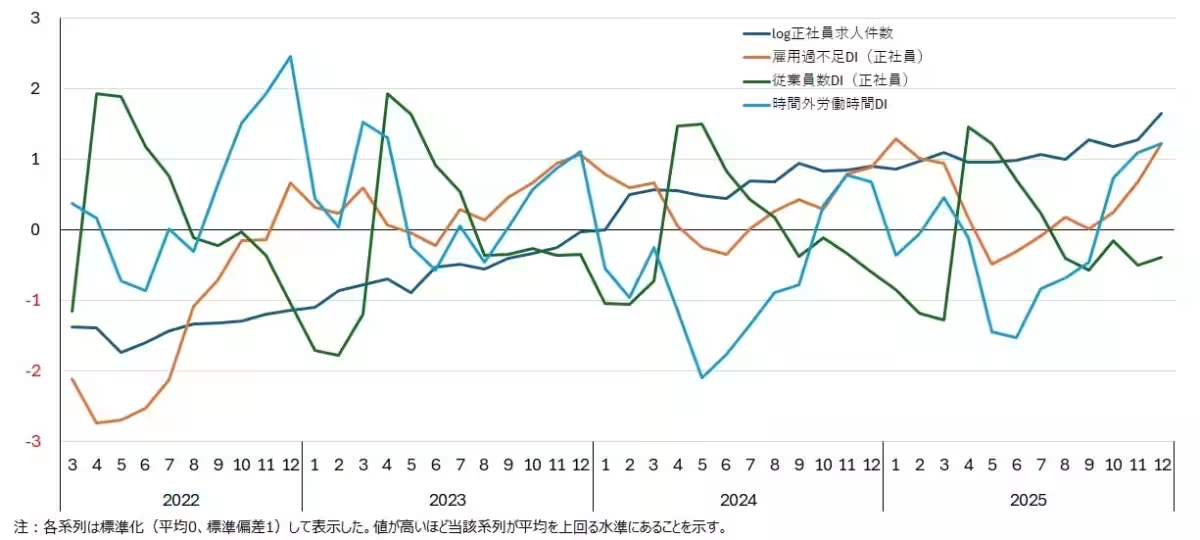
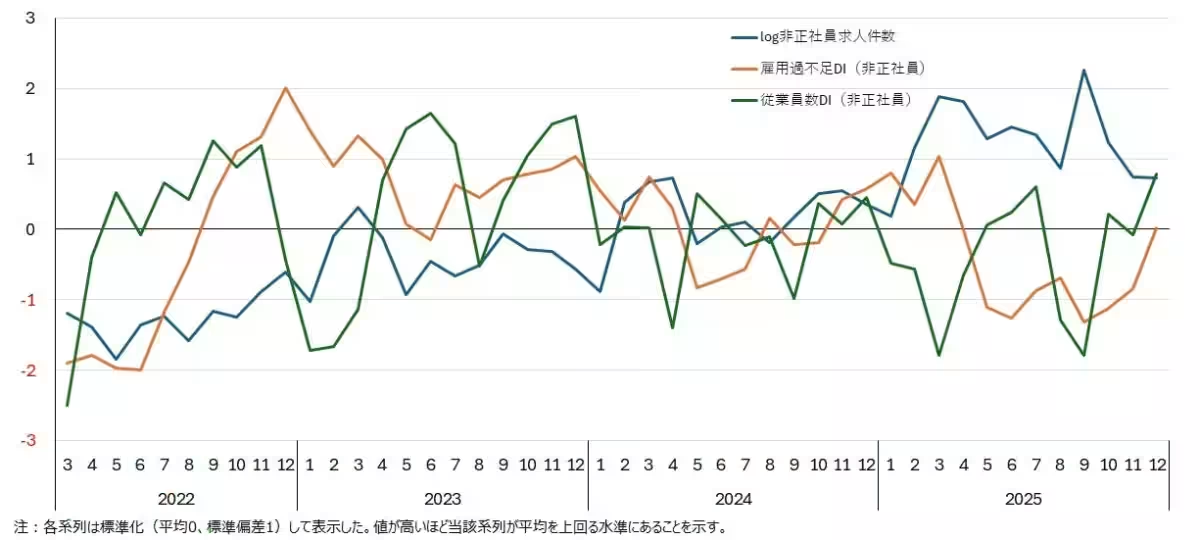
The report, titled "The Relationship Between Job Openings and Labor Shortage DI," meticulously examines the interconnections between job openings and various indicators derived from Teikoku Databank's economic trend survey. Key metrics like 'Employment Shortage DI', 'Employee Number DI', and 'Overtime Work Hours DI' were harmonized in this analysis, allowing for a deeper insight into the implications of big data analytics in labor market evaluations.
Overview of Report Findings
Utilizing the job big data provided by Frog, the report analyzes trends among both regular and non-regular employment types. Key findings include:
1. Regular Employment Trends:
- There is a noticeable correlation between job openings and the perception of labor shortages, indicating that as companies feel the pinch of a dwindling workforce, job openings tend to increase.
2. Non-Regular Employment Trends:
- In contrast, the changes in job openings for non-regular positions often lag behind perceptions of labor shortages, suggesting a more reactive adaptation by employers.
3. Preemptive Trends:
- The 'Employee Number DI' tends to move ahead of job openings, indicating that existing workforce adjustments are often mirrored in the number of vacancies companies post.
4. Overtime Correlation:
- There is a synchronous movement between job openings for regular employees and overtime work hours in the short term. However, on a year-over-year basis, an increase in job openings may correlate with a decrease or normalization in overtime work hours.
5. Complex Influencing Factors:
- Overall, job openings serve as a multifaceted indicator influenced by several variables, including feelings of labor shortage, workforce adjustments, and overtime work practices.
Future Prospects
This analytical endeavor has opened new potential for labor market analyses using job big data. Looking ahead, Frog intends to continue combining its job big data with external datasets in order to provide a more nuanced visualization of Japan's labor market. Collaborative efforts with governmental agencies, research institutions, and media outfits are anticipated to enhance data utilization for comprehensive labor market understanding.
About Teikoku Databank
Established in 1900, Teikoku Databank has grown into a pivotal provider of business information and credit risk management services in Japan. With its headquarters in Minato-ku, Tokyo, the firm offers a wide array of services ranging from corporate credit investigations to marketing support and e-commerce assistance.
- - Company Website: Teikoku Databank
About Frog
Founded in January 2021, Frog has a mission to leverage job big data to support business decision-making. Over the past decade, the firm has amassed over 4 billion job postings, providing crucial insights necessary for strategic decisions in the job market.
- - Company Website: Frog
Frog’s pioneering approach continues to illuminate the complexities of Japan’s labor market, reinforcing its commitment to supporting clients with actionable data.
Topics Consumer Products & Retail)
【About Using Articles】
You can freely use the title and article content by linking to the page where the article is posted.
※ Images cannot be used.
【About Links】
Links are free to use.