



Does a Multiparty Voting System Increase Female Politicians? A Comprehensive Survey Experiment Analysis
Introduction
In a bid to address the long-standing underrepresentation of women in Japanese politics, researchers have conducted a significant survey experiment. The study, spearheaded by professors from Waseda University and Gakushuin University, sought to understand whether a multiple-vote election system can effectively increase the number of female politicians. Using a sample of 5,400 voters, the research aimed to analyze voter preferences and behaviors in two voting systems: a single-vote system and a multiple-vote system where voters can choose multiple candidates.
Key Findings
The results from the study shed light on several key points:
1. Increased Gender Awareness: Voters using the multiple-vote system showed a strong tendency to select candidates of different genders, highlighting enhanced gender awareness during the voting process.
2. Male Preference in Initial Choices: Despite the increased option of selecting multiple candidates, there was still a marked tendency for voters to select male candidates first, which did not necessarily lead to an increase in the success of female candidates.
3. Implications for Election Systems: The study revealed the importance of election system design in encouraging female political representation while also pointing out the limits of such reforms.
Context and Background
Currently, the percentage of female legislators in Japan remains low, reflecting a significant gender gap in politics. Historically, the multiple-vote system was once implemented in post-war Japan, leading to a notable rise in the number of female politicians. However, the exact dynamics behind voters' decision-making processes under this system have not been adequately explored.
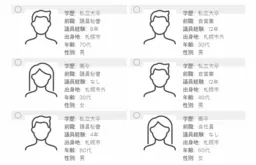
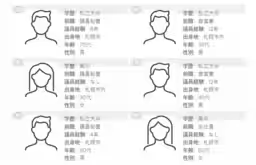
This research addresses that gap, investigating how the ability to vote for multiple candidates affects voter behavior and the potential increase in female representation. The survey involved presenting respondents with fictitious candidate profiles varying by gender and other attributes, allowing for an in-depth understanding of which factors influence voter choices.
Research Methodology
Participants in this study were divided into two groups, one voting under a single-vote condition and the other voting under a multiple-vote condition. Each participant was presented with a list of six hypothetical candidates and could choose either one or up to three candidates. This robust design aimed to uncover the intricacies of how gender influences the selection process among voters. The analysis yielded several striking insights about the behavior associated with each voting type.
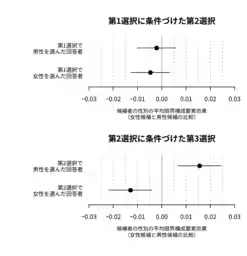
Among respondents using the multiple-vote system, it was found that those who selected a male candidate in their first choice were likely to select a female candidate as their second. However, the opposite was also true: selecting a female candidate first increased the likelihood of choosing a male candidate next. Interestingly, the gender of the first candidate chosen significantly shaped subsequent choices, indicating a complex interplay of voter biases.
Implications of Findings
This study not only highlights the necessity of feminist considerations within political voting systems but also shows that merely implementing a multiple-vote system does not guarantee an increase in female representation in politics. The results suggest that while female candidates might receive increased visibility and support in a multi-vote scenario, this momentum may not translate into victories. This implies that electoral reforms must be comprehensive, considering not just the vote structure but also the underlying voter attitudes and behaviors.
Furthermore, the research signifies the need to review candidate selection processes and the overall political landscape, as these factors also contribute significantly to gender representation.
Future Directions
While this research provides valuable insights, it is crucial to recognize that its findings stem from a specific demographic within Japan, and similar studies in different political systems may yield different results. Future research could expand this analysis to explore how party dynamics, candidate recognition, and strategic voter behavior might influence election outcomes.
Overall, this groundbreaking research underscores the importance of informed electoral reforms focused on achieving a balanced representation of genders in politics, ultimately paving the way for a more equitable political climate.
Conclusion
The study is set to be published in the upcoming May edition of Political Science Research and Methods, titled "Voting for Gender Balancing? The Effect of a Multiple-Vote System on Women's Representation." It serves as a critical contribution to the ongoing discourse around gender dynamics in politics and the effectiveness of electoral systems in achieving gender equity.
Topics Policy & Public Interest)

【About Using Articles】
You can freely use the title and article content by linking to the page where the article is posted.
※ Images cannot be used.
【About Links】
Links are free to use.