



Pioneering a Near Real-Time Earthquake Anomaly Detection System in Japan
New Advances in Earthquake Monitoring
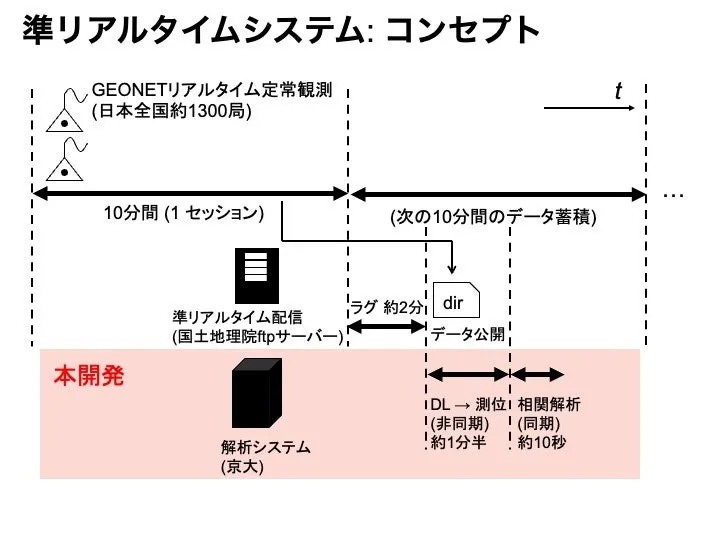
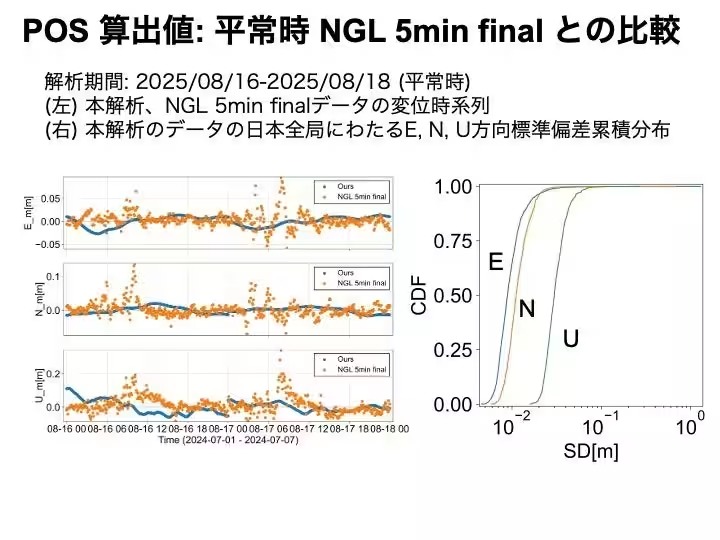
In a groundbreaking development, researchers from the Graduate School of Science at Kyoto University have unveiled a beta version of a near real-time earthquake anomaly detection system. This innovative technology aims to detect anomalies in seismic activity within approximately 10 to 15 minutes after receiving data from the Japan’s Geospatial Information Authority GEONET.
Overview of the Announcement
The project was officially presented during the Japan Seismological Society Academic Lecture on December 20, 2025, held in Tokyo’s Shinagawa district. The announcement was made by junior assistant professor Motoharu Koike and professor Ken Umeno from the Physical Statistics section of the Graduate School of Science at Kyoto University. The title of their presentation was “Development of the Near Real-Time Correlation Analysis System (Beta Version).”
Social Impact
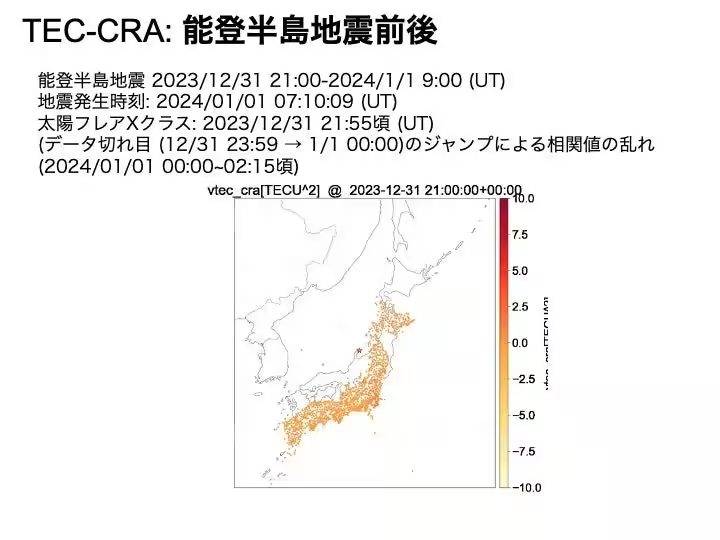
This system represents the first operational monitoring of precursors related to large earthquakes, such as ionospheric irregularities and crustal movements, throughout the country. Previous studies indicated that these precursor phenomena could occur as early as one hour before a major earthquake; however, the analysis was typically conducted post-event. With the recent findings, the researchers have demonstrated that it is possible to complete this analysis in real-time prior to significant earthquakes like the Nankai Trough or urban Tokyo quakes.
The research team plans to enhance the monitoring network further, allowing for effective tracking of ionospheric and crustal irregularities. In turn, this would facilitate timely alerts upon anomaly detection, thereby potentially saving lives in the event of future seismic activities.
Future Plans and Challenges
The current beta version connects not only with the GEONET operated by the Geospatial Information Authority but also utilizes real-time operational data from Kyoto University’s observation instruments located at Yoshida Campus and Chio Misaki. Partnerships with JR Tokai (Central Japan Railway Company), the city of Gamagori in Aichi Prefecture, Amano (Kanagawa Prefecture), and Fujisan Disaster Prevention and Security in Tokyo will help develop a more interconnected system, utilizing newly installed GNSS receivers.
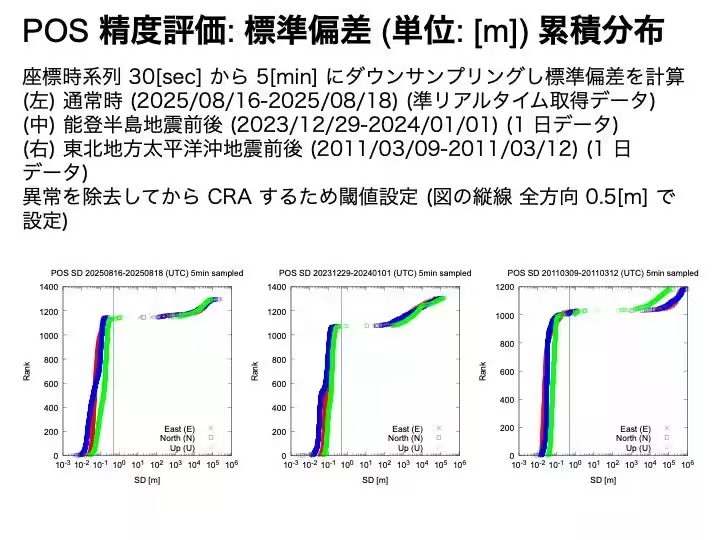
Starting in 2026, the team intends to collaborate with additional research partners, further augmenting observational data while conducting round-the-clock joint verifications of the alert system. Enhancing the precision of real-time positioning remains a challenge. After addressing these challenges, the operationalization of the near real-time system will commence.
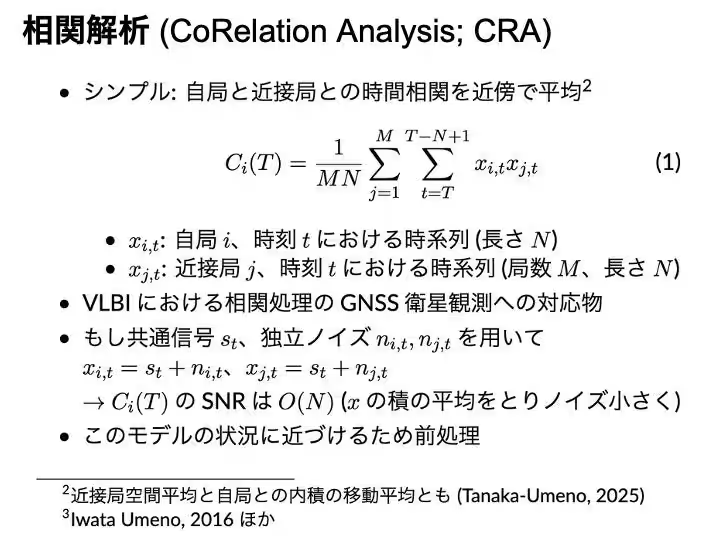
Moreover, this laboratory aims to integrate real-time ionospheric tomography techniques, as well as algorithms for epicenter estimation derived from press slip correlation analysis, into the near real-time system progressively.
Conclusion
This remarkable initiative not only marks a significant step forward in seismology but also reflects a commitment to advancing technology in disaster prevention and response. As Japan continues to prepare for the inevitable seismic events, the establishment of such vigilant monitoring systems is critical in safeguarding communities across the nation.
Topics Other)
【About Using Articles】
You can freely use the title and article content by linking to the page where the article is posted.
※ Images cannot be used.
【About Links】
Links are free to use.