


Revolutionizing Advertising: FakeOOH Makes Its Grand Entrance in Japan
FakeOOH: A New Era in Advertising
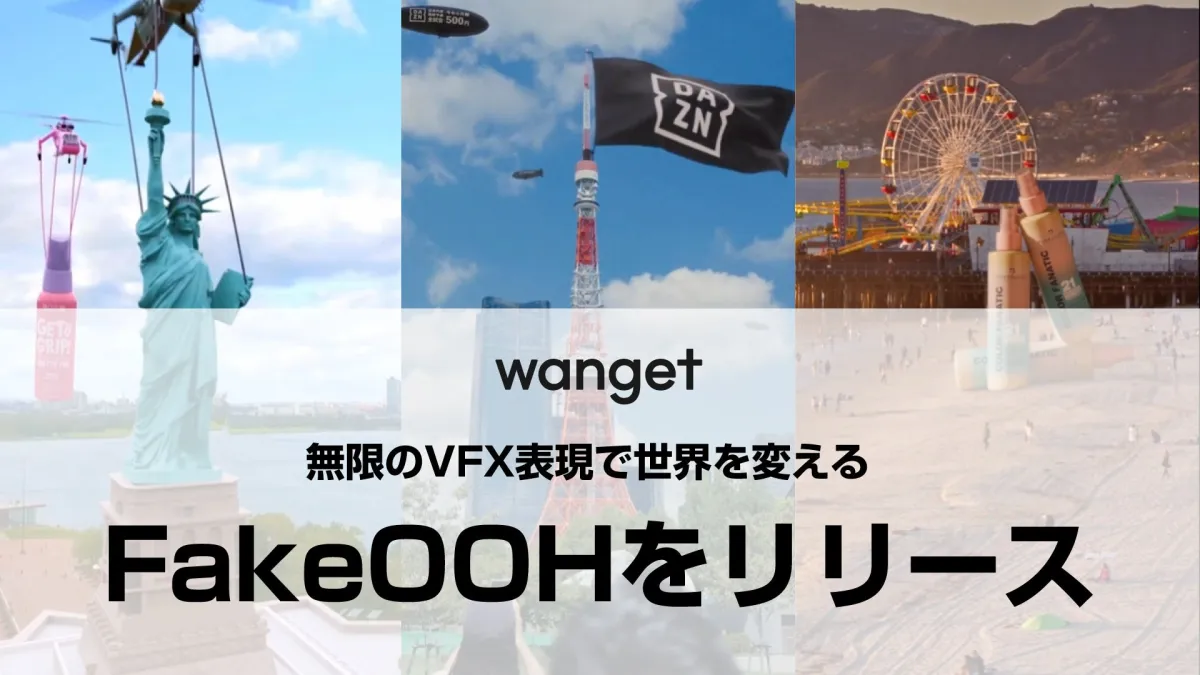
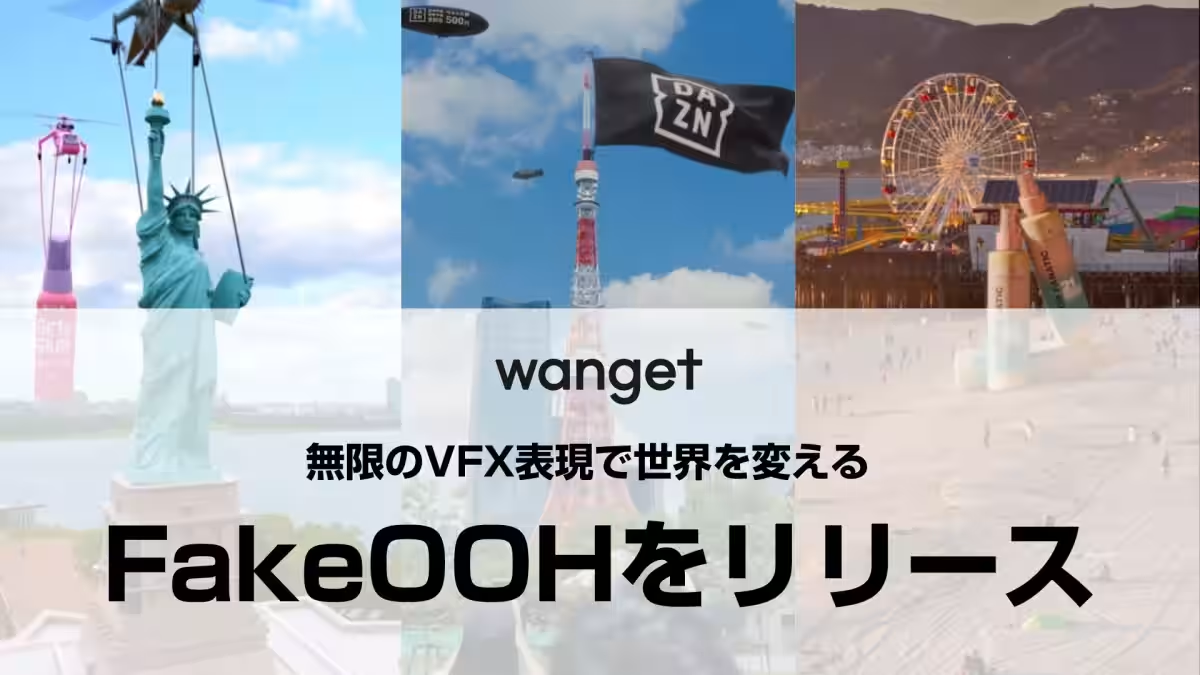
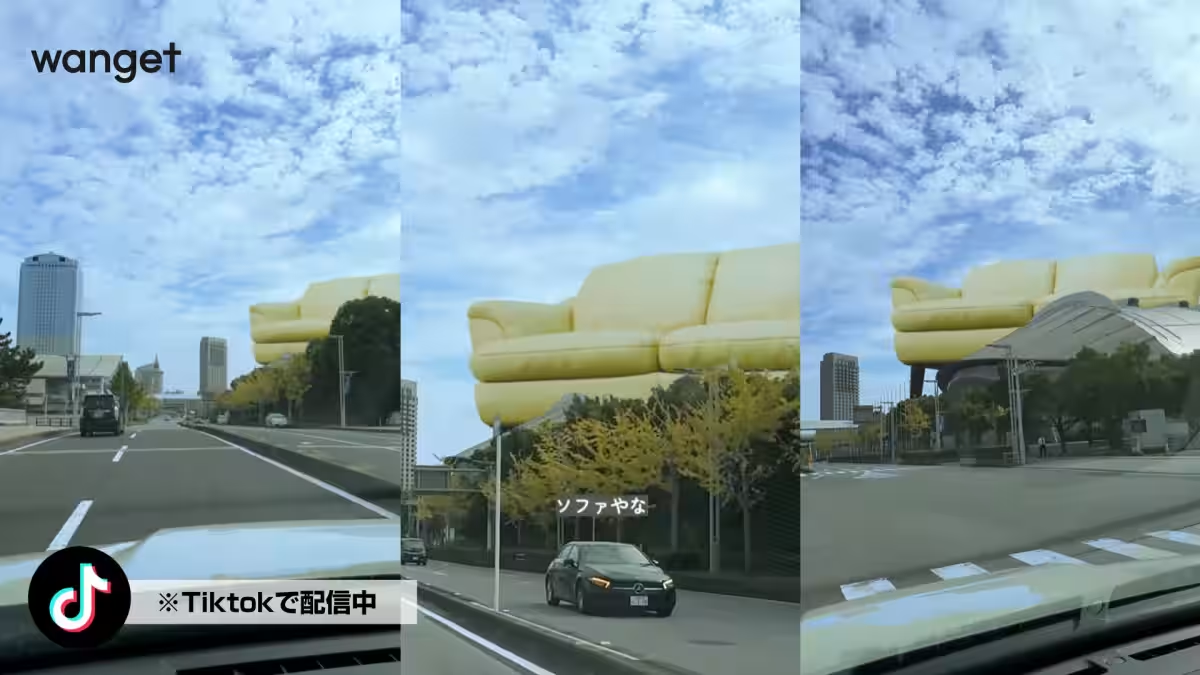
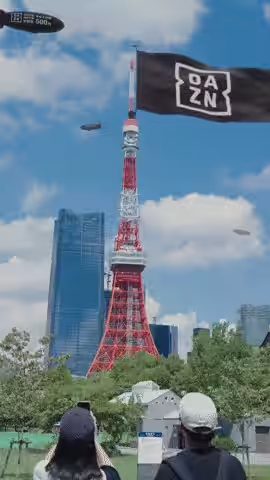
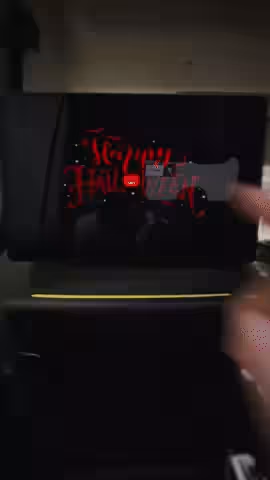
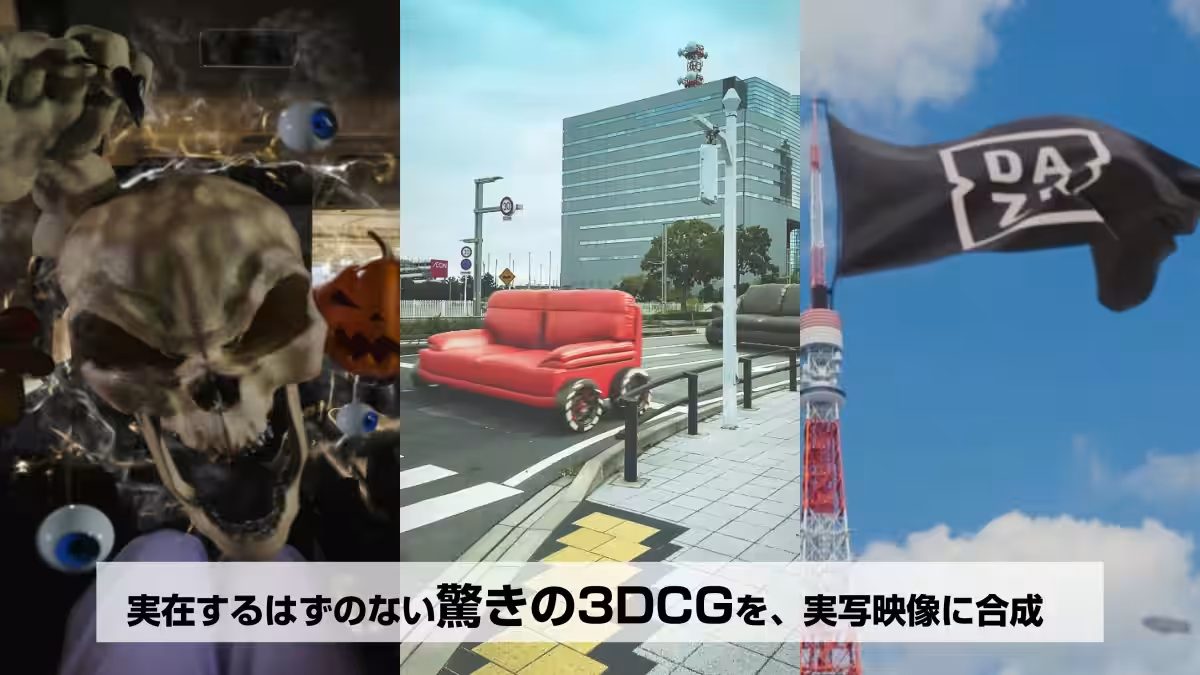
In a world where advertisements need to capture attention more than ever, FakeOOH has emerged as a revolutionary advertising strategy that is transforming the landscape. Leveraging VFX (visual effects) technology, FakeOOH simulates non-existent advertisements in real-world environments through striking CGI short videos. Widely adopted by major brands in Western markets, this innovative approach has already garnered over 1.2 million views and 50,000 likes in international cases, showcasing its explosive dissemination power.
The Need for FakeOOH in the Advertising Landscape
As the advertising industry evolves, there has been a noticeable shift from 'visible ads' to 'shareable ads,' particularly in the realm of social media. In this dynamic environment, it is essential for brands to create content that users want to share voluntarily.
Globally recognized brands such as Nike and Pepsi have successfully harnessed the power of FakeOOH, executing promotions that resonate deeply and spark conversation. However, the Japanese market remains largely untapped. Currently, there are limited instances of its implementation, but the potential for growth in marketing trends is promising.
The fusion of outdoor advertising (OOH) and digital advertising sets FakeOOH apart, allowing for the creation of brand experiences that surpass the constraints of physical advertising spaces.
Unmatched Strengths of FakeOOH
1. Viral Potential of Digital Illusions
FakeOOH blurs the lines between the real and digital realms, generating rapid dissemination through an engaging question: “Is this even real?” In domestic trials, collaborations with influencers propelled FakeOOH to achieve 400,000 views in just seven days, outperforming traditional PR posts by three to five times.
2. Stunning Creative Impact
The viral effect of FakeOOH can be boundless, driven by the creativity behind its concepts. The visual impact of seemingly real ads manifesting in urban settings acts as a catalyst for social sharing. Dynamic presentations achievable only in digital realms facilitate entirely new experiential value that traditional advertising methods struggle to deliver.
3. Hollywood-Level Production Quality
Wanget, the company bringing FakeOOH to Japan, collaborates with top creators from the Philippines, known for their contributions to Hollywood VFX. The Philippines holds a reputable position in producing world-class 3DCG/VFX, and Wanget utilizes this high-end production framework to deliver premium FakeOOH targeted at the Japanese market.
Domestically Launched FakeOOH Projects
The application of FakeOOH in Japan is already making strides. Noteworthy examples include:
- - DAZN (sports streaming platform)
- - Taxi signage advertisements
Additional projects are in progress, indicating a growing trend.
Future Prospects: Transforming Japan's Advertising Market
FakeOOH proposes a new model of brand communication that transcends traditional OOH and digital advertising barriers. The objectives for this innovative approach include:
- - Elevating brand awareness and promoting wider adoption in the Japanese market.
- - Expanding collaborations with major brands.
- - Establishing a new standard in social media marketing.
Company Overview of Wanget
- - Company Name: Wanget Co., Ltd.
- - Location: Shibuya, Tokyo, Japan
- - Business: Digital promotion using VFX/CGI, FakeOOH production, VFX short video production.
- - Official Website: wanget.jp
- - Contact: Takayuki Matsuoka / [email protected]
With FakeOOH, the future of advertising in Japan looks extraordinarily bright, promising a transformation in how brands engage with audiences—and effectively capturing their attention in an increasingly saturated market.
Topics Consumer Products & Retail)







【About Using Articles】
You can freely use the title and article content by linking to the page where the article is posted.
※ Images cannot be used.
【About Links】
Links are free to use.