



#Japan
#Tokyo
#National Institute of Information and Communications Technology
#Paris Observatory
#Optical Atomic Clocks
Accelerating Discussions for the Redefinition of the Second by 2030
Understanding the Redefinition of the Second
In a groundbreaking collaboration, the National Institute of Information and Communications Technology (NICT) and the Paris Observatory have made significant strides towards the redefinition of the second, aimed for 2030. The current definition of the second is tied to the transitions of cesium atoms, but with advancements in optical atomic clocks, this project seeks to enhance precision further.
The Challenge of Redefinition
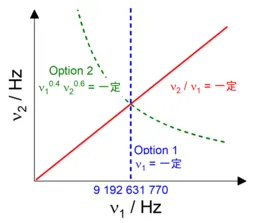
The discussions around redefining the second had previously faced challenges due to the complexity of the two primary options: using a single atomic species (Option 1) or multiple atomic species (Option 2). The contrasting nature of these methodologies made it difficult to achieve a consensus among experts, leading to a stagnation in discussions. However, NICT has introduced a novel approach that utilizes graphical representations to intuitively compare these two options, thus facilitating a more integrated understanding.
Unifying Understanding through Visualization
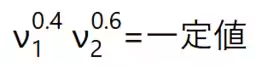
Through this new method, experts can visually interpret how both options correlate. By employing graphs that plot frequency values against each other, stakeholders can grasp the principles underlying Option 2, which proposes a weighted average of transition frequencies from multiple atomic species. This visual aid not only simplifies the comparison but also assures that both options can coexist within a unified framework.
Example of Graphical Representation
The graphs developed allow for a clear depiction of how transition frequencies of cesium and strontium relate. For instance, the intersection of the defined lines in a plotted graph illustrates the precise decision point for the second's value, opening up discussions about both methodologies.
Addressing Concerns of Subjectivity
One major challenge with Option 2 was the subjectivity inherent in the weighting process of various atomic transitions. Prior methods relied heavily on select data, which could introduce bias. The NICT's innovative technique uses comprehensive datasets from around the world to ensure that weights are determined rationally and objectively, thus enhancing the credibility of the redefinition process.
Future Prospects
The progress made by NICT and Paris Observatory not only aims to accelerate discussions leading up to the 2025 International Committee for Weights and Measures (CCTF) meeting but also hopes for a definitive resolution by the anticipated international conference in 2030. The groundwork for a scientifically grounded debate is being laid, allowing proponents of both options to engage in meaningful discussions that may lead to a unified decision regarding the future definition of the second.
Conclusion
As discussions evolve, there is a renewed sense of hope that a comprehensive understanding of the redefinition of the second will emerge, enabling both options to be fairly evaluated. This collaboration marks a pivotal moment in the pursuit of redefining a fundamental unit of measurement, opening the door for advancements in timekeeping accuracy and its implications on various scientific fields. This redefinition could significantly enhance our precision in time measurement, reflecting advancements in the 21st century.
Research Publication
This research is documented in the prestigious journal Metrologia, highlighting its scientific merit and relevance to international measurement standards. As we look forward to 2030, the implications of this work could reshape our understanding of time itself.
References
- - Authors: Jérôme Lodewyck, Tetsuya Ido
- - Title: Properties of a definition of the SI second based on several optical transitions
- - Published in: Metrologia
- - DOI: 10.1088/1681-7575/ae033f
Topics Other)
【About Using Articles】
You can freely use the title and article content by linking to the page where the article is posted.
※ Images cannot be used.
【About Links】
Links are free to use.