




Optimal Age for Career Change: Insights from Public Statistics
Understanding the Optimal Age for Career Change
Introduction
In a recent analysis, CAREER FOCUS has compiled public statistics on career transitions, focusing specifically on the concept of the 'optimal age' for making significant job changes. This exploration goes beyond the simplistic notion that younger ages yield better outcomes, showcasing how factors like age can influence one’s career transition journey.
Statistical Insights
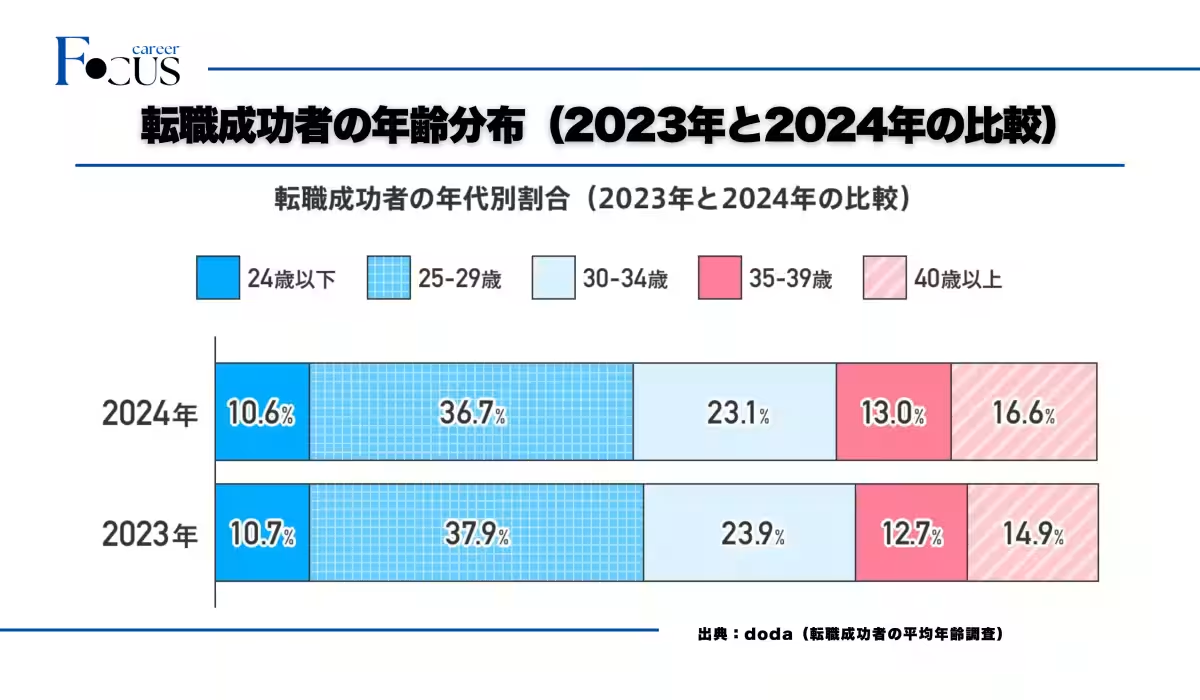
According to data by doda, the average age of successful career changers has risen steadily, reaching 32.7 years in 2024. The breakdown shows that most success stories occur between the ages of 25-29, which accounts for 36.7% of all successful transitions, while those aged 30-34 represent 23.1%.
Age Distribution of Career Changers
Visually represented in recent graphical statistics, we can better understand the demographics of successful career changers:
- - Ages 25-29: 36.7%
- - Ages 30-34: 23.1%
- - Ages 40 and over: 16.6% (an increase from 14.9% in 2022)
As these figures indicate, there is a significant concentration of successful transitions among individuals in their late 20s to early 30s, while also reflecting a growing acceptance of career moves by those in their 40s.
Wage Growth Among Different Age Groups
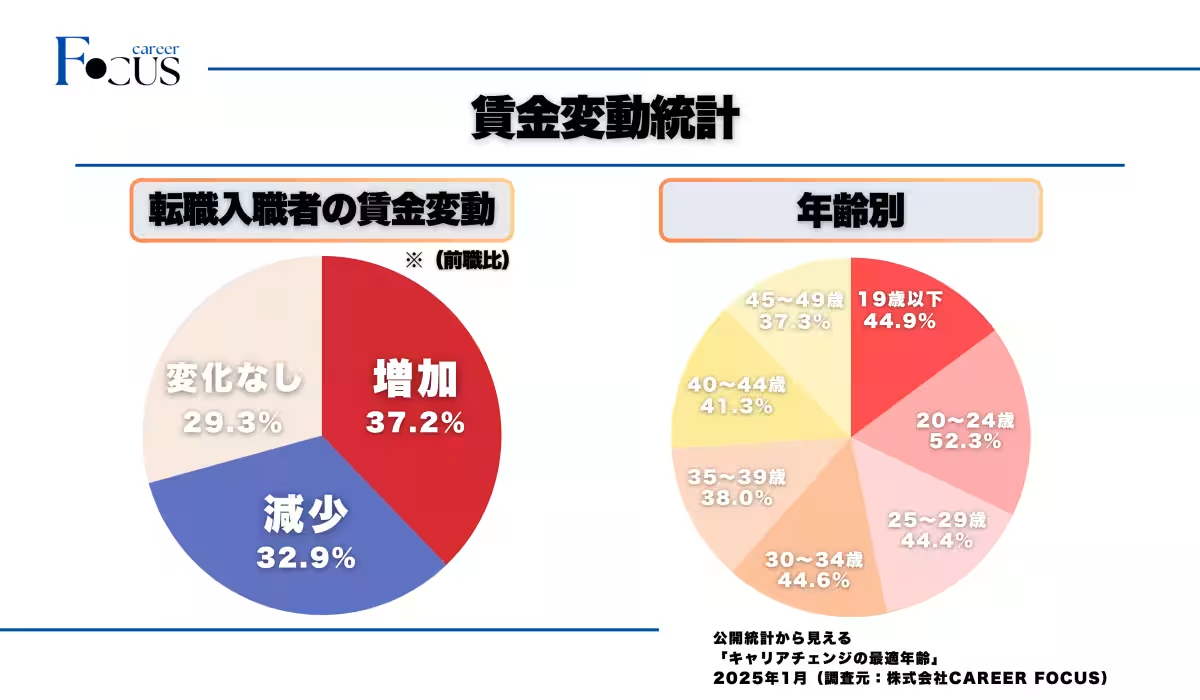
Statistics from the Ministry of Health, Labour and Welfare indicate a notable salary fluctuation for new hires:
- - Salary increase: 37.2%
- - Salary decrease: 32.4%
- - Salary unchanged: 28.8%
When analyzed by age group, we find that:
- - Ages 30-34: 44.6% saw a salary increase.
- - Ages 35-39: 38.0% experienced salary hikes.
- - Ages 40-44: 41.3% of transitions resulted in better wages.
- - Ages 45-49: 37.3% of individuals also experienced increases.
These statistics suggest that while age can often be associated with challenges, especially in terms of obtaining new roles, it can also bring about opportunities for salary growth during career transitions.
Changing Dynamics in Career Transitions
The changing landscape of career transitions highlights that the evaluation of candidates by employers evolves with age. Rather than establishing a straightforward paradigm where younger candidates are favored, data suggests that older applicants, particularly in their 40s, can present compelling reasons for their candidacy.
Key Takeaways by Age:
- - In their late 20s: Individuals demonstrate adaptability and a willingness to learn.
- - In their early 30s: Candidates largely exhibit relevant job experience, facilitating smoother transitions.
- - In their late 30s: Professionals begin to exhibit specialized skills and leadership potential, increasing their competitiveness in the job market.
- - In their 40s: Candidates must present evidence of past successes to align with employer expectations, though there remains significant potential for achieving salary increases through effective negotiation and presentation of prior achievements.
Conclusion
The CEO of CAREER FOCUS, Naoki Higashida, emphasizes the importance of viewership regarding age. He asserts that while the core of successful career transitions lies predominantly within the early 30s demographic, it is critical not to close doors based merely on age. Instead, he highlights the transformation of one’s strengths and how they can be articulated at different stages of a career.
Summary
Understanding the optimal age for career pivoting requires a nuanced appreciation of data. The array of statistics underscores that age is not merely a barrier but can be recalibrated to our advantage when challenges are matched with strategic planning. The ongoing changes in labor market dynamics create vast opportunities for all age groups to succeed in their career transitions, provided they communicate their narratives effectively and leverage their experience wisdom to showcase value.

Topics Business Technology)
【About Using Articles】
You can freely use the title and article content by linking to the page where the article is posted.
※ Images cannot be used.
【About Links】
Links are free to use.