




The Theoretical Insights into Batesian Mimicry and Its Adaptive Strategies
Understanding Batesian Mimicry: A Complex Adaptive Strategy
Batesian mimicry is a fascinating evolutionary strategy wherein non-toxic species evolve to resemble toxic ones, thereby gaining protection from predators. Over the past 150 years, this concept has been a cornerstone of evolutionary biology, probing how organisms adapt to ensure survival. The common thought is that the more closely a non-toxic organism can mimic its toxic counterpart, the less likely it is to be preyed upon. Generally, it seems that perfect mimicry would gradually be the optimal goal for all non-toxic species. However, recent research indicates a much more complex picture.
The Diversity in Mimetic Forms
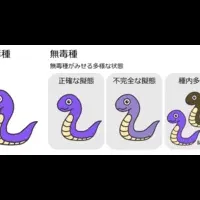
Batesian mimicry encompasses a range of mimetic forms: precise mimicry, partial mimicry, and intraspecific polymorphism. Precise mimicry presents a non-toxic species that closely resembles a toxic one, while partial mimicry is when the resemblance is not as strong. Intraspecific polymorphism occurs when individuals of the same species exhibit different forms of mimicry within the same population.
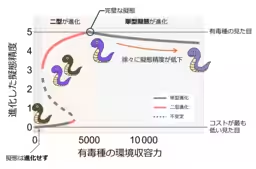
Researchers Haruto Tomizuka and Yuuya Tachiki from Tokyo Metropolitan University have developed a mathematical model to investigate how these varieties in mimicry arise and are maintained. Their findings reveal that the environmental carrying capacity, or the number of toxic species that can inhabit a given environment, is crucial in determining the evolutionary paths of non-toxic species' appearances.
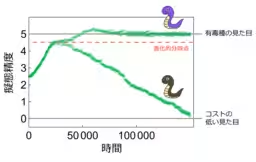
When the environment supports only a few toxic species, non-toxic species do not evolve mimicry. As the carrying capacity increases, distinct forms of mimicry emerge. Initially, a population may diversify, leading to both mimicking and non-mimicking individuals coexisting (intraspecific polymorphism). If the carrying capacity continues to rise, the populations may evolve precise mimicry, resembling toxic species closely. Interestingly, this evolution can also lead to the development of imperfect mimics when the carrying capacity becomes very large, as such environments might lower the effectiveness of perfect mimicry.
The Importance of Reproductive Rate
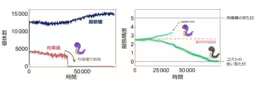
The research also highlights another significant factor: the reproductive rate of toxic species. As non-toxic species adopt mimicry, they increase in number; however, this surge can lead predators to associate the mimicry with non-danger, consequently resulting in higher predation on the actual toxic species. If toxic species have a low reproductive rate, they may not survive increased predation pressure and could face extinction. When toxic species disappear, the advantage of mimicry for non-toxic species dissipates, ultimately leading to the loss of the mimetic traits.
This study posits a novel perspective by examining not only the non-toxic mimickers but also the dynamics of the toxic species populations. Through mathematical modeling, it unified previous explanations of diverse mimetic forms—highlighting how they can arise, be maintained, or lost under varying ecological and evolutionary pressures.
Implications for Evolutionary Biology
The results contribute significantly to understanding predator-prey interactions and how individual-level behaviors can impact population dynamics and evolutionary trajectories. This provides a fresh perspective on the conditions under which the diversity of traits in organisms emerges, sustains, and sometimes fades away—a vital concept in studying biodiversity and evolutionary strategies.
The findings of this research were published on November 6, 2026, in the journal The American Naturalist. The study titled “Maintenance and breakdown: how population dynamics determine the evolutionary fate of Batesian mimicry” explores the delicate balance between mimicry and survival, broadening the horizon of evolutionary biology in understanding life's complexities.
As organisms continue to adapt and evolve, the insights from this study reinforce the intricate relationships within ecosystems and the constant evolutionary potential organisms possess in the face of predation. Understanding these dynamics is crucial for grasping how life diversifies in response to environmental challenges and opportunities.

Topics People & Culture)

【About Using Articles】
You can freely use the title and article content by linking to the page where the article is posted.
※ Images cannot be used.
【About Links】
Links are free to use.