



The Unprecedented Surge of Tokyo's New Condominium Prices Over the Past Decade
Tokyo's New Condominium Market: A Decade of Astonishing Growth
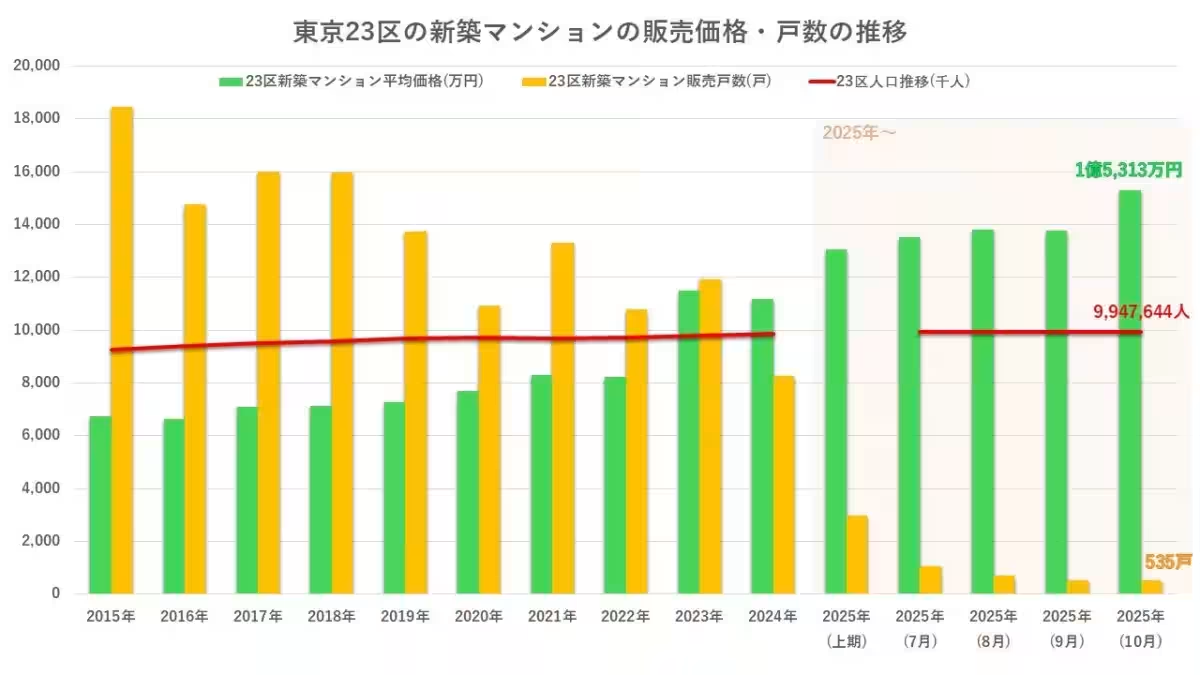
In the past ten years, the average price of new condominiums in Tokyo's 23 wards has surged dramatically, rising impressively by 2.27 times. The investment real estate firm, Set Life Agency, has conducted a detailed analysis of the price trends, sales units, and population changes in Tokyo from 2015 to 2025. This comprehensive study unveiled shocking realities about the city’s real estate market, marked by skyrocketing prices and a declining number of new constructions.
Price Trends
According to the data, the average price for new condominiums jumped from ¥67.32 million in 2015 to ¥153.13 million in 2025, a staggering increase that reflects a substantial rise of over ¥85 million in just a decade. Notably, the year 2023 registered a sharp 39.43% increase in average prices, highlighting a pivotal moment in the market where prices climbed from ¥82.36 million to ¥114.83 million. This trend indicates more than just a fluctuation; it's a signal of a market dynamic fundamentally shifting.
Here's a breakdown of the average price changes over the years:
| Year | Average Price | Change Rate |
|---|---|---|
| -- | --- | ----- |
| 2015 | ¥67.32 million | +12.31% |
| 2016 | ¥66.29 million | -1.53% |
| 2017 | ¥70.89 million | +6.94% |
| 2018 | ¥71.42 million | +0.75% |
| 2019 | ¥72.86 million | +2.02% |
| 2020 | ¥77.12 million | +5.86% |
| 2021 | ¥82.93 million | +7.53% |
| 2022 | ¥82.36 million | -0.69% |
| 2023 | ¥114.83 million | +39.43% |
| 2024 | ¥111.81 million | -2.63% |
| 2025 | ¥153.13 million | +11.27% |
As the numbers illustrate, the price increase post-2020 has been particularly steep, reflecting not only rising demand but also a shift towards luxury real estate as new condominiums begin to cater more to wealthy buyers rather than ordinary consumers.
Supply Trends
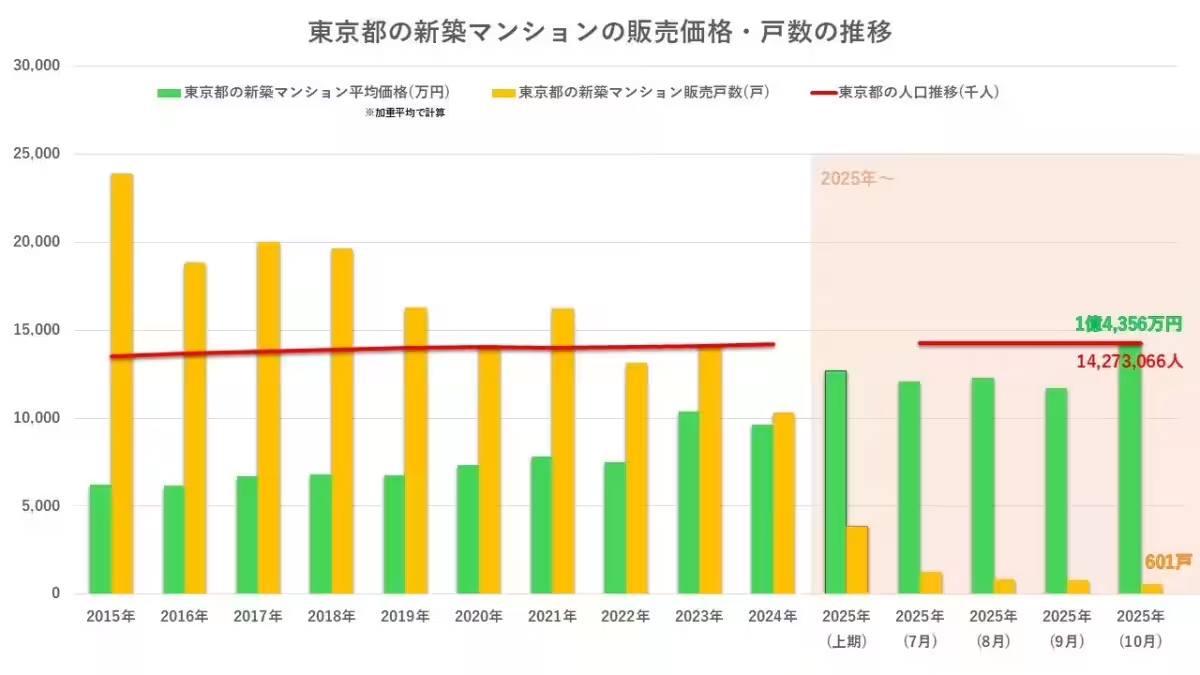
While prices soared, the number of new condominiums being released onto the market has plunged. The total new condominium launches in Tokyo fell from 23,899 units in 2015 down to just 10,316 units in 2024, marking a dramatic 56.8% decrease. This trend in supply highlights a significant concern for future buyers and investors, indicating a market that is rapidly becoming unattainable for average consumers.
Here’s a quick look at the number of new condominium launches:
| Year | Launches in Tokyo 23 Wards | Total Launches |
|---|---|---|
| -- | ------- | ------ |
| 2015 | 18,472 | 23,899 |
| 2016 | 14,764 | 18,833 |
| 2017 | 16,017 | 20,033 |
| 2018 | 15,957 | 19,623 |
| 2019 | 13,737 | 16,274 |
| 2020 | 10,911 | 14,153 |
| 2021 | 13,290 | 16,211 |
| 2022 | 10,797 | 13,157 |
| 2023 | 11,909 | 14,135 |
| 2024 | 8,275 | 10,316 |
| 2025 | 2,964 | 3,872 |
This decline in available condominiums paired with population growth has created a supply-and-demand dichotomy where prices are expected to keep climbing. The rising cost of construction materials and labor, compounded by persistent demand driven by population growth, has inevitably led to increased real estate values.
Population Trends
Additionally, the population within Tokyo's 23 wards has also shown positive growth, increasing by 674,904 residents (+7.2%) over the past decade. This demographic trend, juxtaposed against falling supply, paints a grim picture for potential buyers looking for affordability in the housing sector.
| Year | Population in 23 Wards | Total Tokyo Population |
|---|---|---|
| -- | ----- | ------- |
| 2015 | 9,272,740 | 13,515,271 |
| 2025 | 9,947,644 | 14,273,066 |
Despite challenges, Tokyo’s population has steadily grown, presenting a unique market situation where demand continues to surpass supply. The data clearly reveals that new condominiums have transformed into luxurious assets favored by the wealthy, especially amid the ongoing trends of population growth and declining new construction.
Conclusion
The findings from Set Life Agency reveal a stark transition in Tokyo’s condominium market over the last decade. Rising prices coupled with diminished supply highlight a critical tipping point, marking a shift in the real estate landscape where new condominiums serve increasingly as investment opportunities for affluent buyers rather than as residences for the average consumer. As Tokyo establishes itself as a premier real estate investment destination, it becomes inevitably clear that the market dynamics are set to evolve further, cementing the perception of new condominiums as valuable assets for financial growth.
Topics Consumer Products & Retail)
【About Using Articles】
You can freely use the title and article content by linking to the page where the article is posted.
※ Images cannot be used.
【About Links】
Links are free to use.