




Japan's New Working Group Explores AI Knowledge Resources for Future Development
Exploring AI Knowledge Resources in Japan
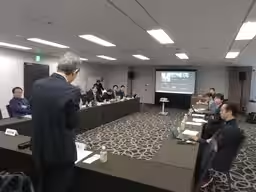
On November 27, 2026, the Resilience Japan Promotion Council held the inaugural meeting of its newly established working group to explore the AI knowledge resources specific to the Japanese context. This initiative aims to enhance the competitive strength of Japanese companies and ensure economic security through effective use of AI technologies.
Establishment Background
The rapid proliferation of generative AI and AI agents has transformed their application from mere efficiency tools to critical factors that influence management decisions and business competitiveness. However, the integration of AI into society has surfaced challenges such as hallucination, misunderstandings of specialized terms, and difficulties in leveraging experienced personnel's implicit knowledge.
As AI begins to operate autonomously, ensuring the accuracy and relevance of the information it references is vital for maintaining trust among companies and society as a whole. To achieve this, businesses and organizations must systematically organize crucial elements, including data, business knowledge, and regulations, to create a robust AI knowledge resource. Key components include:
- - Metadata: Information indicating the location, definition, and quality of data.
- - Business Context: Specific business structures, terminology, and assumptions unique to Japanese companies.
- - Rules as Code: The method of transforming regulations and business rules into machine-readable formats for automated execution.
- - Ontology: A structured representation of common concepts and their relationships.
- - Knowledge Graph: A framework that visualizes the relationships among different pieces of information.
The uniqueness of the Japanese language and its specific commercial practices, cultural context, and legal frameworks necessitate careful consideration. Simply applying technologies developed abroad may not suffice to address these uniquely Japanese challenges. This working group hopes to forge collaborative efforts among academia, industry, and government to construct AI knowledge resources tailored to Japan's needs and explore strategic utilization.
Major Topics of Discussion
1. Construction of Japanese-type AI Knowledge Resources: The working group will examine how to develop knowledge resources that enable AI to make accurate and reliable judgments, taking into account the peculiarities of the Japanese language and business environment.
2. Building Data and Knowledge Bases for AI Utilization: The group aims to systematically organize data quality and location metadata, contextual meanings, conceptual frameworks, relationships, and business rules to establish a foundation for AI to operate effectively.
3. Advancements in AI Utilization and Enhancement of Industrial Competitiveness: With a focus on the practical application of advanced AI technologies, including AI agents, the group will explore how to effectively utilize the knowledge and experience held by companies while also considering the potential for physical AI applications.
4. Ensuring Economic Security and Security Measures: The group will investigate how to manage important and confidential information properly while ensuring the security of data, contributing to Japan’s economic safety through strategic AI knowledge resource development and management.
5. Policy Support and Standardization from the Government: The working group aims to outline standardization, system development, budget proposals, and industrial support measures to promote and refine Japan's AI knowledge resources, ultimately leading to concrete policy recommendations.
Expansion Towards National Resilience
The goal of establishing AI knowledge resources goes beyond merely improving productivity at individual companies. The working group envisions the application of AI in diverse sectors, such as disaster prevention and mitigation, transportation and logistics, and healthcare. By creating an environment where AI can accurately understand necessary information and support appropriate decision-making, they aim to strengthen Japan's industrial competitiveness and contribute to building a resilient society capable of adapting to social changes and disasters.
Recommendations for Government Policy
Based on the findings of the working group, a policy recommendation document highlighting the necessary steps toward the establishment and promotion of Japanese-type AI knowledge resources will be compiled. This document will be presented to key government officials, including the Prime Minister and ministers responsible for economic security, digital policy, and AI reforms. The collective expertise of industry, academia, and government will strive to realize new policies that balance economic growth with security concerns.
Overview of the Working Group
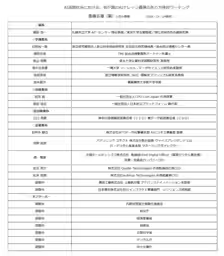
- - Official Name: Working Group on the Exploration of Japan's AI Knowledge Resources
- - Organization: Resilience Japan Promotion Council
- - Chairperson: Koichi Hashida, Professor Emeritus at the University of Tokyo and Special Appointed Professor at Sapporo City University
The next meetings are scheduled for February 3, 2027, and follow a timeline leading to policy proposal submissions in mid-May 2027.
About Resilience Japan Promotion Council
The Resilience Japan Promotion Council is a body comprising private enterprises, organizations, and experts dedicated to advancing disaster resilience and preparing against societal risks through policy recommendations and innovative practices.
For more information, visit the official site: Resilience Japan.


Topics Other)


【About Using Articles】
You can freely use the title and article content by linking to the page where the article is posted.
※ Images cannot be used.
【About Links】
Links are free to use.