



Recent Trends in Flat-Screen TV Usage and Ownership in 2025
Flat-Screen TV Ownership and Usage Trends
In the realm of home entertainment, flat-screen televisions have become a staple in modern households. A recent Internet survey conducted by MyVoiceCom from November 1 to November 7, 2025, aims to shed light on the current state of flat-screen TV ownership and usage patterns among Japanese consumers. This study marks the 14th iteration of their ongoing research into this topic, with responses collected from a sample of 11,443 participants.
Ownership Rates
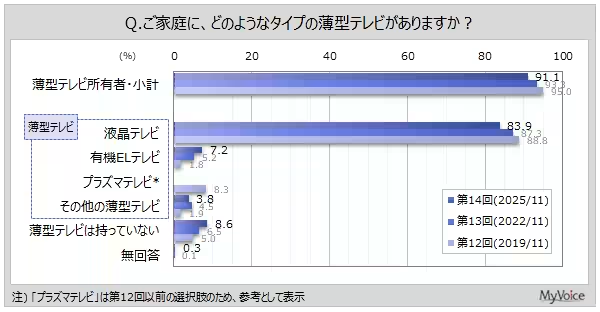
The survey indicates an impressive ownership rate of flat-screen TVs, sitting at just over 90%. Remarkably, this figure remains robust across different age groups, with approximately 76% ownership among individuals in their teens and twenties and over 80% among those in their thirties.
Purchase Motivations
When delving into the reasons behind purchasing these televisions, respondents revealed several significant factors. Approximately 44.4% mentioned that their motivation stemmed from their previous TV breaking down, while 26.1% cited wanting to upgrade due to age. Additionally, over 10% of respondents noted that they were influenced by the shift to digital broadcasting or by their desire for larger screen sizes. Interestingly, 35% of current flat-screen TV owners reported acquiring their devices more than a decade ago, with around 22.9% having made their purchase between five to ten years earlier.
Viewing Habits
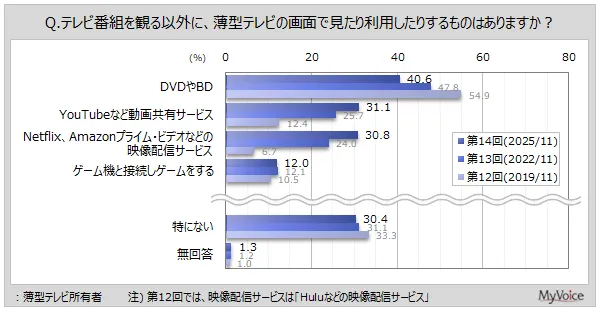
According to the findings, around 70% of flat-screen TV owners utilize their screens for content beyond traditional TV programming. This trend is particularly pronounced among younger women and diminishes with age, particularly in the seventies.
When asked what types of content they watch on their flat screens, 40.6% of respondents indicated that they primarily watch DVDs or Blu-rays. In contrast, over 30% engage with streaming services and video-sharing platforms, a number that has shown a marked increase since the 2019 survey. Interestingly, in younger demographics aged between 10 and 30, usage of streaming services has surpassed traditional media like DVDs and Blu-rays, signaling a shift in consumption habits.
Future Purchase Criteria
Looking ahead, respondents have articulated the key factors they will consider when purchasing a new flat-screen TV. Pricing and screen size ranked highly, each at about 60%, while brand reputation followed closely at 43.2%, and picture quality at 37.2%. Notably, when analyzing preferences by brand, Sony users emphasized the importance of brand reputation and image quality, while Panasonic users showed a significant inclination towards brand recognition. In contrast, brands like LG Electronics and Hisense Japan highlighted the importance of compatibility with streaming services.
Plans to Purchase
The study also revealed that nearly 40% of individuals are considering purchasing a new flat-screen TV in the near future. However, a substantial 46% of surveyed participants indicated that they do not plan to make a purchase, reflecting hesitation in the market.
Tuner-less TVs
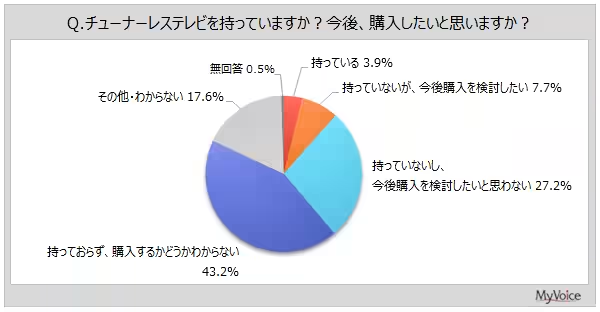
Additionally, the survey explored perceptions surrounding tuner-less TVs, which are tailored for streaming services without conventional broadcast capabilities. Only about 3.9% of respondents indicated ownership of such devices, while around 7.7% expressed a desire to consider buying one in the future.
Customer Perspectives
Participants provided insights on their preferred flat-screen TV brands through open-ended responses. Brand loyalty was evident, with many citing quality, reliability, and personal experience as primary reasons for their choices. For example, one 49-year-old female mentioned that her choice of Sharp's AQUOS stemmed from in-store demonstrations, while a 67-year-old woman favored REGZA for its superior picture clarity.
Conclusion
In summary, the insights from MyVoiceCom's latest survey indicate not only a strong presence of flat-screen TVs within Japanese households but also evolving patterns in how these devices are used. The trends highlight an ongoing shift towards digital content consumption, particularly among younger generations, which could significantly influence future product offerings in the consumer electronics market.
Topics Consumer Products & Retail)
【About Using Articles】
You can freely use the title and article content by linking to the page where the article is posted.
※ Images cannot be used.
【About Links】
Links are free to use.