



Factoring Fee Index: Projecting Trends and Rising Costs Over Three Years
Insights on the Future of Factoring Fees
Recently, Facutto, a leading media outlet dedicated to comparing factoring companies, has released a report forecasting the trends in factoring fees over the next three years. This analysis was conducted with the guidance of Stock Option Advisory Services and includes insights derived from the unique Facutto Fee Index and recent bankruptcy data.
Key Forecast Findings
The primary conclusion drawn from the study indicates that while rising interest rates do not directly impact factoring fees, they play a significant role through the pathway of corporate bankruptcies triggered by these rate hikes. Considering the sustained interest rate increases not seen in nearly 30 years along with continuous rises in corporate bankruptcies, the report suggests several projections:
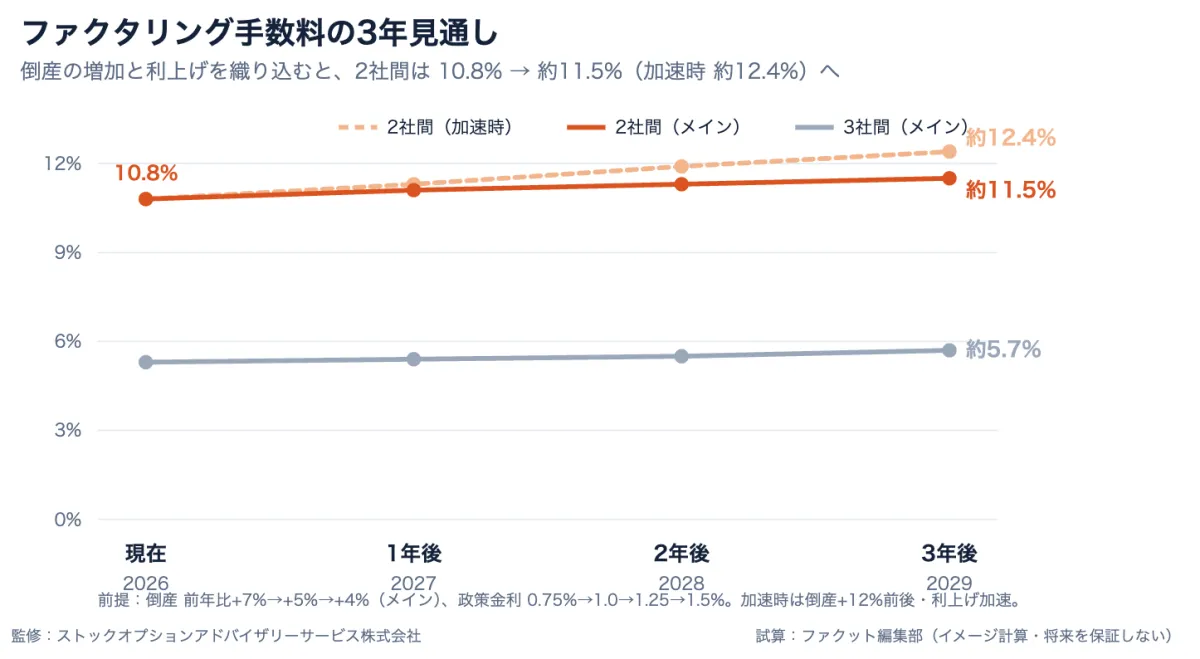
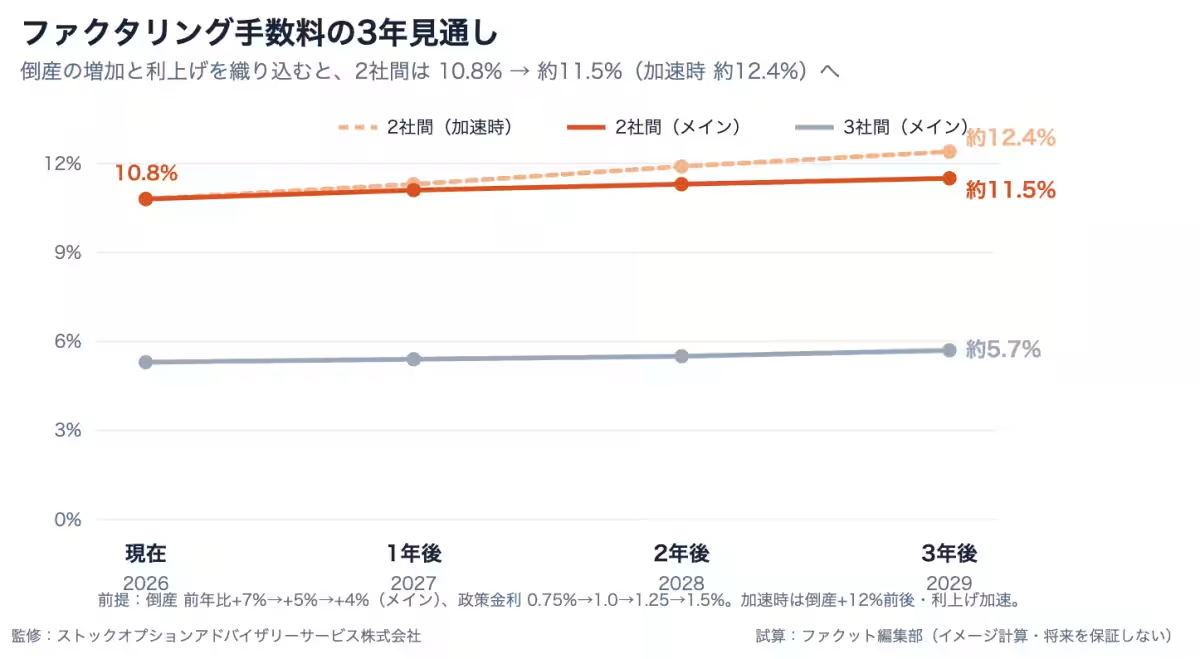
- - The indexing for two-party factoring fees, currently at 10.8, is expected to rise to 11.1-11.4 over the next three years, reflecting an increase of 3-6%. If bankruptcies increase further, this could escalate to around 12, representing a 10% rise.
- - It’s worth noting that smaller businesses and sole proprietors, who often struggle to secure bank loans, will likely be the most affected.
Mechanisms of Change
The study emphasizes that while interest rates typically exert a minor direct effect on fees, with an increase of 1% in policy rates translating to a mere 0.1-point rise in the fee index, the indirect consequences are more pronounced. Specifically, the chain reaction caused by rising interest costs leads to:
1. Increased financial burdens for businesses
2. A subsequent rise in bankruptcies
3. An increase in bad debts, finally driving up factoring fees
This reflects a classic understanding of the financial accelerator mechanism described in economic literature, where the impact of interest rates on corporate finances indirectly influences the market.
The Bankruptcy Trend
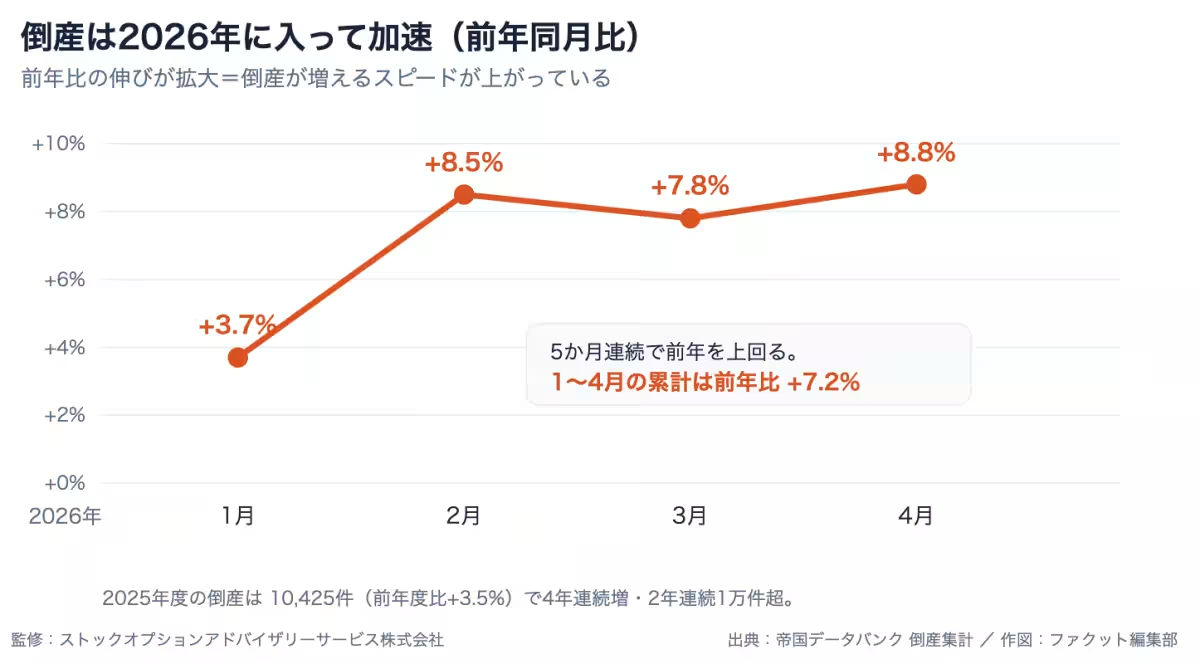
Bankruptcy rates have been climbing for four consecutive years, with projections pointing toward an accelerated rate of bankruptcies in 2026. According to the Japan Empire Data Bank, the total number of corporate bankruptcies reached 10,425 last fiscal year, marking an increase.
This ongoing trend underscores a critical point: while many anticipate that higher interest rates alone could drive up factoring fees, the real driver is the resulting increase in corporate insolvencies. The report predicts continued upward pressure on fees due to these bankruptcies. During the early months of 2026, bankruptcies were reported to have risen by 7.2% compared to the previous year.
Context: Understanding the Cost Dynamics
Since the negative interest rate policy was abandoned in March 2024, policy rates have surged to approximately 0.75%, a level unseen in three decades. Similarly, the yield on 10-year government bonds has reached about 2.67%. Amidst increasing costs, there is a growing perception that rising interest rates should logically lead to higher factoring fees.
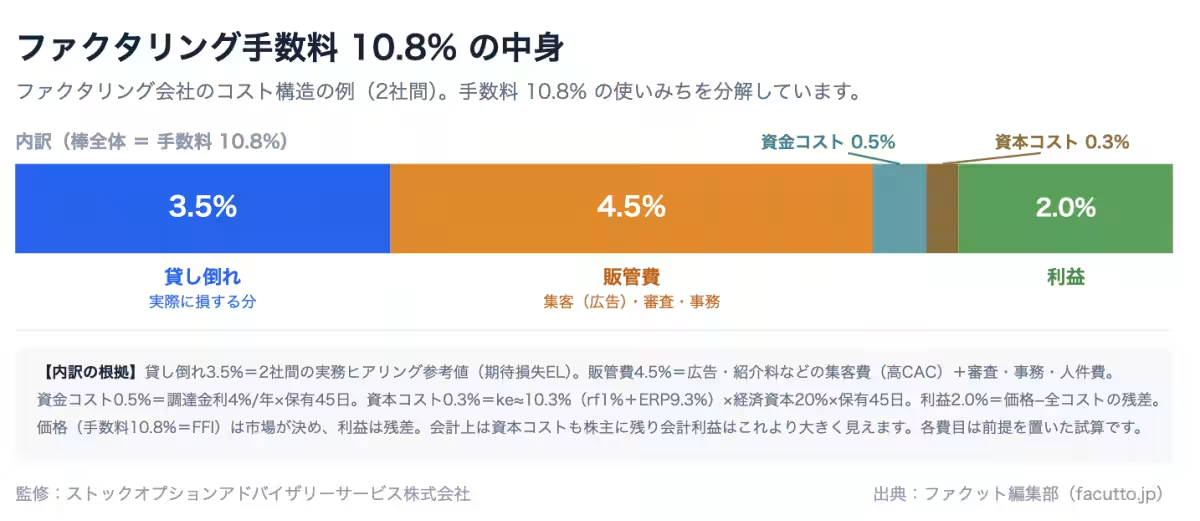
The report meticulously dissects these fees using a cost-plus pricing model, breaking them down into components: 1) the cost of capital (interest), 2) management expenses, 3) provisions for bad debts, and 4) profit margins. By analyzing interest rates and bankruptcy trends as critical variables, the report delivers a comprehensive examination of how market dynamics are evolving.
Summary of Study Findings
1. Limited Direct Influence of Rates: The report finds that the direct impact of interest rate hikes on the factoring fee remains limited, estimating a rise of only around 0.1 points in the index. The more significant concern lies with the provisions for loans that default due to bankruptcies.
2. Interlinked Outcomes of Rates and Bankruptcies: While initially, it may seem that interest rates do not correlate with fees, they are indeed connected in a cascading format that ultimately affects the fee structure via increasing defaults.
As articulated by Ippei Tanaka, head of the Facutto editorial team, "The burden of rising interest rates does not fall equally; it affects those less capable of leveraging low-interest loans, particularly small firms and independent business owners, through increased bankruptcies that result in higher factoring fees. The significance of understanding prevailing fee estimates heightens, especially as market conditions shift."
Conclusion and Further Analysis
This insightful report not only highlights the anticipated changes in factoring fees but also serves as a call for businesses to stay attuned to the market trends and seek informed estimates when engaging in factoring agreements. As companies navigate through evolving fiscal landscapes, the Facutto Fee Index offers a crucial benchmarking tool.
For a comprehensive look into the projections and essential findings, the complete report is accessible here.



Topics Business Technology)
【About Using Articles】
You can freely use the title and article content by linking to the page where the article is posted.
※ Images cannot be used.
【About Links】
Links are free to use.