



Introducing a New Disaster Preparedness Model for Condominiums by WAVE1 and TERA Energy
A New Approach to Disaster Preparedness
In a groundbreaking initiative, WAVE1, a company based in Suginami, Tokyo, and TERA Energy from Ukyo, Kyoto, are collaborating to introduce a novel disaster preparedness model specifically designed for condominiums. The program, set to launch in May 2026, aims to fundamentally resolve the challenges condominiums face in terms of disaster funding.
The Components of the Model
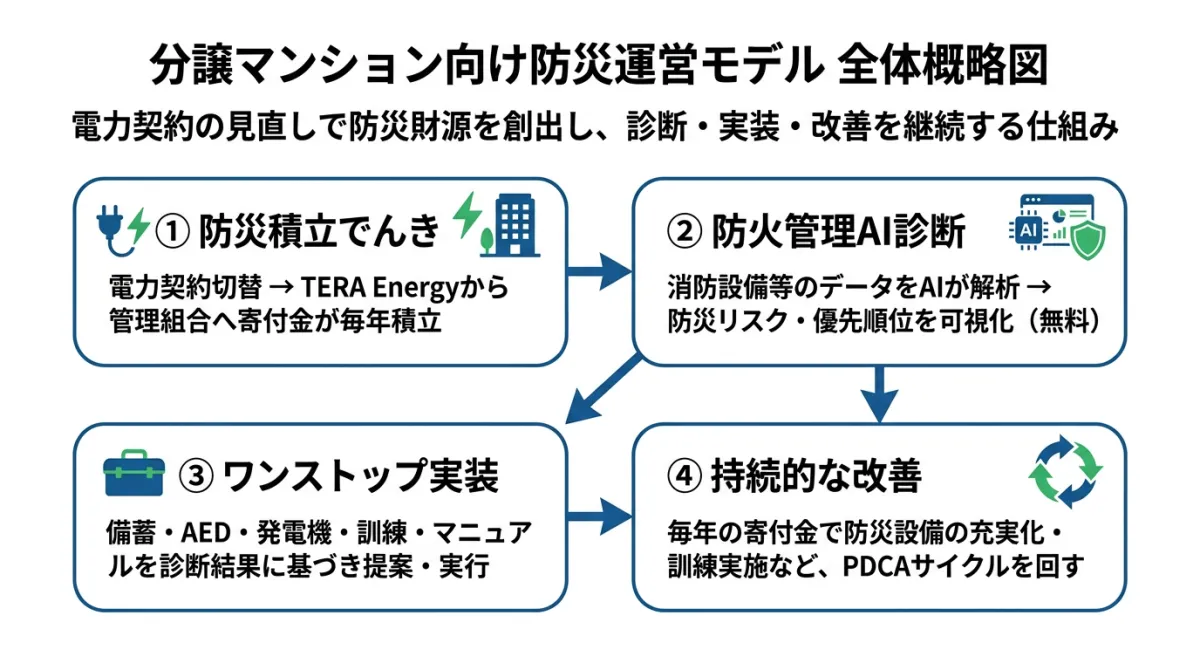
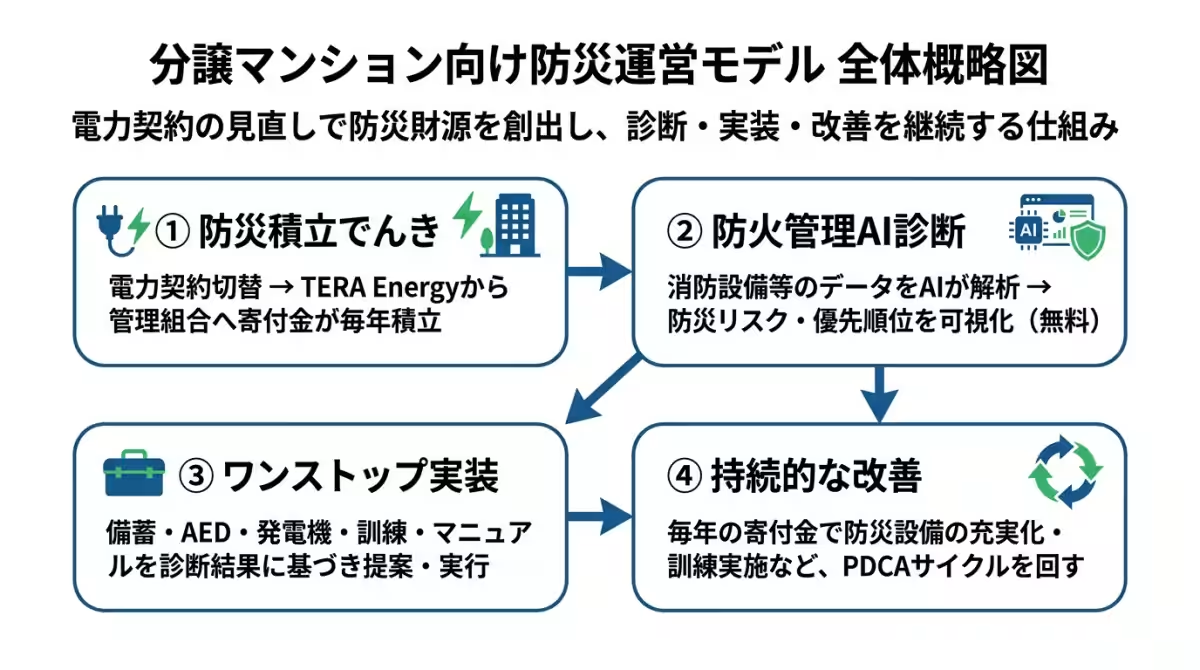
The new disaster preparedness model combines four essential elements:
1. Disaster Fund Electricity (Creating funding sources)
2. Fire Management AI Diagnostics (Visualizing risks)
3. One-Stop Implementation of Disaster Measures
4. Sustainable Operational Cycle
The uniqueness of this model lies in its ability to generate disaster funds simply by reevaluating electricity contracts, eliminating the need for a separate budget. Estimated at around 350,000 yen over ten years for a building with 100 units, this model offers a sustainable mechanism for condominiums to implement disaster preparedness measures consistently.
Context of the Initiative
1. The Structural Issue of Disaster Budget Deficiency in Condominiums
Japan possesses approximately 6.85 million condominiums, which have become a primary form of urban living. However, the financial framework of these buildings is centered around two main aspects: operational expenses and long-term repair funds, with no dedicated budget for disaster preparedness. As a result, consistent investment in critical areas such as emergency power supplies, stockpiling necessities, and training can be structurally challenging. This disconnection between awareness and action often leaves essential preparedness measures sidelined.
2. The Gap Between Wanting to Prepare and Actually Preparing
Surveys by the Cabinet Office reveal that while many residents understand the necessity of disaster preparedness, actual implementation is lacking. The shared facilities and mutual support systems in condominiums often require organized efforts beyond individual initiatives, highlighting the need for a comprehensive approach that involves all residents and management associations.
3. Innovative Models from Europe
In Europe, community-run energy companies known as Stadtwerke exist where local residents invest in and operate their own electricity systems. The profits generated support public infrastructure and transit. This project takes inspiration from that model, transitioning from a consumer-focused approach to a community-driven one that harnesses the power of electricity to fund disaster preparedness initiatives.
The Steps to Urban Resilience
The urban resilience model incorporates a cyclical approach consisting of four interconnected steps that transition disaster preparedness from reactionary measures to continuous management:
Step 1: Disaster Fund Electricity
By switching their electricity contracts to TERA Energy, condominium associations automatically receive contributions from TERA Energy earmarked for disaster preparedness, without requiring additional fees or budgets.
Step 2: Free Fire Management AI Diagnostics
WAVE1 offers a free AI diagnostic service that evaluates fire safety based on inspection reports and on-site data from buildings. By visualizing risks and prioritizing necessary improvements, this service addresses issues like the significant portion of fire-related deaths due to delays in evacuation.
Step 3: One-Stop Implementation
Based on the diagnostic results, WAVE1 proposes a comprehensive suite of solutions tailored to each condominium’s needs, including stockpiling, installing emergency generators, and conducting drills.
Step 4: A Continuous Cycle of Preparedness
Using the accumulated disaster fund, the model allows for regular audits, improvements, and training sessions, transforming disaster preparedness into an ongoing management responsibility for the condominium administration.
Future Vision: Integrating Disaster Preparedness with Sustainability
This initiative aims not only to enhance the individual disaster resilience of condominiums but also to lay the groundwork for broader regional resilience. By promoting renewable energy use, the model supports a transition away from fossil fuels, contributing to a nature-positive society where environmental sustainability is prioritized.
Both WAVE1 and TERA Energy are committed to expanding this model across condominiums through collaborations with management associations and developers, integrating AI diagnostics with fire management, and facilitating community disaster models through partnerships with local governments.
The vision is clear: to empower residents within their communities to proactively prepare for disasters, ensuring safety, security, and sustainability as they navigate the challenges of modern living.
Topics Policy & Public Interest)

【About Using Articles】
You can freely use the title and article content by linking to the page where the article is posted.
※ Images cannot be used.
【About Links】
Links are free to use.