



Remote Job Trends Show Stability as Remote Opportunities Surge in Japan
Remote Job Trends in Japan: 2025 Analysis
In recent years, the landscape of work in Japan has dramatically shifted, especially after the onset of the COVID-19 pandemic. The remote work model that gained prevalence during the crisis saw companies embracing new working methods. However, a recent report from Frog Inc., based in Chiyoda, Tokyo, indicates a growing trend where major corporations are encouraging employees to return to the office. Despite this shift, interest in remote work remains pronounced among job seekers, as highlighted in the company’s "2025 September Job Offering Welfare Trend Report."
Overview of the Findings
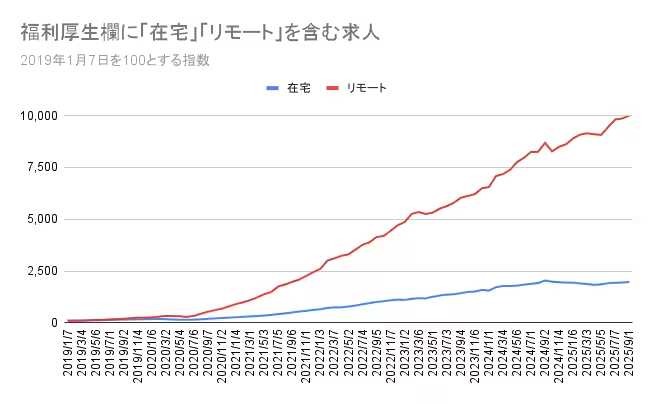
According to the report, while full remote job postings have remained stagnant, there has been a 15.1% increase in remote job listings over the last year. The data indicates a significant rise in job searches with the keyword "remote work," showing an increase of 2.9 times from 2019 to 2025. Notably, searches specifically for full remote options surged an astonishing 90.9 times during this same period.
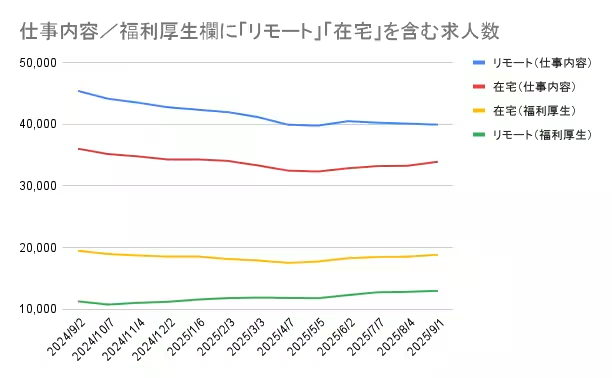
Interestingly, while the number of job listings explicitly noting remote work in the job description decreased from 45,386 to 39,919, the number of listings that included remote work as a benefit rose from 11,289 to 12,995. This reveals a shift in how companies are advertising their job offerings, transitioning from focusing on details of remote work in the job description to presenting it as a favorable welfare benefit.
Remote vs. Full Remote Opportunities
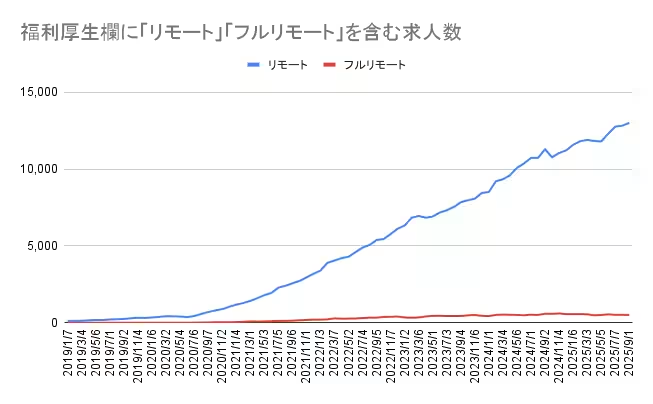
When comparing listings that mention "remote" or "full remote" in the welfare section, we can see that the overall number of remote job opportunities exceeds those for full remote positions, indicating a continuous upward trend. Remote jobs have been seen since early 2019, but full remote positions only emerged in April of that year. The volume of full remote jobs has remained around 500 since May 2023.
Despite the noted trend of returning to office work, job seekers continue to express a robust desire for remote work. This indicates that companies are adapting by offering more flexible remote working conditions rather than insisting on complete full-time remote roles.
The Rise of Remote and Home-Based Jobs
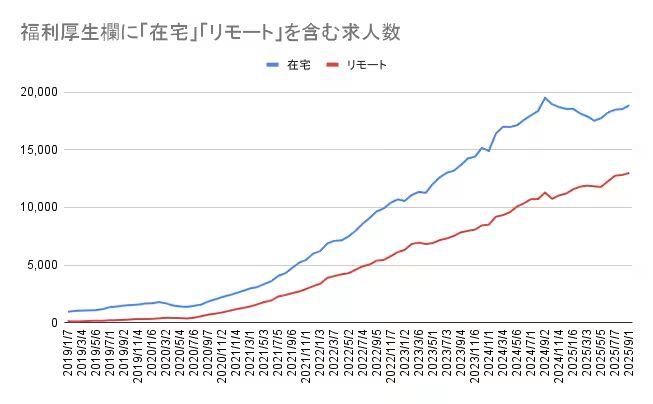
Statistics from early September 2025 show that the number of job postings containing the term "work from home" has reached 18,860. This figure surpasses the 12,995 remote job postings during the same timeframe. However, while the number of home-based jobs remains high, their growth rate has plateaued, whereas remote job listings continue to climb significantly.
It's critical to note the distinction between "home-based" and "remote" working arrangements. The term "home-based" typically confines work to the employee's home, while "remote" implies flexibility in location and time. The shift from predominantly home-based work to a more diverse definition of remote work is indicative of evolving preferences among job seekers.
Trends in Job Description Listings
In the past year, there was a decrease in the number of job descriptions mentioning "remote" or "home-based" roles — with remote job listings dropping from 45,386 to 39,919 (a -12% reduction) and home-based roles declining from 36,015 to 33,910 (-5.8%). Conversely, the number of remote jobs classified under employee benefits increased from 11,289 to 12,995 (+15.1%). This suggests that remote work is increasingly seen not as an exceptional job condition, but rather as a necessity to meet the strong demand from job seekers.
Regional Trends in Remote Jobs
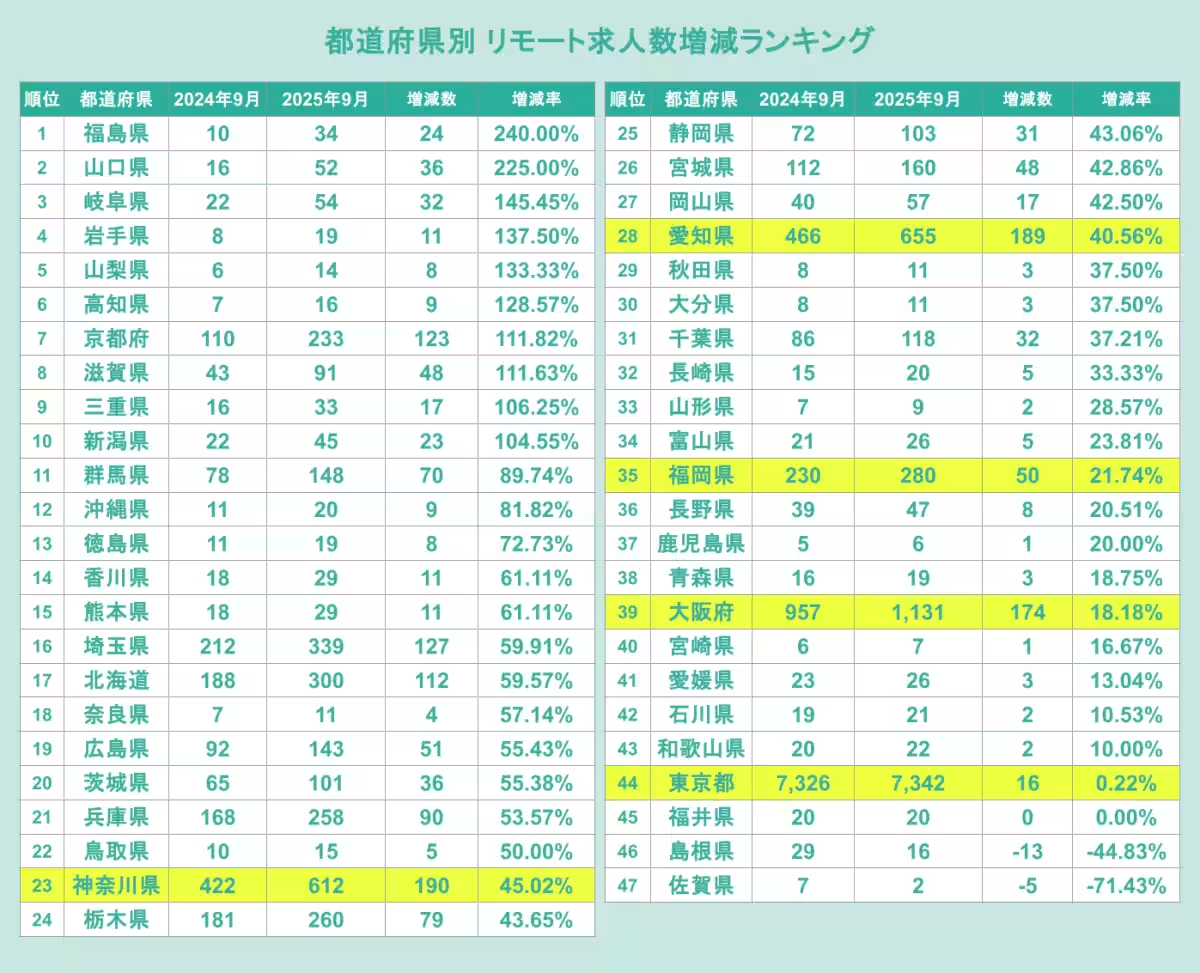
When evaluating recent changes in remote job availability across Japan’s prefectures, Fukushima saw the highest growth rate, while Saga recorded the least. All but one of the 44 prefectures exhibited an increase in remote job numbers, which highlights a national trend towards expanded remote opportunities.
Interestingly, major urban areas like Tokyo and Kanagawa are not leading in this increase, indicating that remote work opportunities are expanding more robustly in regional areas compared to urban centers. This trend suggests that remote work is becoming a crucial factor for competitive recruitment in local hiring practices.
Conclusion
The expansion of remote work, triggered by the pandemic, continues despite recent encouragement for employees to return to offices. There is a clear shift in preference towards remote positions over traditional home-based jobs, with remote work definitions becoming more inclusive. This trend is particularly evident in regional areas, underlining the stark contrast with urban employment patterns.
Nevertheless, the search interest in full remote jobs has skyrocketed, while the actual number of available positions has plateaued. This discrepancy between job seeker interests and actual job postings presents a significant challenge for employers aiming to meet the evolving demands of the market in the future.
Leveraging big data in recruitment can facilitate better understanding and adaptation to these changing dynamics, making it an invaluable resource in recruitment strategies moving forward.
Survey Overview
- - Data Sources: doda, type, En Ten Shoku, Mynavi Shoku
- - Employment Type: Full-time employees
- - Survey Period: January 7, 2019 - September 1, 2025
Through these insights, businesses can refine their hiring practices to align more closely with current trends and candidate expectations.
Topics Consumer Products & Retail)


【About Using Articles】
You can freely use the title and article content by linking to the page where the article is posted.
※ Images cannot be used.
【About Links】
Links are free to use.