



Exploring the Utilization and Effectiveness of Video Manuals in the Manufacturing Industry
Overview
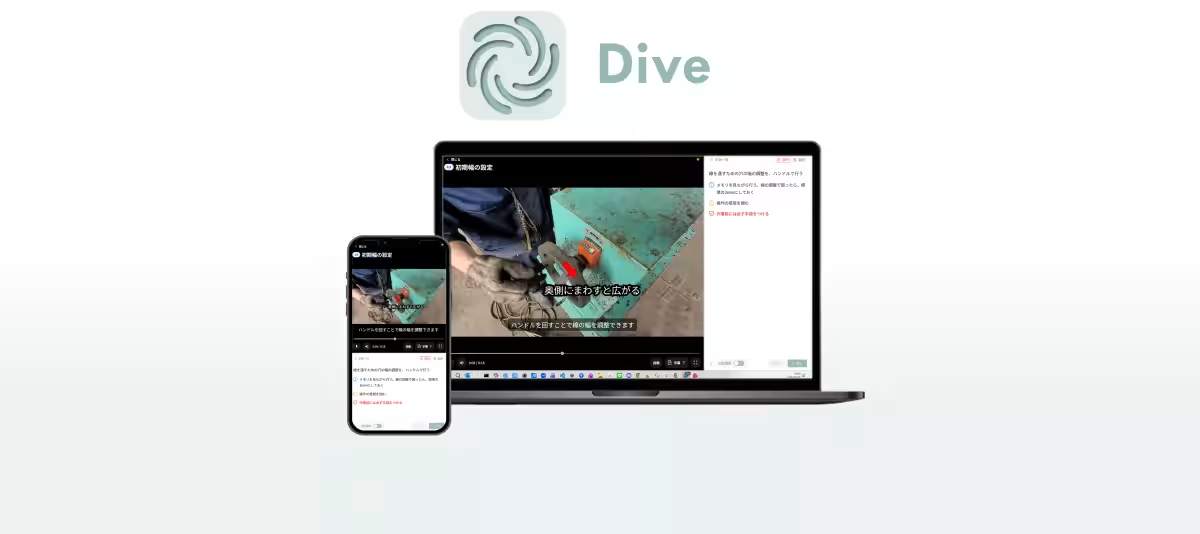
A recent investigation by Episotech, a Tokyo-based company that offers a video manual software as a service (SaaS) called 'Dive', explored the effectiveness and utilization of video manuals in the manufacturing sector. This study surveyed 841 representatives from both operational and supervisory roles within the industry, highlighting significant findings about the use of video in practical training.
Key Findings
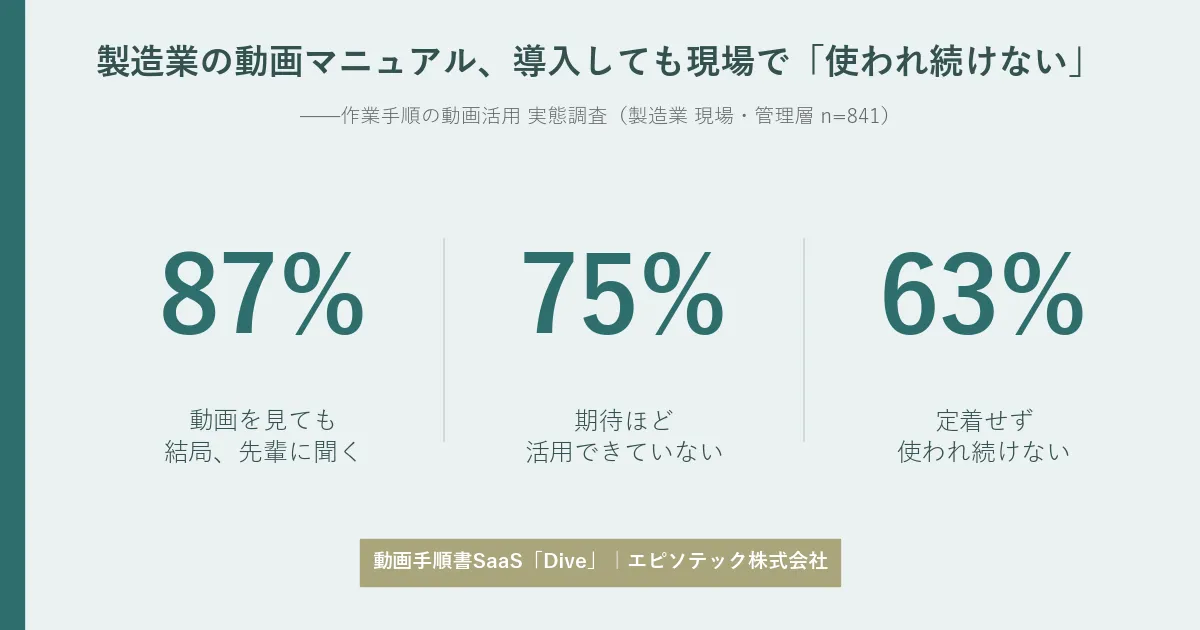
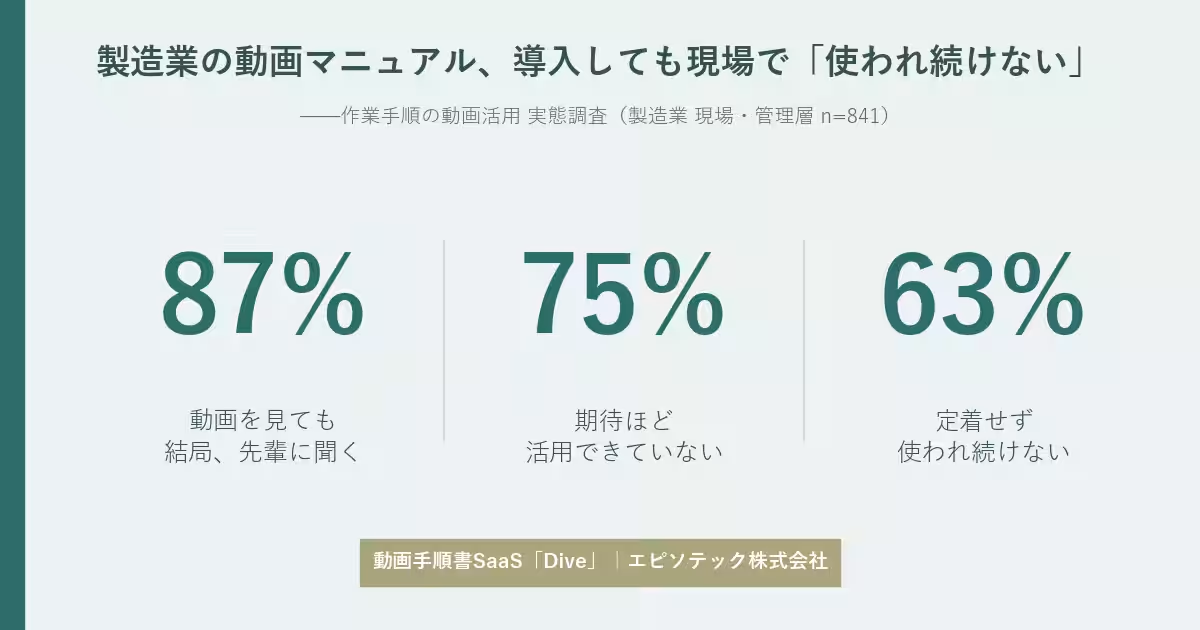
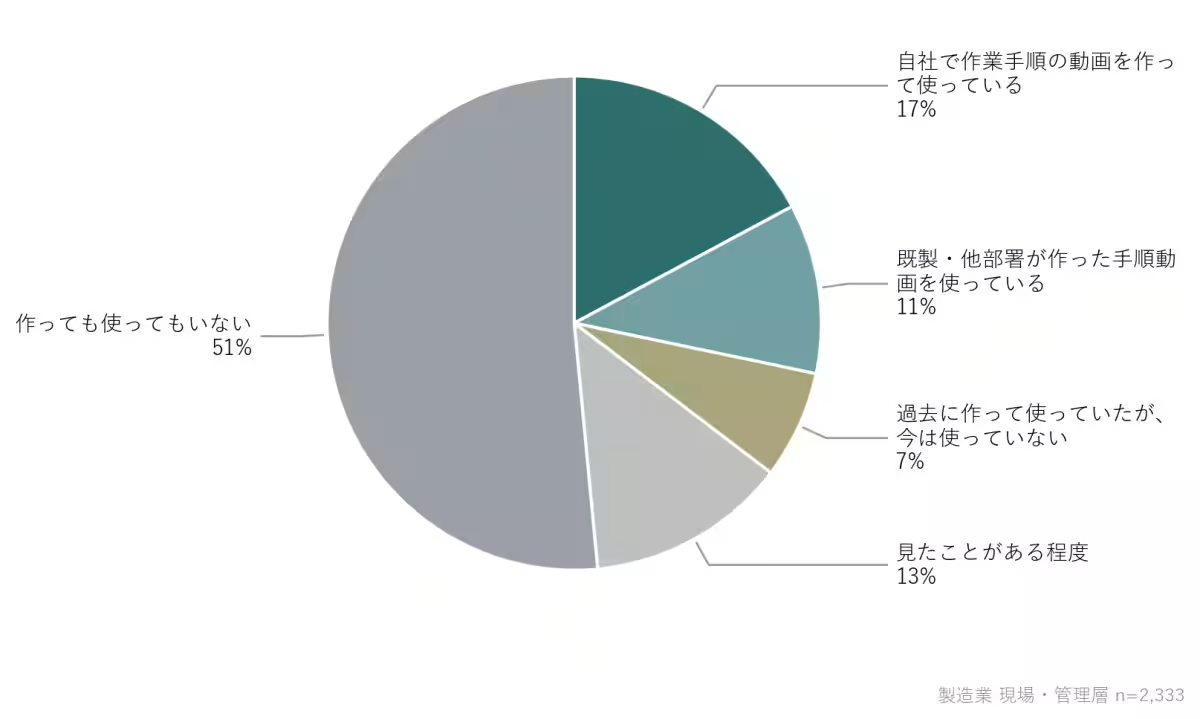
The survey revealed that 36% of manufacturing professionals reported having experience with video manuals to convey work procedures. Yet, a staggering 87% of them still felt the need to ask colleagues or supervisors questions about the work processes even after viewing the videos. This indicates that while video manuals have been adopted in the industry, their effectiveness remains questionable.
The study identified two primary functions of these videos: 1) for training and education purposes, and 2) as a reference tool during operations. While the former function appears to be somewhat effective, the latter still demonstrates persistent friction, leading employees to revert to asking others for help.
Psychological Factors at Play
Among those who frequently ask questions during work, 80% reported experiencing psychological stress when consulting others or stopping their work to seek clarification. This tendency underscores the importance of addressing the psychological barriers linked to relying on human assistance over video guidance.
Background Context
The manufacturing industry faces challenges in skills transfer and workforce training due to a declining workforce and an aging population. Data indicates a notable decrease in employees under the age of 34, with numbers dwindling from 3.26 million in 2002 to 2.59 million in 2023. As such, ensuring quality training and skills retention is increasingly critical.
With the expansion of video manuals, many companies express dissatisfaction, noting that despite their implementation, these resources are underutilized in the workplace. Thus, this investigation was conducted to provide empirical data on the situation.
In-depth Insights
The survey results pointed to some concerning trends:
- - Video Adoption: Of the surveyed professionals, 36% confirmed that their workplaces had integrated video manuals—a reflection of growing acceptance.
- - Ongoing Queries: The reality remains that 87% still find themselves consulting colleagues despite having access to video resources, hinting at a gap between the intended purpose of the videos and actual practice.
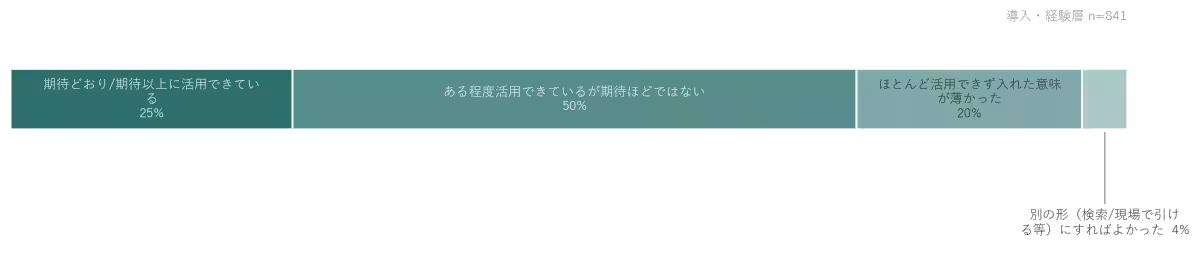
- - Satisfaction Levels: A staggering 75% of respondents felt they were not utilizing the videos to their full potential, emphasizing the need for these tools to evolve beyond mere introductory training resources.
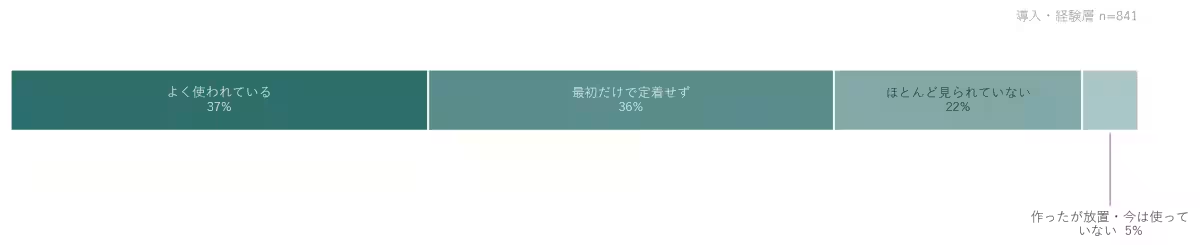
- - Utilization Rates: A mere 37% reported regular use of these videos, indicating that maintaining their relevance and continued use in the workflow is a challenge.
Usage Scenarios
A follow-up survey involving 500 participants revealed interesting usage dynamics:
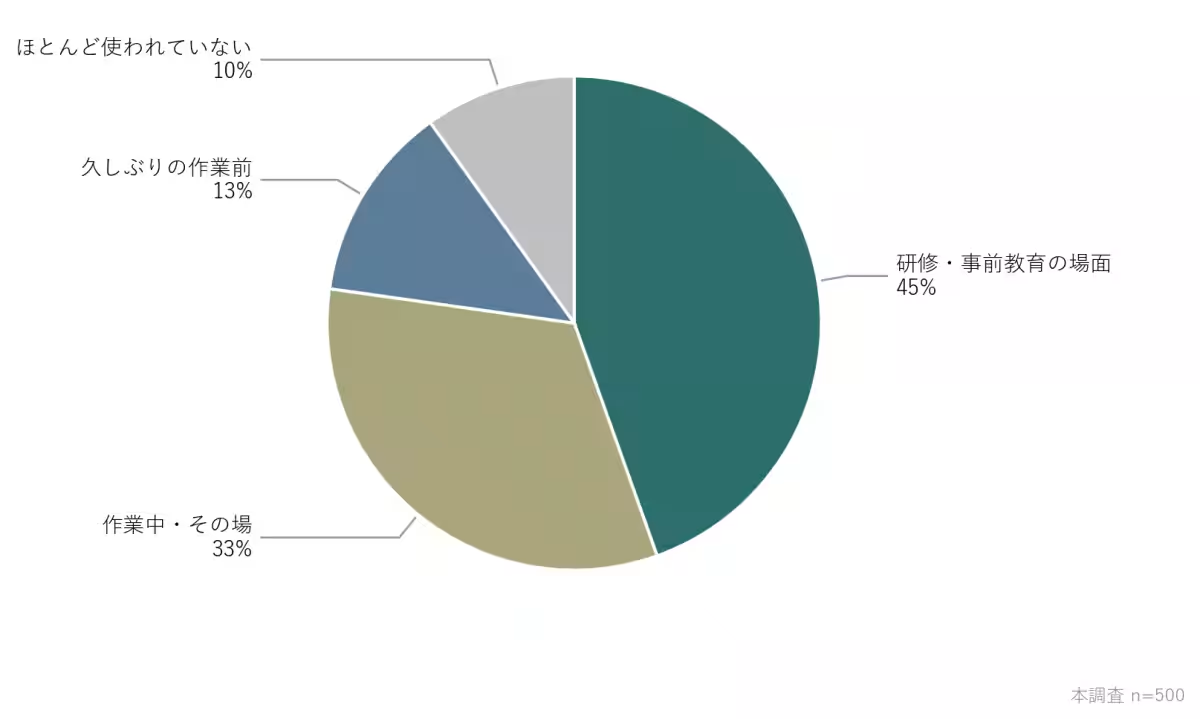
- - 46% mentioned that they accessed videos during work, demonstrating a split of use cases where 33% utilized them on the spot during tasks, and 13% referred to them for refreshing knowledge before performing a task once again.
- - Around 45% used videos for training purposes, confirming that both functions coexist but require distinct surface-level interactions.
Challenges Identified
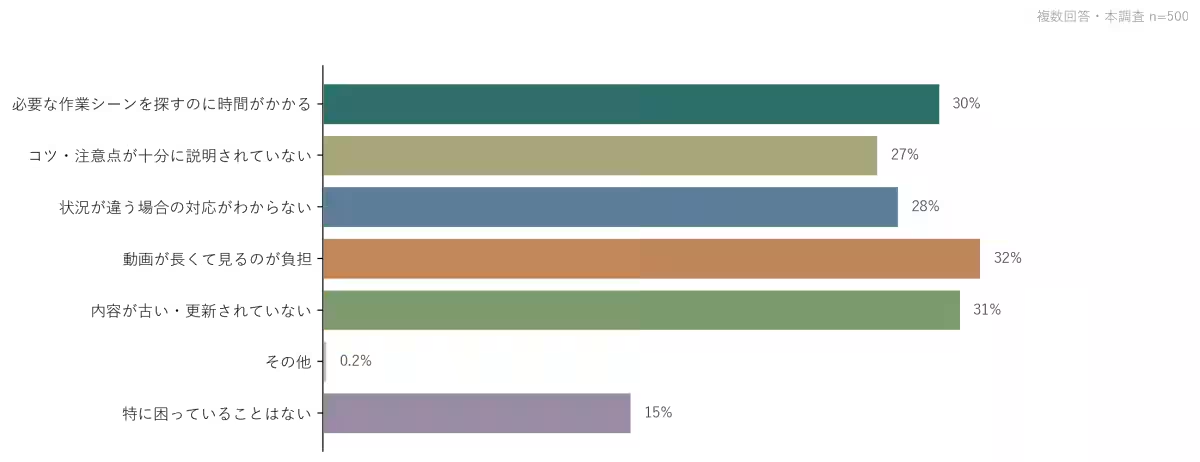
Various hurdles affecting video efficacy include:
- - Difficulty in locating relevant content (30%)
- - Inability to convey crucial tips effectively (27%)
- - Content length and outdated material being significant concerns (32% and 31% respectively)
Future Preferences and Insights
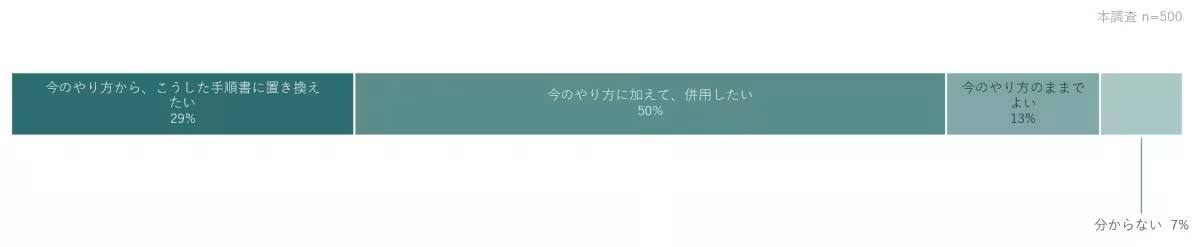
Interestingly, when presented with an upgraded concept of 'searchable video manuals', enthusiasm emerged, with 79% expressing interest in videos that provide quick access to specific procedures.
Conclusion
The study exemplifies the dual nature of video manuals with their applicability in both training environments and real-time references. As the manufacturing sector evolves, distinguishing between 'broad learning videos' and 'searchable stepwise video manuals' will be essential to address the unique needs of today’s workforce.
For further insights and detailed data from the study, visit Dive's Blog.



Topics General Business)
【About Using Articles】
You can freely use the title and article content by linking to the page where the article is posted.
※ Images cannot be used.
【About Links】
Links are free to use.