



The 14th Meeting of Microbial Explorers at Okayama University Fosters Interdisciplinary Research Initiatives
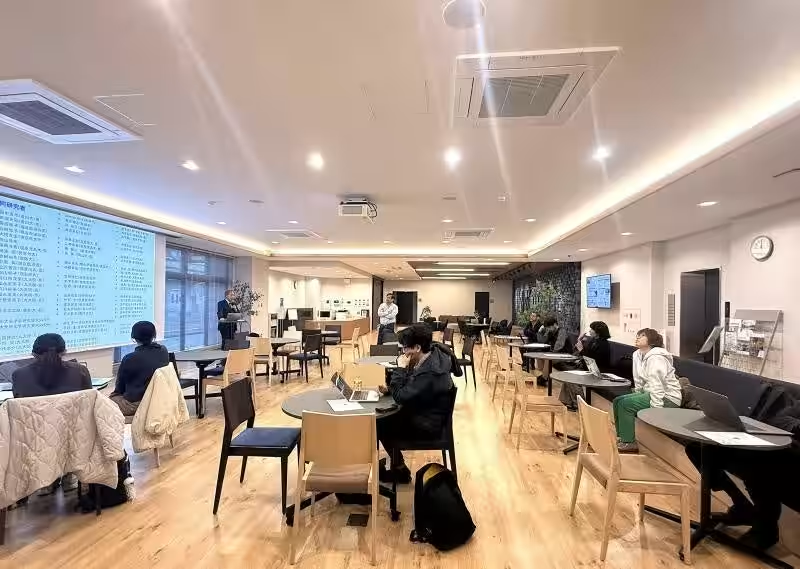
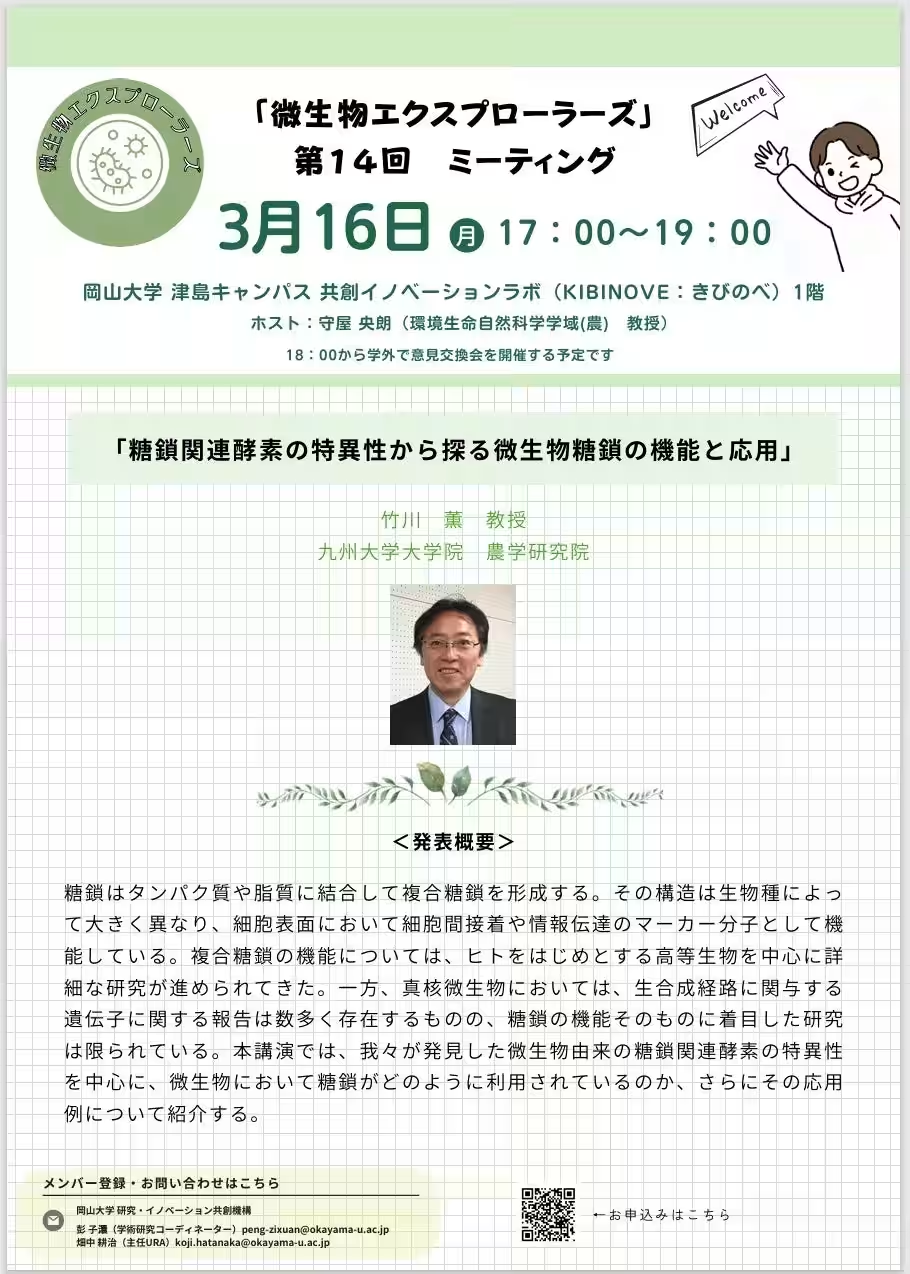
On March 16, 2026, Okayama University hosted the 14th meeting of the 'Microbial Explorers' research group at the Tsushima Campus. This initiative aims to foster interdisciplinary collaboration and establish research hubs, focusing on the study of microorganisms. The meeting attracted approximately 15 participants, including faculty, students, university research administrators (URA), and coordinators from various fields.
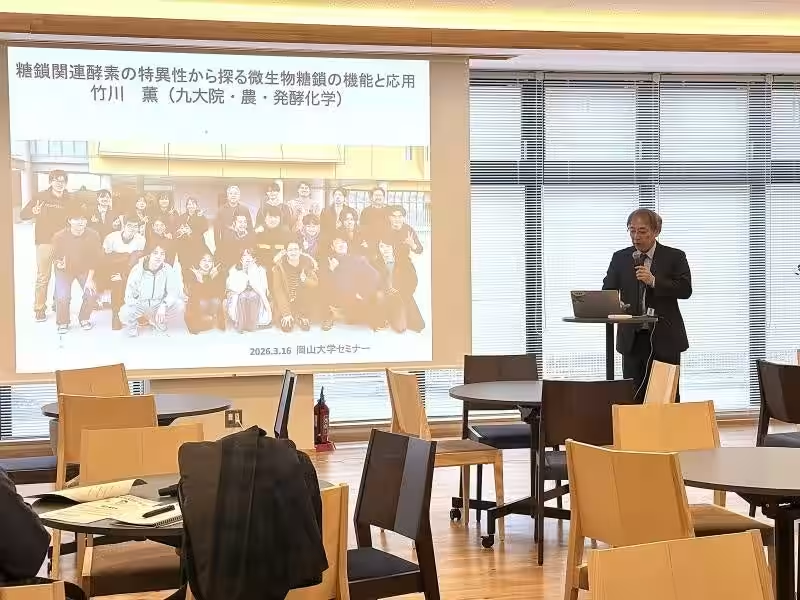
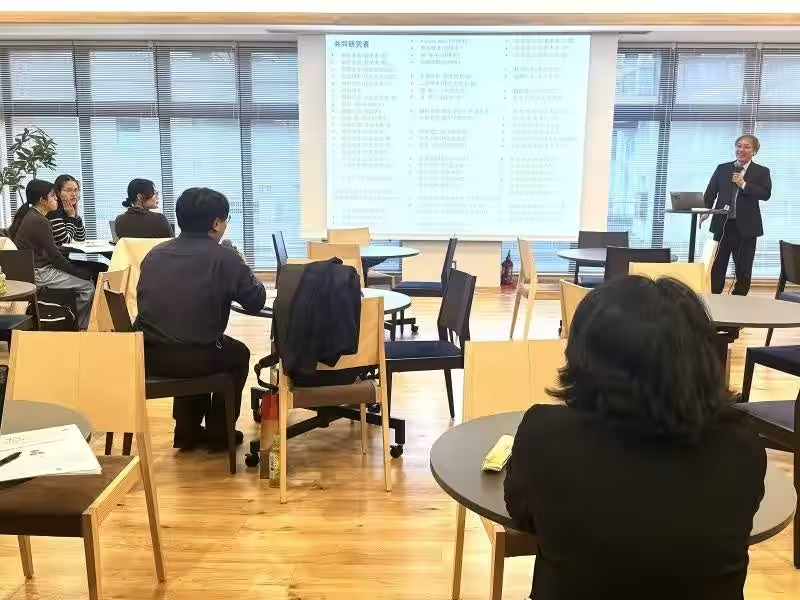
The event commenced with an opening address from Professor Hiroki Moriya, a distinguished member of the Faculty of Environmental Life Sciences. Following this, Professor Kaoru Takekawa from Kyushu University delivered a keynote speech titled "Exploring the Functions and Applications of Microbial Glycans through Specificity of Glycan-Related Enzymes." In his presentation, Professor Takekawa emphasized the role of glycans, particularly on cell surfaces, functioning as markers for cell adhesion and information transmission. He shed light on the previously underexplored functions of glycans in eukaryotic microorganisms, illustrating how these organisms utilize glycans, and what potential applications could arise from this knowledge.
The discussion that followed the keynote was robust, with participants engaging in stimulating questions and exchanges of ideas, providing an enriching opportunity for collaborative growth in research. Such discussions not only foster deeper understanding but also energize participants towards potential breakthroughs in microbial research. The 'Microbial Explorers' initiative encourages diverse researchers to share insights and machinery, paving the way for innovative projects arising from interdisciplinary dialogue. This collaborative effort aims to enhance the infrastructure of microbial research at Okayama University, supported through securing funding for expensive shared equipment, thereby reinforcing the research base within the university.
Furthermore, the university expresses its commitment to continue to be a unique research institution that embraces values of openness and community engagement, contributing considerably to the development of regional and global research. Participants can look forward to future meetings which will further propel microbial research into new arenas and cultivate significant academic partnerships.
New initiatives and collaborations are sure to emerge from this vibrant assembly of minds at Okayama University, encouraging a culture of exploration and innovation. The university remains dedicated to being a leading research institution, driving forward initiatives that align with global standards and addressing the world’s challenges, in part through its recognition of the United Nations Sustainable Development Goals (SDGs). It is an exciting time for microbial research as Okayama University stands at the forefront of these critical discussions.

The event commenced with an opening address from Professor Hiroki Moriya, a distinguished member of the Faculty of Environmental Life Sciences. Following this, Professor Kaoru Takekawa from Kyushu University delivered a keynote speech titled "Exploring the Functions and Applications of Microbial Glycans through Specificity of Glycan-Related Enzymes." In his presentation, Professor Takekawa emphasized the role of glycans, particularly on cell surfaces, functioning as markers for cell adhesion and information transmission. He shed light on the previously underexplored functions of glycans in eukaryotic microorganisms, illustrating how these organisms utilize glycans, and what potential applications could arise from this knowledge.
The discussion that followed the keynote was robust, with participants engaging in stimulating questions and exchanges of ideas, providing an enriching opportunity for collaborative growth in research. Such discussions not only foster deeper understanding but also energize participants towards potential breakthroughs in microbial research. The 'Microbial Explorers' initiative encourages diverse researchers to share insights and machinery, paving the way for innovative projects arising from interdisciplinary dialogue. This collaborative effort aims to enhance the infrastructure of microbial research at Okayama University, supported through securing funding for expensive shared equipment, thereby reinforcing the research base within the university.
Furthermore, the university expresses its commitment to continue to be a unique research institution that embraces values of openness and community engagement, contributing considerably to the development of regional and global research. Participants can look forward to future meetings which will further propel microbial research into new arenas and cultivate significant academic partnerships.
New initiatives and collaborations are sure to emerge from this vibrant assembly of minds at Okayama University, encouraging a culture of exploration and innovation. The university remains dedicated to being a leading research institution, driving forward initiatives that align with global standards and addressing the world’s challenges, in part through its recognition of the United Nations Sustainable Development Goals (SDGs). It is an exciting time for microbial research as Okayama University stands at the forefront of these critical discussions.
Topics Other)
【About Using Articles】
You can freely use the title and article content by linking to the page where the article is posted.
※ Images cannot be used.
【About Links】
Links are free to use.