



Miyoto Shopping Street DAO Launches Renovation with 14.8 Million Yen Funding
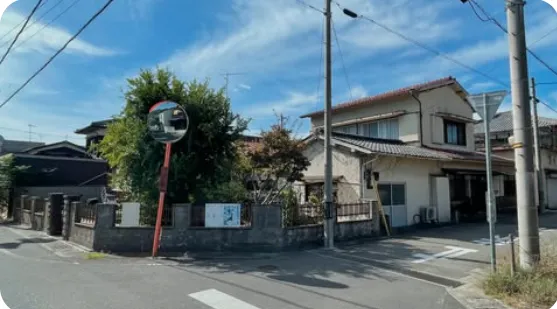
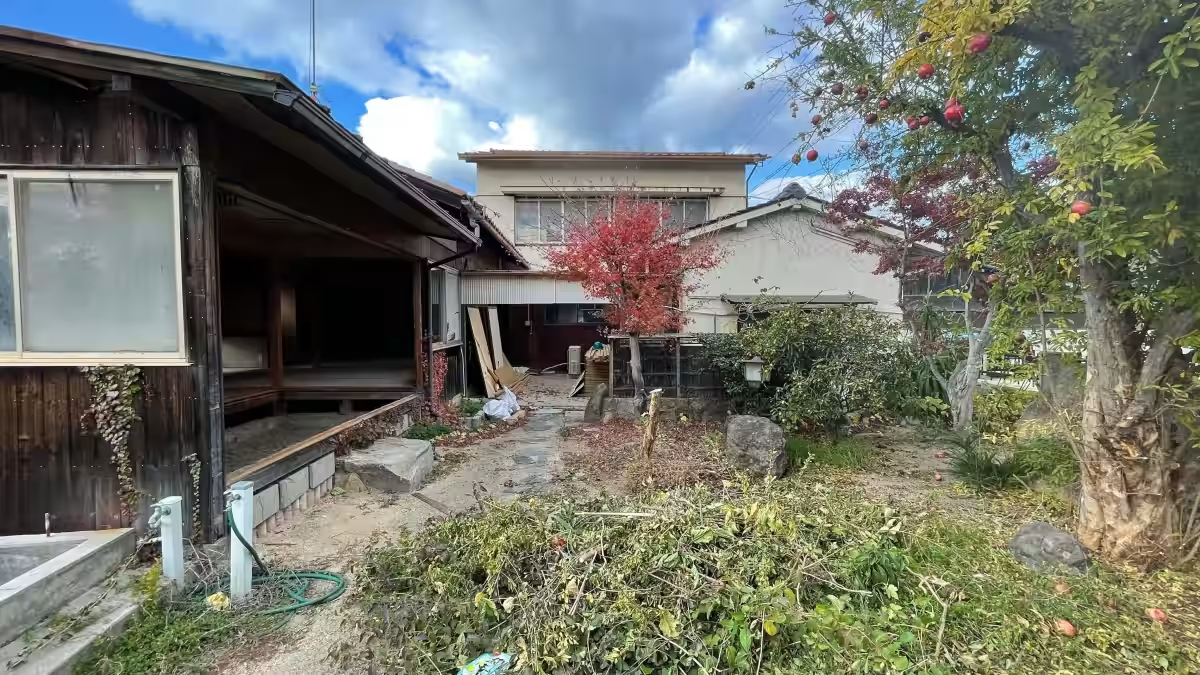
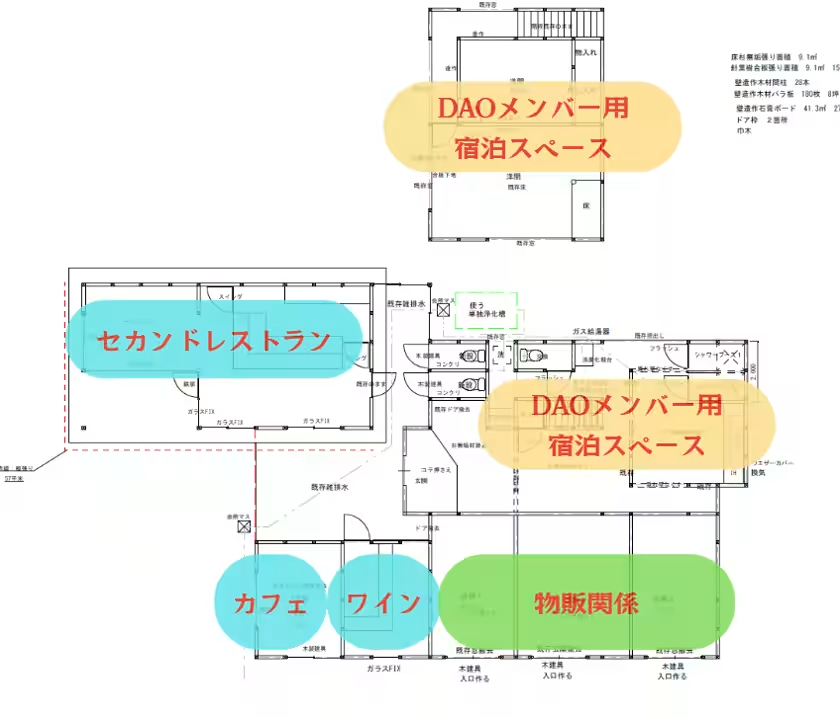
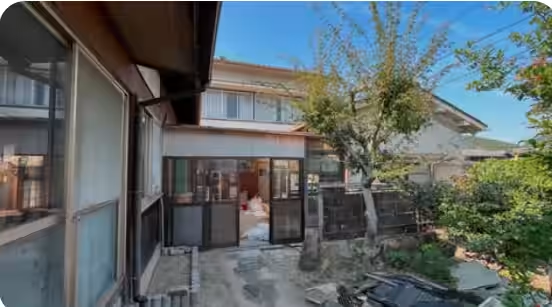
The Miyoto Shopping Street DAO, a pioneering project initiated in Japan's Kagawa Prefecture, is set to transform a beloved local residence into a community hub. This innovative endeavor, created through decentralized autonomous organization (DAO) principles, has successfully raised 14.8 million yen from 118 investors primarily in the Tokyo metropolitan area. The renovation, which focuses on creating a vibrant space that includes a café, bar, and restaurant, began in December 2023 and aims for a grand opening in the spring of 2026.
Incorporating DAO mechanisms allows members not just to invest, but to actively participate in governance decisions such as tenant selection and event planning. Members will also be entitled to ten stays over ten years in the new resident living space, fostering a sense of ownership and community among contributors.
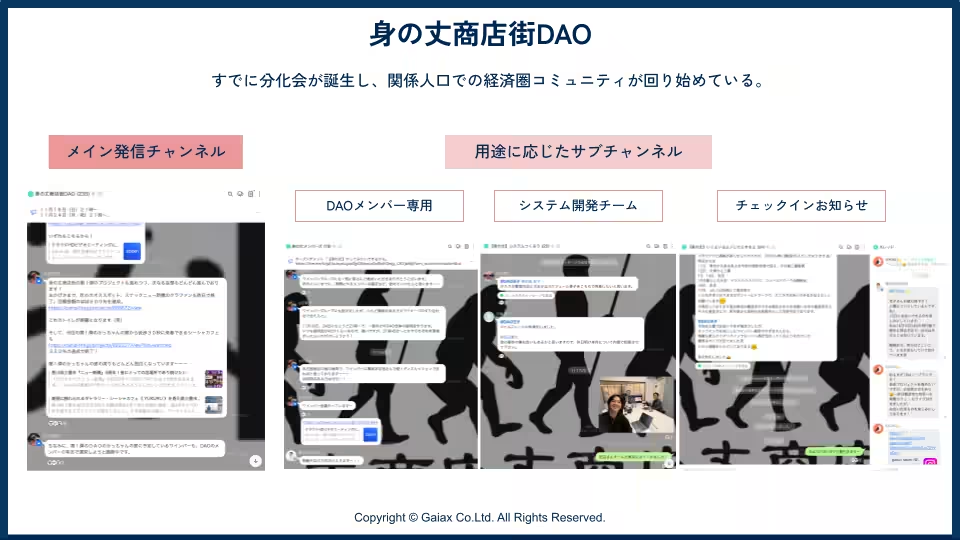
A key feature of this project is its emphasis on collaboration within the community. Investors have already formed subcommittees to facilitate communication and planning for joint activities, sharing insights and ideas through social media. As a result, members are not only contributing financially but are also engaging in community-building efforts.
As detailed by various contributors, such as candidate wine bar master Kenji Hirakawa, this initiative reflects a collective desire to manifest shared dreams for the local economy. Similarly, Takahisa Tanabe from Hokkaido shared how DAO's structure fosters sustainable community-driven projects that can alleviate common barriers to local entrepreneurship.
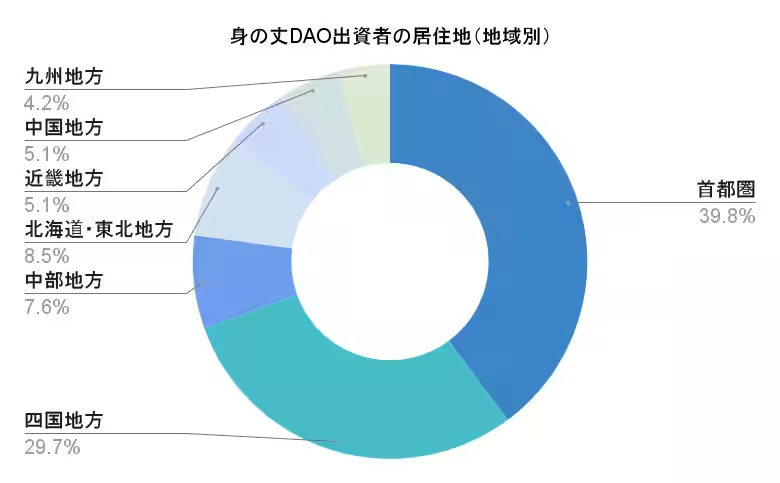
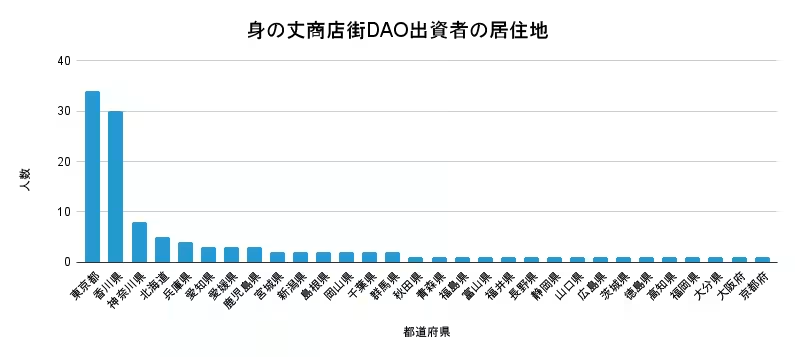
The project has successfully attracted participants from diverse locations, with not only local residents but city dwellers and aspiring entrepreneurs from across Japan engaging in this unique opportunity to influence local economic policies. With approximately 39.8% of investors hailing from the capital region, and 29.7% from Shikoku, it illustrates a broader intent to reconnect urban populations with rural economies.
Comments from community manager Noriyuki Shinoda highlight that the initiative is creating a fertile ground for diverse skills to intertwine, resulting in a self-sustaining project that values 'trust' within its decentralized structure. This sense of community is further echoed by Kyoko Akiyama, who began a dual-residence lifestyle that fosters connections and enhances her local engagement while balancing her commitments in Tokyo.
In this sense, the Miyoto Shopping Street DAO represents a significant shift in how communities can approach local development. By challenging the conventional notion that urban planning is only the province of governments or local leaders, this DAO model invites anyone wishing to contribute—be it city dwellers, remote workers, or prospective migrants—to have a voice in the evolution of their local area.
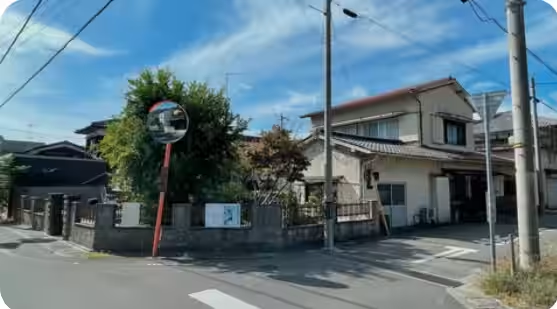
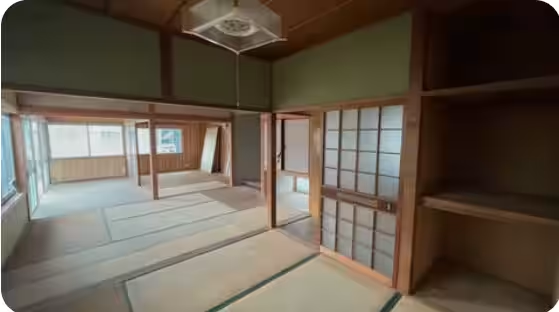
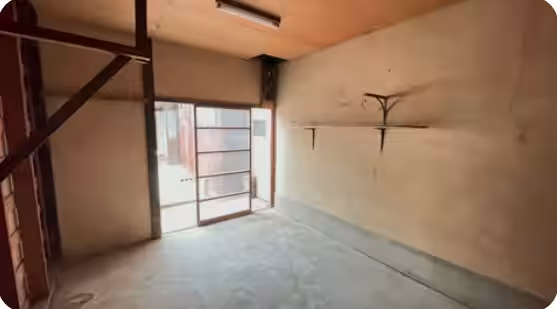
Accommodating a variety of offerings—like Kazuchan's House, a spacious 50-tatami home in Nio, Kagawa—the initiative aims to bolster enthusiasm for community-driven businesses that reflect the unique characteristics of the Miyoto area. As the project progresses, potential stakeholders are encouraged to join through a dedicated platform where they can explore investment opportunities and partake in decision-making processes.
In conclusion, the Miyoto Shopping Street DAO stands at the forefront of a new era where ordinary citizens are empowered to drive local economic and cultural revitalization. With its unique approach to community involvement, it serves as a beacon for similar initiatives across Japan, highlighting the transformative potential of collaborative efforts fueled by modern technologies and innovative governance frameworks.






Incorporating DAO mechanisms allows members not just to invest, but to actively participate in governance decisions such as tenant selection and event planning. Members will also be entitled to ten stays over ten years in the new resident living space, fostering a sense of ownership and community among contributors.
A key feature of this project is its emphasis on collaboration within the community. Investors have already formed subcommittees to facilitate communication and planning for joint activities, sharing insights and ideas through social media. As a result, members are not only contributing financially but are also engaging in community-building efforts.
As detailed by various contributors, such as candidate wine bar master Kenji Hirakawa, this initiative reflects a collective desire to manifest shared dreams for the local economy. Similarly, Takahisa Tanabe from Hokkaido shared how DAO's structure fosters sustainable community-driven projects that can alleviate common barriers to local entrepreneurship.
The project has successfully attracted participants from diverse locations, with not only local residents but city dwellers and aspiring entrepreneurs from across Japan engaging in this unique opportunity to influence local economic policies. With approximately 39.8% of investors hailing from the capital region, and 29.7% from Shikoku, it illustrates a broader intent to reconnect urban populations with rural economies.
Comments from community manager Noriyuki Shinoda highlight that the initiative is creating a fertile ground for diverse skills to intertwine, resulting in a self-sustaining project that values 'trust' within its decentralized structure. This sense of community is further echoed by Kyoko Akiyama, who began a dual-residence lifestyle that fosters connections and enhances her local engagement while balancing her commitments in Tokyo.
In this sense, the Miyoto Shopping Street DAO represents a significant shift in how communities can approach local development. By challenging the conventional notion that urban planning is only the province of governments or local leaders, this DAO model invites anyone wishing to contribute—be it city dwellers, remote workers, or prospective migrants—to have a voice in the evolution of their local area.
Accommodating a variety of offerings—like Kazuchan's House, a spacious 50-tatami home in Nio, Kagawa—the initiative aims to bolster enthusiasm for community-driven businesses that reflect the unique characteristics of the Miyoto area. As the project progresses, potential stakeholders are encouraged to join through a dedicated platform where they can explore investment opportunities and partake in decision-making processes.
In conclusion, the Miyoto Shopping Street DAO stands at the forefront of a new era where ordinary citizens are empowered to drive local economic and cultural revitalization. With its unique approach to community involvement, it serves as a beacon for similar initiatives across Japan, highlighting the transformative potential of collaborative efforts fueled by modern technologies and innovative governance frameworks.
Topics Consumer Products & Retail)
【About Using Articles】
You can freely use the title and article content by linking to the page where the article is posted.
※ Images cannot be used.
【About Links】
Links are free to use.