



Impact of Gasoline Tax Reduction on Local Communities Under the New Takichi Administration
Analyzing the Effects of Gasoline Tax Reduction Under the New Takichi Administration
Introduction
In an impactful report by Joycal Japan, a car leasing company based in Tokyo, the relationship between economic fluctuations and car ownership has been thoroughly analyzed using data from nine years of car lease contracts. This analysis comes in light of the new Takichi administration, which promises to abolish the temporary gasoline tax rate starting from October 2025 under the leadership of Sanna Takichi, Japan's first female Prime Minister.
Understanding the Policy Direction Behind Gasoline Tax Reduction
The proposed cancellation of the temporary gasoline tax is seen as a significant move to alleviate living costs, particularly for rural communities where automobiles dominate daily transportation needs. Japan's average annual fuel cost reduction could be approximately ¥11,000 to ¥12,000, benefiting households that own multiple vehicles and heavily rely on cars for daily activities.
According to studies by the Ministry of Land, Infrastructure, Transport and Tourism, the share of car usage for transportation in rural areas is approximately 61%, a dramatic contrast to just 32% in Japan's three major urban areas. In prefectures like Fukui and Yamagata, households own an average of 1.670 and 1.617 vehicles respectively, compared to Tokyo’s mere 0.405 vehicles, illustrating a stark contrast in mobility dependence.
Thus, the gasoline tax reduction can no longer be viewed simply as a cost-saving measure; it directly correlates with the quality of life in regions where mobility is heavily car-dependent.
Economic Changes Reflected in 9 Years of Data
Joycal's analysis of car lease data from October 2016 to September 2024 reveals that economic changes have explicitly influenced consumer behavior regarding car ownership.
1. Increase in Initial Cost Burden
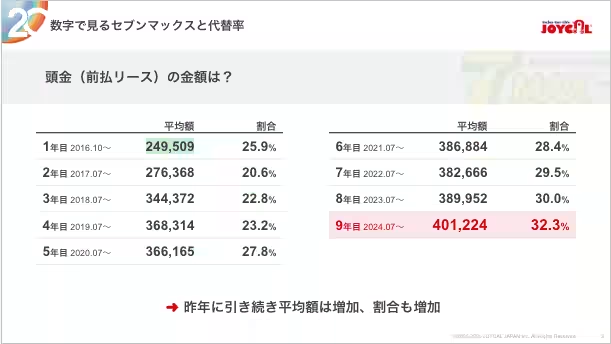
The average down payment for car leases has increased significantly, from ¥249,509 in the first year to ¥401,224 by the ninth year, indicating a 1.6-fold rise. The share of leases requiring an initial payment has also grown from 25.9% to 32.3%. This trend is reflective of rising vehicle prices and a shifting consumer mindset that values lower monthly payments through higher initial investments.
2. Rising Monthly Costs Coupled with Bonuses
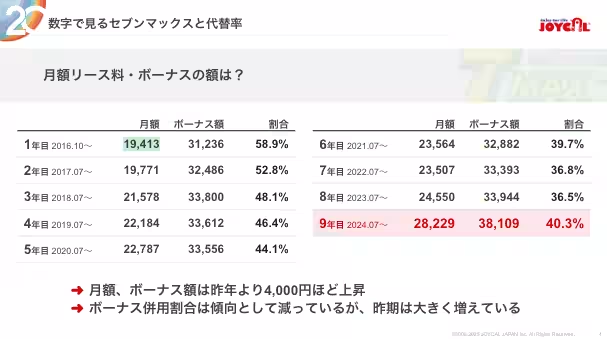
Average monthly lease payments increased from ¥19,413 to ¥28,229—an approximate 45% rise. Additionally, bonus payment contributions have similarly escalated from ¥31,236 to ¥38,109, signifying a growing burden on consumers even as the proportion of those utilizing bonus payments has dropped. This trend highlights consumers' adaptability in managing finances under varying economic conditions.
3. Diverse Lease Contract Durations
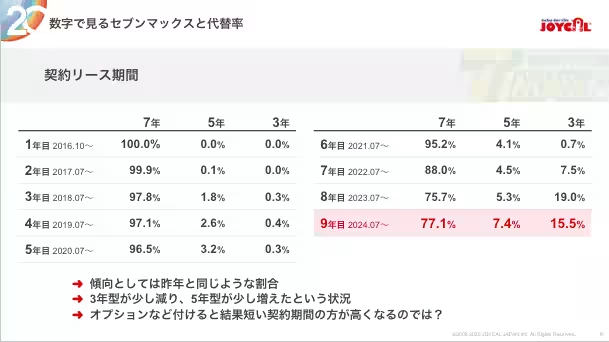
Initially offering only 7-year contracts, Joycal now provides options for 5- and 3-year leases, leading to reduced dominance of long-term contracts (from 100% to 77.1% for 7-year leases). The rising interest in shorter agreements, particularly 3-year contracts, reflects a desire for frequent upgrades among consumers, as evidenced by the 15.5% uptake of 3-year contracts
4. Gradual Decline in Kei Cars
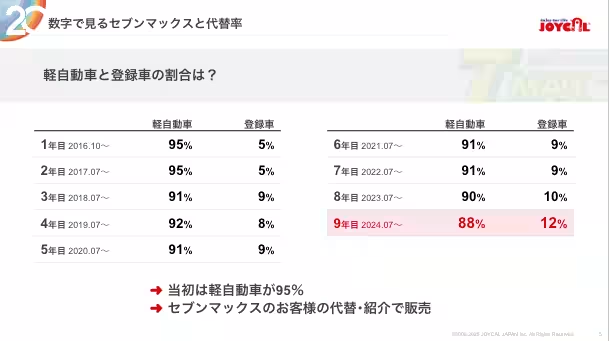
The preference for kei (small) cars has slightly diminished, dropping from 95% to 88%, while the proportion of standard cars rose from 5% to 12%. This shift suggests a broader range of considerations in vehicle selection beyond just fuel efficiency.
Anticipated Impacts of Gasoline Tax Reduction on Car Ownership
1. Bridging the Gap Between Ideal and Reality
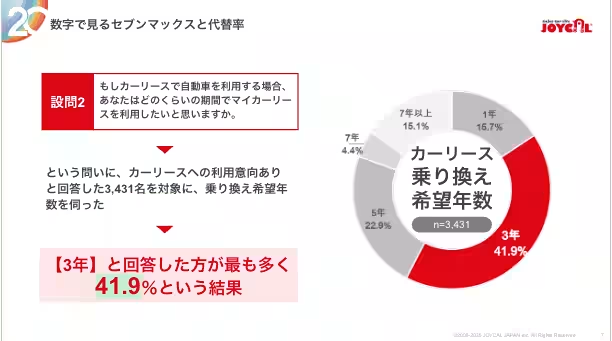
A survey indicates that 41.9% of potential car lease customers prefer to switch vehicles every three years, while long-term 7-year leases remain predominant. This discrepancy largely stems from concerns over heightened monthly expenses with shorter contracts. The anticipated reduction in monthly costs through the gasoline tax could enable consumers to embrace ideal contract durations, making more frequent car upgrades viable.
2. Broadened Vehicle Selection Options
Easing the financial burden of fuel costs may encourage long-time kei car users to consider more comfort-focused vehicles that fit their lifestyle needs.
3. Regional Disparities in Impact
Urban areas, equipped with robust public transport systems, may experience limited effects from gasoline price fluctuations, whereas rural households that commonly own multiple cars are likely to feel much greater impacts from the tax reduction.
Considering these regional differences, the policy also serves as a catalyst for
Topics Consumer Products & Retail)
【About Using Articles】
You can freely use the title and article content by linking to the page where the article is posted.
※ Images cannot be used.
【About Links】
Links are free to use.