



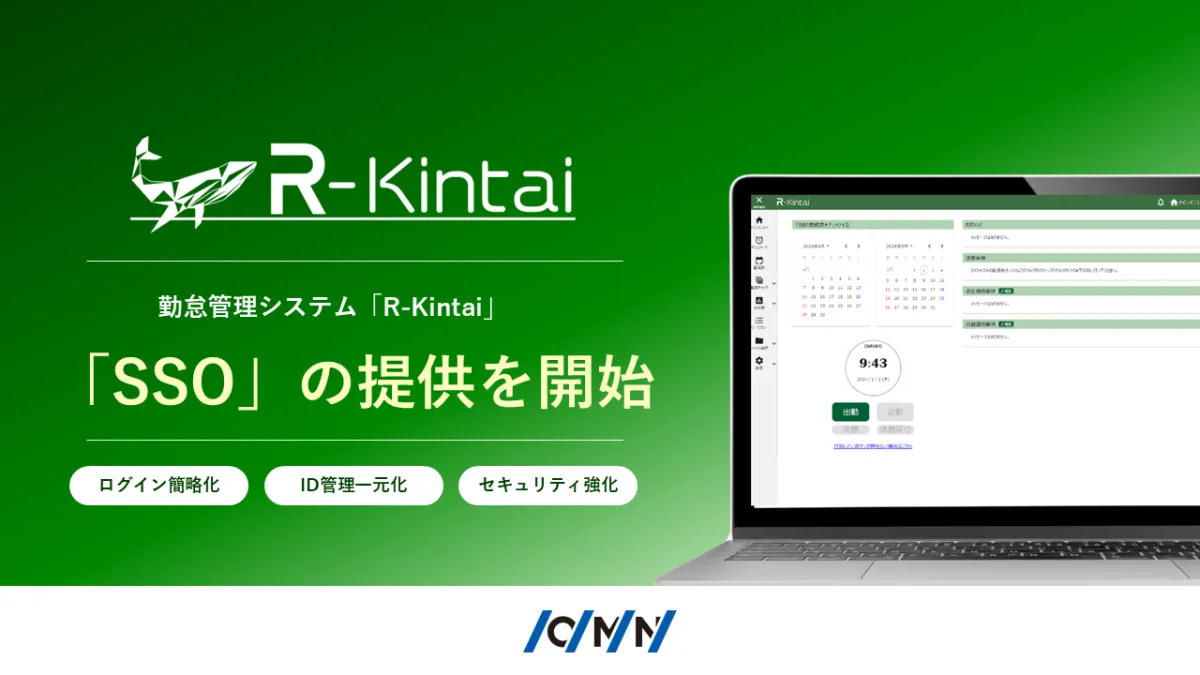
R-Kintai Enhances Workforce Management with New SSO Implementation for Streamlined Security
Introduction
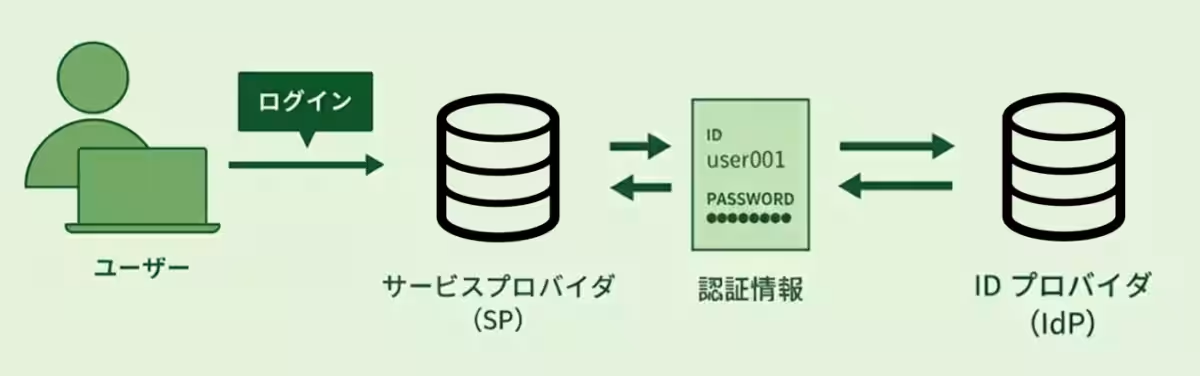
In a rapidly evolving digital landscape, companies face challenges in managing multiple Software as a Service (SaaS) applications. With the advent of 'R-Kintai,' a cloud-based attendance management system, a significant upgrade has just been released: the implementation of Single Sign-On (SSO) capabilities compliant with SAML 2.0. This enhancement aims to facilitate seamless collaboration with prominent Identity Providers (IdPs) like Azure AD, Okta, and Google Workspace while enhancing security and smoothing operational processes.
Challenges in Multi-SaaS Environments
Businesses today often utilize diverse SaaS platforms for tasks ranging from attendance tracking to expense reports and communication tools. Retail and service sectors, in particular, face complications as they frequently deploy different systems across various locations. This results in a rapidly increasing number of systems that employees must access regularly, often leading to several key challenges:
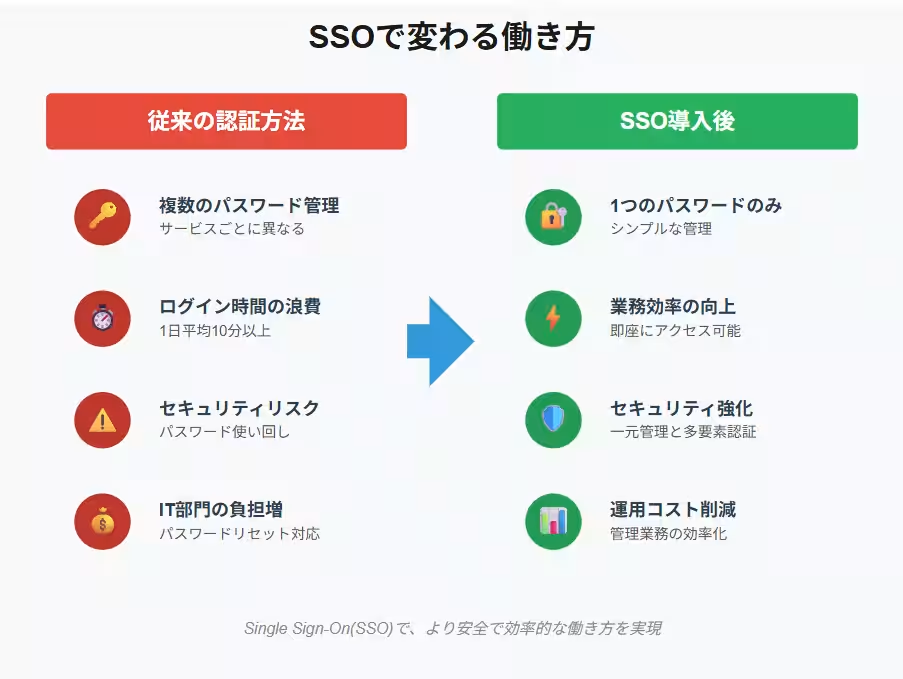
- - Increased Login Complexity: Employees must manage multiple IDs and passwords across systems, making daily logins cumbersome and stressful.
- - Operational Burden on IT Departments: Information systems teams bear the brunt of issuing, deleting, and managing access permissions for user accounts, introducing risks such as overlooked account deletions when employees move on or switch roles.
These issues have prompted numerous requests from businesses using R-Kintai, seeking to integrate their existing IdP systems and unify their account management processes. Responding to this demand, R-Kintai has prioritized enhancing user convenience and alleviating the operational burden for IT departments by developing SSO functionality.
Features of R-Kintai's SSO Implementation
The newly launched SSO capability brings forth several key features:
Collaboration with Major IdPs
By adhering to SAML 2.0 standards, R-Kintai can effectively synchronize with major IdPs like Azure AD, Okta, and Google Workspace. This compatibility allows companies to leverage their pre-existing authentication frameworks—eliminating the need for an entirely new system deployment.
Gradual Transition Flexibility
The SSO option supports integration alongside traditional username-password authentication. Companies currently utilizing R-Kintai can safely transition to SSO in phases, testing the efficacy in select departments before broader implementation.
Benefits to Users, IT, and Management
The introduction of SSO not only simplifies the login process for end-users but also provides substantial advantages for IT departments and management:
Streamlined User Experience
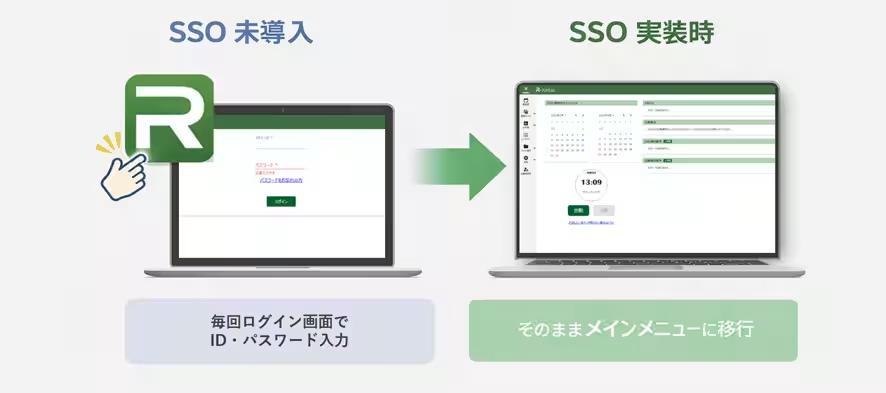
Employees using R-Kintai will no longer have to remember multiple credentials across different systems. Post-SSO implementation, they will log in once through their corporate IDP, granting seamless access to R-Kintai. This alleviation of daily login frustrations promotes concentrated engagement in core tasks.
Efficiency for IT Management
For IT departments, SSO greatly modernizes account management practices. Previously, each account had to be created and controlled separately in R-Kintai. Now, account management transitions to the company's IdP, significantly minimizing security risks associated with account deletion oversights during personnel transitions.
Enhanced Corporate Governance
From a management perspective, the unification of ID management strengthens IT governance. Organizations can more easily track access records—including who accessed which systems and when—as well as improve compliance with internal audits. This consolidation directly mitigates the risks of security breaches and data leaks, supporting robust corporate risk management strategies.
Future Outlook
R-Kintai's SSO implementation serves as a foundational step toward expanding authentication and integration capabilities. Future enhancements will focus on fostering interoperability with external services via OAuth among others, creating a more aligned workforce management platform. Moreover, ongoing efforts will target continual improvements to UI/UX, aiming for enhanced operational efficiency and user satisfaction for a system that is utilized daily.
Company Overview
Company Name: OM Network Co., Ltd.
Location: Chuo-ku, Niigata City, Niigata Prefecture
CEO: Shinya Yamagishi
Business Focus: Development of business systems, shift management with R-Shift.
Website: OM Network
Explore additional articles showcasing how OM Network innovations are revolutionizing workforce management practices.




Topics Consumer Technology)

【About Using Articles】
You can freely use the title and article content by linking to the page where the article is posted.
※ Images cannot be used.
【About Links】
Links are free to use.