



The Future of Disaster Relief: Introducing the Mokutas Cube by Tokyu Construction
The Future of Disaster Relief: Introducing the Mokutas Cube by Tokyu Construction
In a groundbreaking initiative, the Japan Mobile Architecture Association, headquartered in Chiyoda, Tokyo, is championing the use of mobile architecture for both regular and emergency situations. This novel approach aims to create a system of "social stockpiling," where community resources are utilized during peacetime and swiftly repurposed as emergency shelters during disasters.
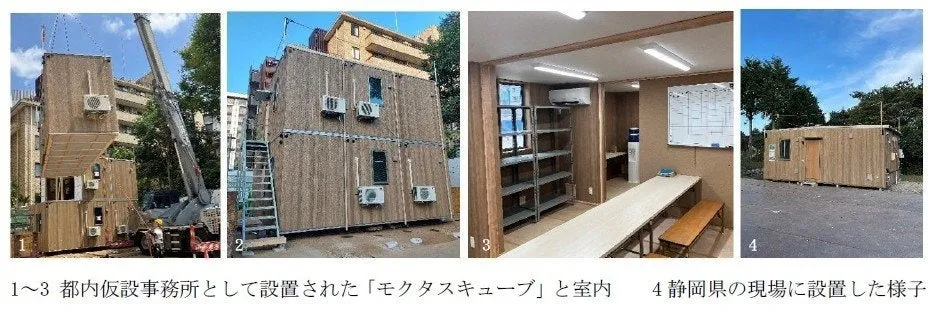
In collaboration with Tokyu Construction Co., based in Shibuya, Tokyo, this initiative has recently taken a significant step forward. The company has launched its own portable wooden structure named the "Mokutas Cube" as an on-site office at its construction projects. The essence of this project embodies the concept of "social stockpiling," as it provides a comfortable workspace in normal times and serves as a temporary shelter in the aftermath of disasters.
The Necessity for Rapid Housing Solutions
The frequency of large-scale disasters, including earthquakes and severe weather events, has heightened the urgency for providing quick and effective emergency housing solutions. The Japan Mobile Architecture Association acknowledges this pressing issue and promotes mobile buildings compliant with construction standards. These structures, fabricated off-site, can be utilized as community resources during normal times and quickly transformed into emergency shelters when calamities occur.
Tokyu Construction's Pioneering Efforts
Tokyu Construction took proactive measures during the 2024 Noto Peninsula Earthquake by deploying the Mokutas Cube as temporary accommodations for recovery workers and as a workshop for traditional Wajima lacquer art. This experience illuminated the critical need for pre-manufactured solutions in crisis response. The lesson learned was clear: it is crucial to produce and stock these structures in advance and determine how to use them efficiently during non-emergency periods to ensure prompt deployment when needed.
As a solution, Tokyu Construction has committed to utilizing the Mokutas Cube as a temporary office for its construction sites. The first unit was placed at a site in Tokyo in August 2025, with another unit following at a location in Shizuoka at the end of October. This project marks the beginning of a broader plan to expand the use of Mokutas Cubes across their construction sites.
Key Features of the Mokutas Cube
During Normal Operations (Office Use)
- - The Mokutas Cube offers a warm and comfortable workspace, emphasizing a high level of livability.
- - The structure consists of multiple connected units, with the Tokyo site featuring a two-story building made up of three 15-square-meter units.
- - These units are designed to be as resilient as traditional wooden houses, boasting excellent seismic and sound insulation performance, as well as superior thermal insulation (with UA values below 0.6).
In Case of Emergencies (Temporary Housing)
- - When a disaster strikes, the association can promptly relocate the office to provide temporary housing as needed.
- - The Mokutas Cube is produced in an off-site factory, making it easy to transport via a large truck and allowing for quick setup with minimal personnel on-site.
A Model for Future Resilience
The Japan Mobile Architecture Association anticipates that Tokyu Construction's innovative approach to using temporary jobsite offices as a form of social stockpiling will dramatically improve the speed of emergency housing provision. This phase-free strategy not only enhances working conditions for construction staff during non-emergency periods but also enables a rapid transition to community assistance during times of crisis.
Moreover, once the structures have served their purpose at construction sites, they can be relocated instead of being dismantled, aligning with Tokyu Construction's commitment to a "zero waste" philosophy and supporting sustainable practices.
The association is dedicated to continuing its work alongside member companies, relevant government agencies, and local governments to build a disaster-resilient future.
Topics Other)
【About Using Articles】
You can freely use the title and article content by linking to the page where the article is posted.
※ Images cannot be used.
【About Links】
Links are free to use.