



The Rise of the Ultra-Thin Skin Anpan: A Sweet Revolution in Japanese Bakery Culture
The Rise of the Ultra-Thin Skin Anpan: A Sweet Revolution in Japanese Bakery Culture
In the continuously evolving world of bakery products, the ultra-thin skin anpan is making a bold statement. This innovative creation challenges long-held conventions within the realm of traditional Japanese pastries. At the helm of this transformation is Taku Akimoto, the CEO of Equal Condition, who is making waves with his unique approach to a beloved staple of Japanese cuisine: anpan, the sweet bun filled with red bean paste.
Rethinking the Classics
Since the inception of Equal Condition in 1999, Akimoto has consistently pushed the boundaries of what is considered traditional in the world of cakes and breads. At a time when price, uniform appearance, and ease of production dictated the bakery landscape, Akimoto took a different route. Instead of conforming to the trend-heavy, low-cost production mentality, he devoted time and resources to quality ingredients and artisanal methods. This unique philosophy led to what many refer to as the inception of a luxurious bread trend. His online venture '@Cinnamon' gained a massive following, leading to incredible demand and a waiting list that lasted over a year.
The ultra-thin skin anpan is Akimoto’s latest endeavor, effectively reexamining the expectations surrounding this traditional sweet.
The Philosophy Behind the Ultra-Thin Skin
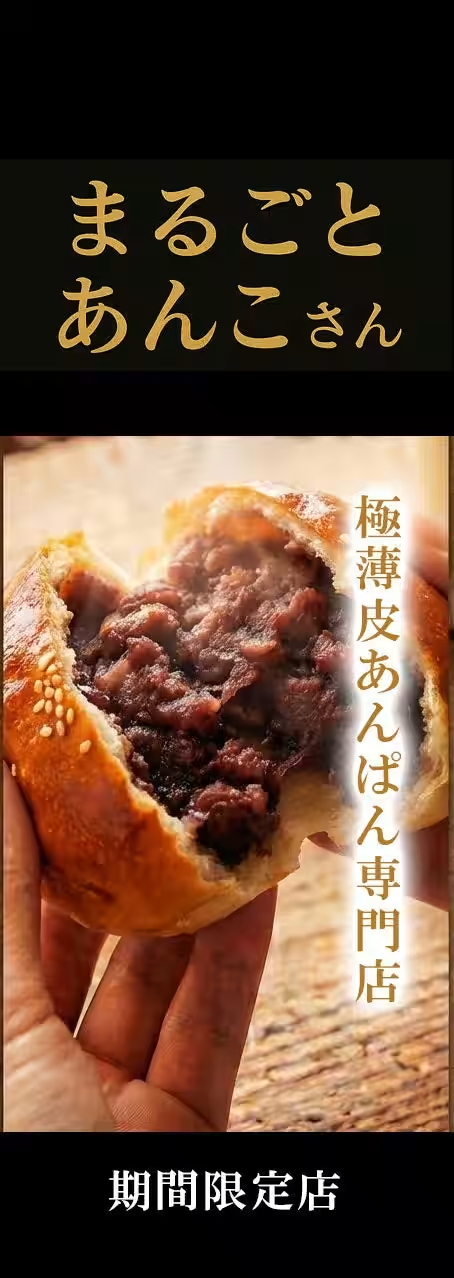
The flagship product of this new wave is the 'Marugoto Anko,' a pastry that prioritizes the filling—rich, velvety red bean paste—as the star of the show. To emphasize the flavor and texture of the an, Akimoto's team has engineered the bread itself to an incredibly thin layer, allowing the filling to shine through. This concept pivots away from merely adding more ingredients to create flavor, instead embracing a minimalist approach where less is indeed more.
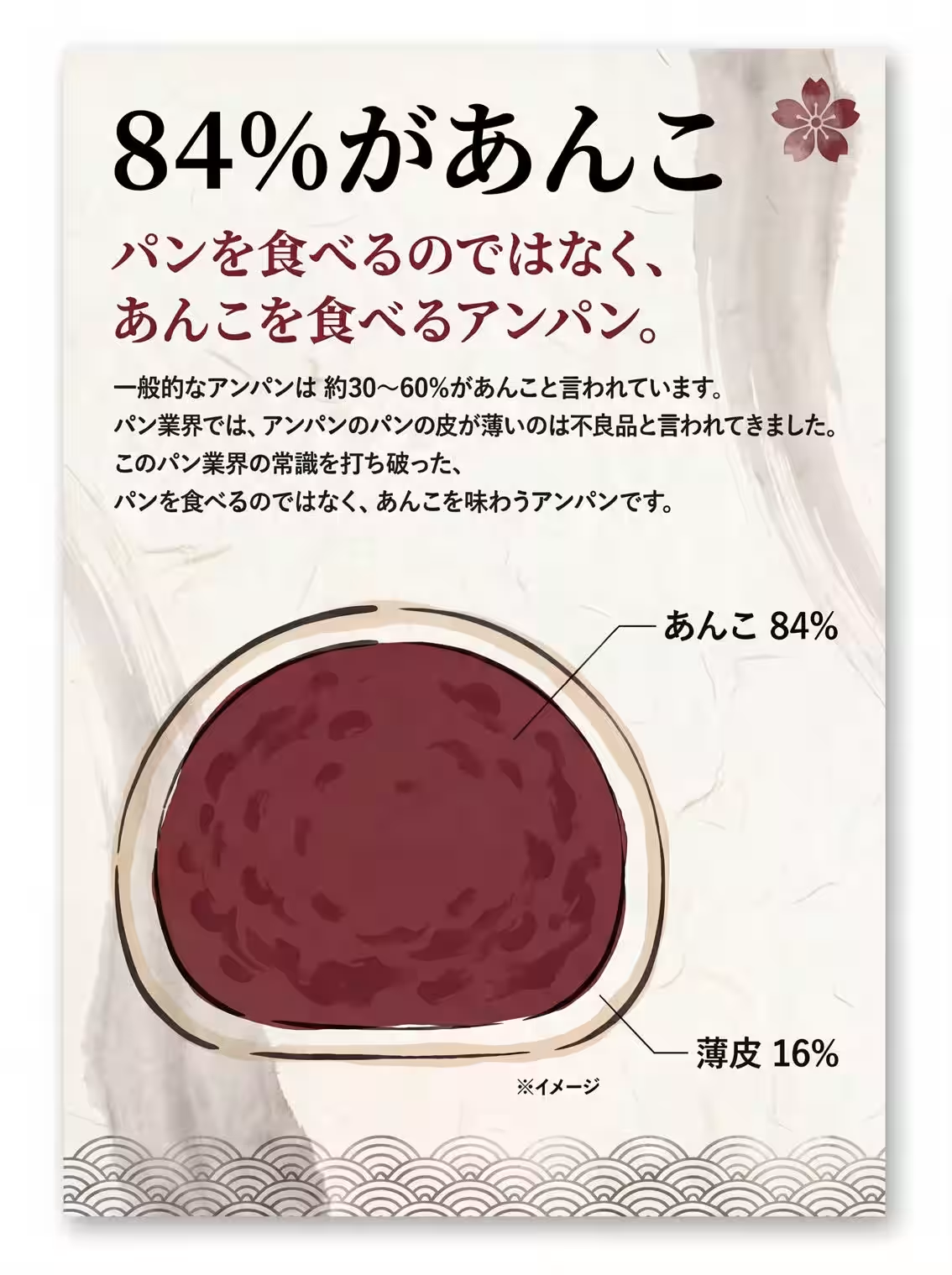
Traditionally, anpan is composed of around 30% to 60% filling, as the common belief is that anything more results in a subpar product. However, the ultra-thin skin anpan disrupts this norm. With up to 84% of the bun filled with anko, this innovative creation ensures that each bite reveals the full taste and character of the filling. It mimics the delicacy found in monaka and taiyaki while uniquely allowing the anko to be the primary focus.
Embracing the Beauty of Imperfections
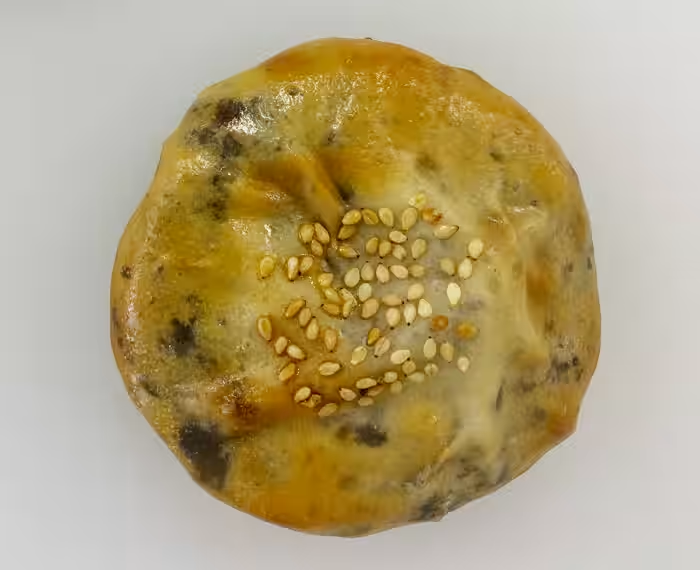
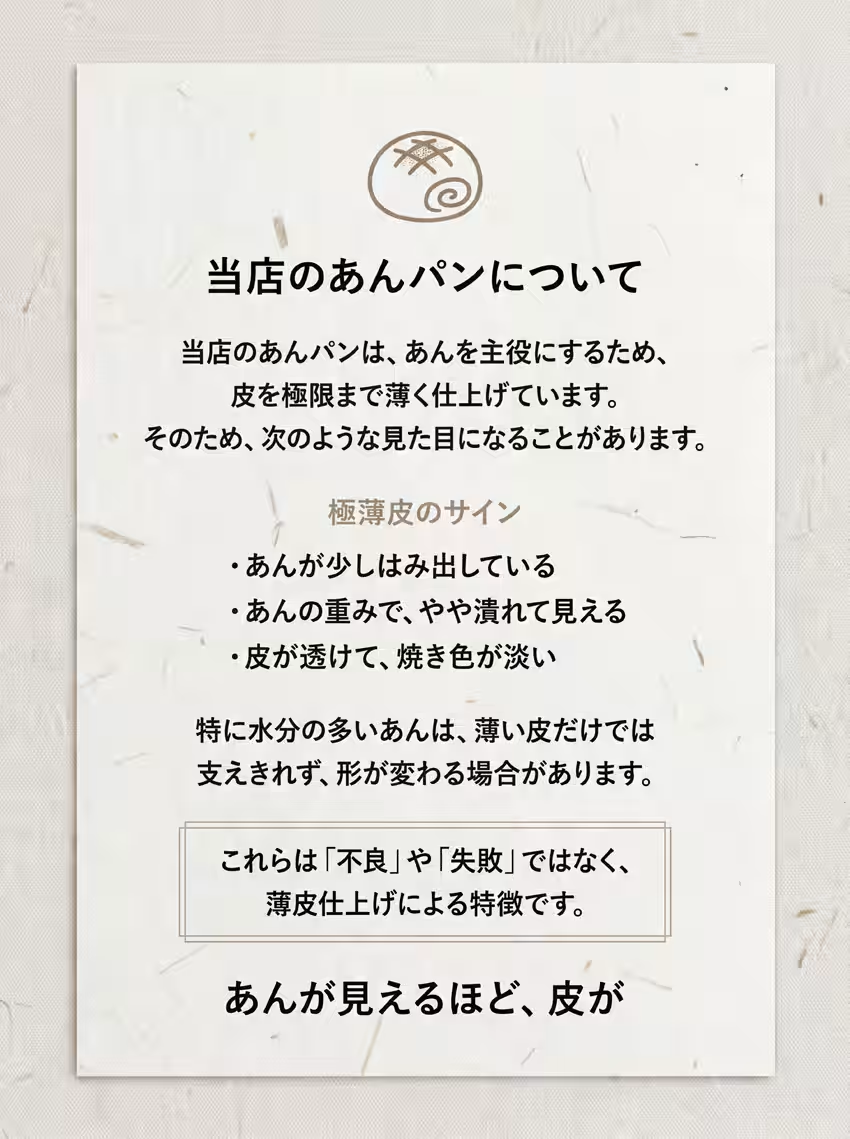
In anbiden to the shift towards a refined baking process, the ultra-thin skin can lead to physical variation among products. Equal Condition wants to redefine 'imperfection' in this context and inform customers about the characteristics of their unique anpan.
The signs of this ultra-thin skin can include:
- - The filling is slightly visible from the outside.
- - Due to its weight, the filling may create a subtle deformation.
- - The skin is translucent, exhibiting a lighter brown tone.
These factors contribute to a product that reflects high-quality craftsmanship and a bold new standard in the industry. Instead of viewing these signs as negatives, they represent the very essence of this innovative baked good, confirming that the pastry’s primary role is to showcase its delightful filling.
Upcoming Event to Experience Marugoto Anko
For those eager to experience the revolutionary ultra-thin skin anpan firsthand, Equal Condition will roll out this treat at a limited event titled “Have You Tried This Yet? Omori Store.”
- - Event Name: Have You Tried This Yet? Omori Store
- - Sales Period: January 20, 2026 (Tuesday) - February 2, 2026 (Monday)
- - Sales Format: Event limited (for a limited duration)
- - Featured Product: Marugoto Anko (Ultra-Thin Skin Anpan)
In a remarkable twist, the promotional material created for this event, including posters and images, was entirely crafted through AI technology within a matter of days, emphasizing the innovative nature behind not just the product, but also its promotion.
Contact Information
For further inquiries, reach out to Equal Condition at:
Address: 2-4-5 Ikejiri, Setagaya, Tokyo, Japan, Home/Work Village 309
Phone: 03-6432-6502
Website: Equal Condition
As Japan continues to embrace contemporary tastes while honoring tradition, the ultra-thin skin anpan stands as a brilliant example of how innovation can arise from rethinking what we consider 'normal' in culinary culture.
Topics Consumer Products & Retail)
【About Using Articles】
You can freely use the title and article content by linking to the page where the article is posted.
※ Images cannot be used.
【About Links】
Links are free to use.