



Fourier's Integrated System Architecture Showcased at 2026 Cooling Technologies Conference in Taipei
Fourier's Innovations in Modular Data Center Architecture
Introduction
At the Advanced Liquid Cooling Technologies 2026 conference held in Taipei, Fourier Data Center Solution Inc., a leader in modular data center solutions, unveiled its cutting-edge integrated architecture designed for artificial intelligence and high-performance computing (HPC). This event highlighted the significant shift toward system-level integration in the AI infrastructure landscape.
A Groundbreaking Collaboration
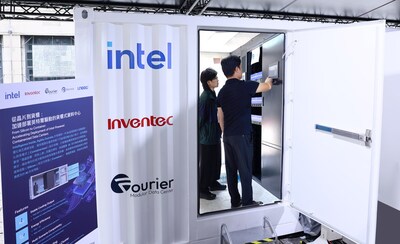
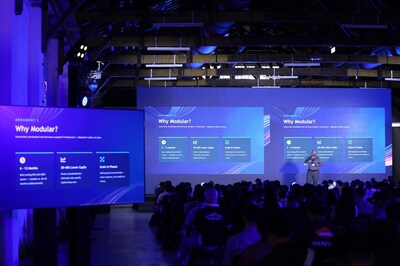
The focal point of the conference was a collaborative presentation between Fourier and Intel, introducing a fully integrated six-meter modular data center container. This new architecture is a testament to both companies' commitment to innovation in data center solutions, showcasing how AI infrastructure can be both modular and flexible. Justin Cass, the Director of Product Development at Fourier, delivered a compelling keynote, emphasizing the importance of technology independence in modern data centers.
Shifting Paradigms in Infrastructure Definition
Discussions at the conference underscored a transformative change in defining AI infrastructure. Advances at the silicon level, along with developments in thermal interface technologies, are continually pushing the boundaries of heat transfer capabilities. On a systematic level, Intel’s platform-oriented approach enables ecosystem partners to extend their capabilities beyond individual components, allowing for the emergence of integrated data center solutions. Fourier's six-meter modular container provides a comprehensive view of integrated cooling, power, and computing architectures.
Real-world Demonstration
Attendees of the conference were given the opportunity to tour the open container, gaining firsthand insight into the system's internal layout and operational integration. This visual demonstration highlighted Fourier’s vision of unifying cooling, power, and computational efficiency into a single cohesive architecture. According to Cass, this redefines the premise for infrastructure deployment; it's no longer about isolated devices or subsystems but rather aligning these elements into a seamless architecture.
The Importance of Speed in AI Deployment
As the AI infrastructure cycles accelerate, the speed of deployment has become a critical competitive variable. Delays in compatibility, validation, and integration significantly impact the time taken to achieve revenue. The conference illuminated the development of a more coordinated validation environment that aligns cooling technologies, power architectures, and system interfaces within a shared ecosystem, effectively reducing integration friction on a large scale.
This progress supports Fourier’s core principle: speed of deployment is a system-level outcome. Off-site prefabrication, factory integration, and standardized modular designs are not just engineering strategies; they also serve as mechanisms to shorten delivery times and reduce on-site uncertainties, enabling predictable deployment of high-density computing infrastructure.
The Future of AI Infrastructure
Looking ahead, the AI infrastructure market is expected to expand globally, increasingly gravitating toward integrated, prefabricated systems. Fourier remains committed to transforming system-level innovations into deployable infrastructure that meets the demands for speed and computing density in the next generation.
In conclusion, as the industry evolves, the integration of modular and pre-constructed components will shape the future of data centers, ensuring they can meet the rigorous demands of AI and HPC applications. Fourier aims to lead this charge, bridging the gap between innovative technology and practical deployment solutions.
Topics Consumer Technology)
【About Using Articles】
You can freely use the title and article content by linking to the page where the article is posted.
※ Images cannot be used.
【About Links】
Links are free to use.