



Palladium Global Science Award Ceremony Celebrates Innovative Technologies in Hong Kong
Palladium Global Science Award Ceremony in Hong Kong
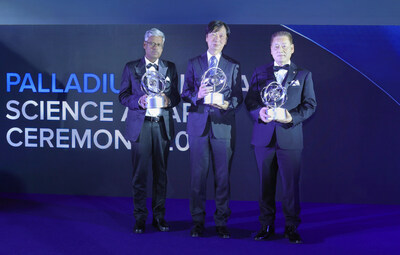
On November 22, 2025, Hong Kong played host to the inaugural Palladium Global Science Award ceremony, a significant event that recognized the most cutting-edge innovations in the industrial applications of palladium. This international scientific competition was launched to stimulate and support pioneering research focused on new technologies that utilize this precious metal.
The event drew attention from leading scientists, business representatives, government officials, and international partners. Attendees witnessed the official announcement of the winners and appreciated the high level of innovation shaping the future of palladium applications. The ceremony not only celebrated the top achievers but also highlighted the global scale of the competition and its role in advancing cutting-edge technologies using palladium.
Overview of the Competition
In its first edition, the competition received close to 100 submissions from over 30 countries, covering diverse areas such as traditional and alternative energy, metallurgy, chemistry, nanotechnology, medicine, electronics, and environmental technologies. An esteemed international panel of experts evaluated each submission based on scientific novelty, technological feasibility, and industrial applicability.
The winners were awarded in three distinct categories:
1. Best Scientific Discoveries in New Palladium Applications
2. Best Scientific Paper on New Palladium Applications
3. Best Applied Concept in New Palladium Applications
Recognition of Winners
In the Best Scientific Discoveries category, Professor Chao-Jun Li from McGill University, Canada, secured first place for his palladium catalyst, which effectively converts methane and carbon dioxide into methanol—an essential chemical feedstock. This technology not only reduces greenhouse gas emissions but also optimizes resource utilization while minimizing production waste, creating a more sustainable and eco-friendly process.
The second prize in this category was awarded to the prominent Professor Makoto Fujita from the University of Tokyo and the Institute of Molecular Science, Japan, for developing a groundbreaking method to construct palladium nanostructures. His research paves the way for material innovations with unique properties beneficial for electronics, medicine, and advanced industrial technologies.
In the Best Scientific Paper category, Professor Natesan Thirupathi from Delhi University, India, claimed the top spot for his work in palladium organic chemistry, which accelerates drug development and enhances the ecological sustainability of pharmaceutical production. Professor Michael Joseph Krische from the University of Texas at Austin, USA, took second place for his innovative method employing palladium for simultaneous hydrogenation and coupling reactions, which expedites the synthesis of critical medical compounds.
The Best Applied Concept award was presented to Associate Professor Safa Faris Kayed from Prince Sattam bin Abdulaziz University, Saudi Arabia, for creating PalladClear—a palladium-based system designed for wastewater treatment. This device efficiently purifies water, recovers metals for reuse, and minimizes environmental impacts, which is pivotal in cultivating cleaner and safer urban environments.
Expert Insights
Francis Verpoort, chairman of the International Scientific Board for the Palladium Global Science Award, stated, "We evaluated not only original ideas but also their real-world impact, where deep scientific insights find practical applications. Even from the initial submissions, it was clear that palladium transcends its traditional uses. We witnessed innovations that transform it from a raw material into a strategic, functional resource—ranging from new classes of antimicrobial molecules to precision tools for the pharmaceutical industry and clean energy technologies. These developmental trends not only enhance existing processes but also create new markets that previously seemed impossible. By acknowledging work that combines scientific depth with varied applications, we set a standard that may dictate global research and development priorities and shape how palladium will address the challenges of the coming decades."
The award ceremony received support from its general partner, the China Precious Metals Industry Committee (CPMIC), along with the Shanghai Metal Exchange, North-West University (South Africa), and the MDX Research Center for Element Strategies (Japan).
The next edition of the Palladium Global Science Award will kick off in spring 2026. Scientists and engineers worldwide are encouraged to submit new projects that could revolutionize technologies, increase environmental sustainability, and enhance palladium's role in the industries of the future.
Conclusion
The Palladium Global Science Award not only celebrates extraordinary scientific endeavors but also fosters a community of innovators who are reshaping the future landscape of technology through sustainable practices and new applications of palladium. It promises to inspire further advancements in the field and encourages researchers to continue pushing the boundaries of what is possible.
Topics Other)
【About Using Articles】
You can freely use the title and article content by linking to the page where the article is posted.
※ Images cannot be used.
【About Links】
Links are free to use.