



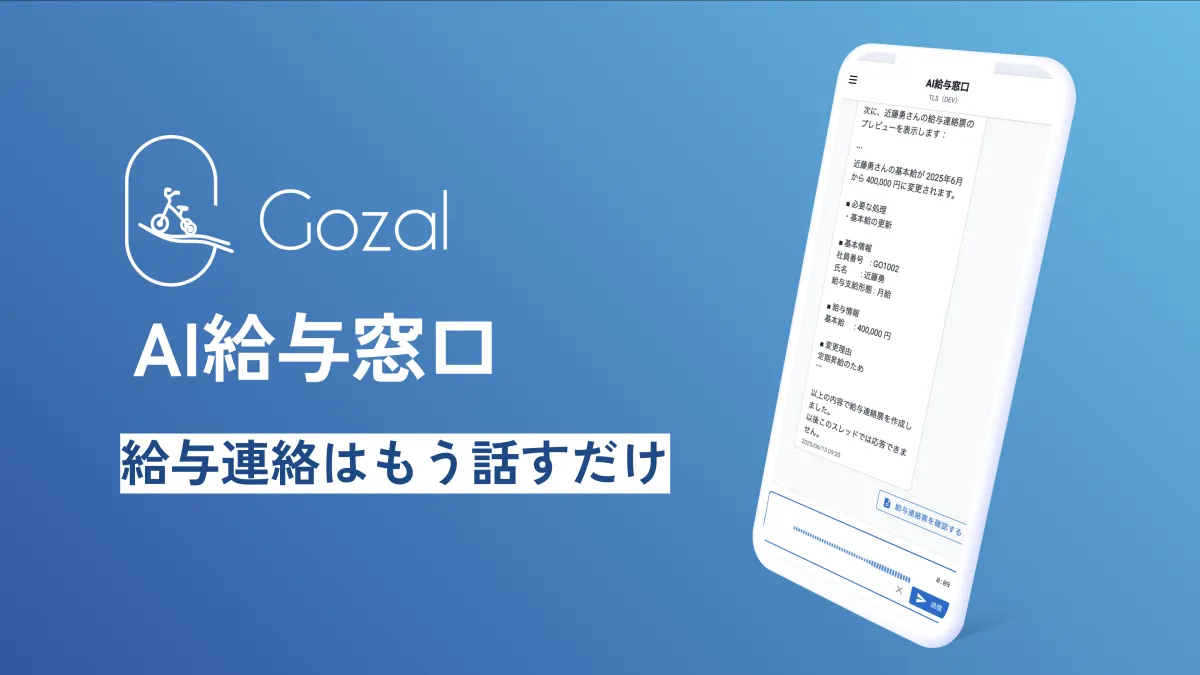
Introducing AI Payroll Window: Automating Payroll Communication with AI Technology
AI Payroll Window: Revolutionizing Payroll Communication
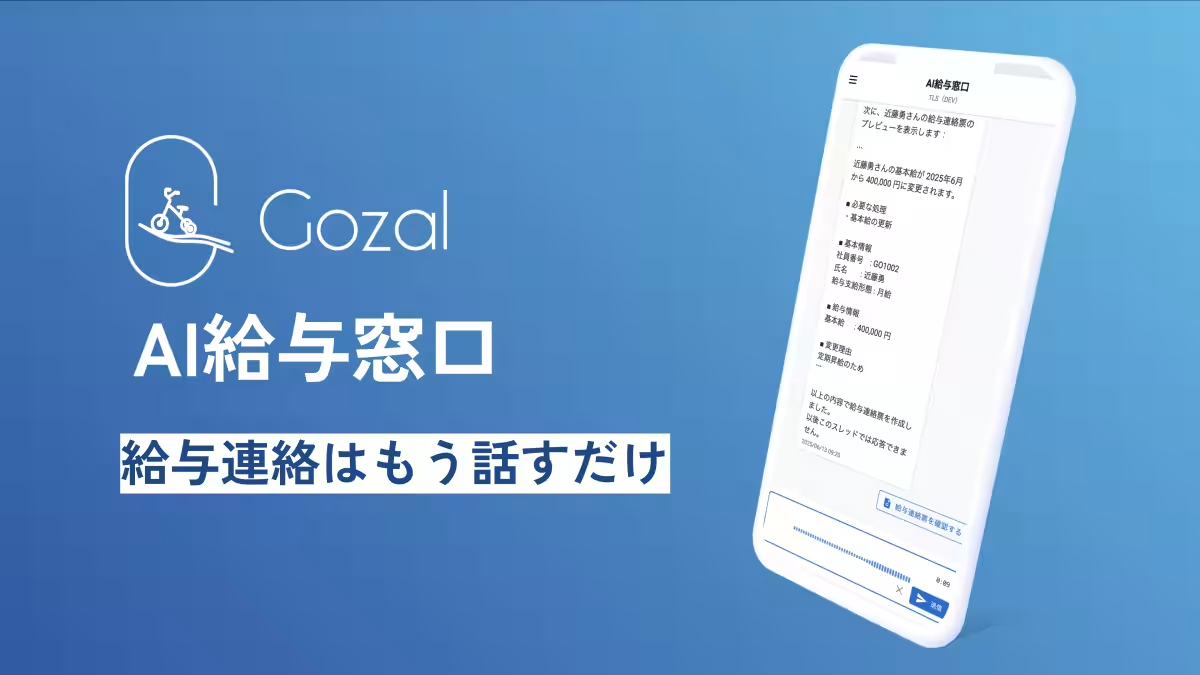
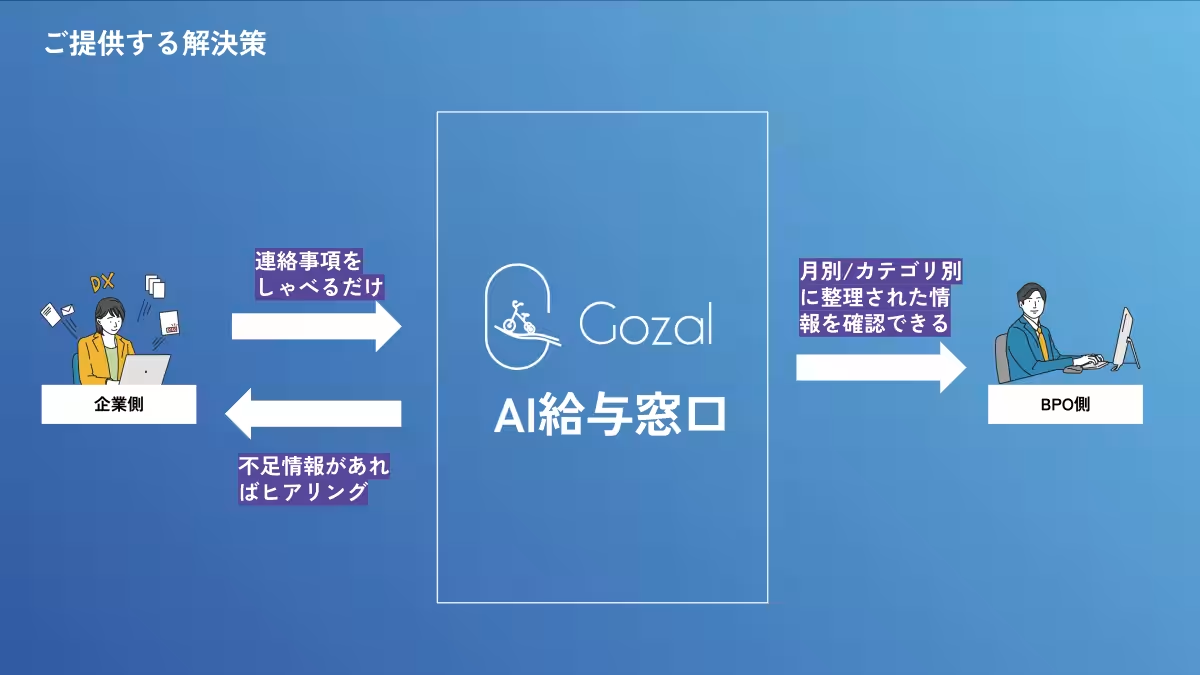
In a rapidly evolving digital landscape, Gozal Inc. has unveiled its innovative cloud service, AI Payroll Window, aimed specifically at labor and social security consultants (社労士) and BPO vendors. By harnessing the power of generative AI and large language models (LLMs), this service offers a seamless solution for managing payroll communication. Users can now communicate payroll information merely by speaking, making data organization and sharing streamlined and efficient.
Understanding the Innovation
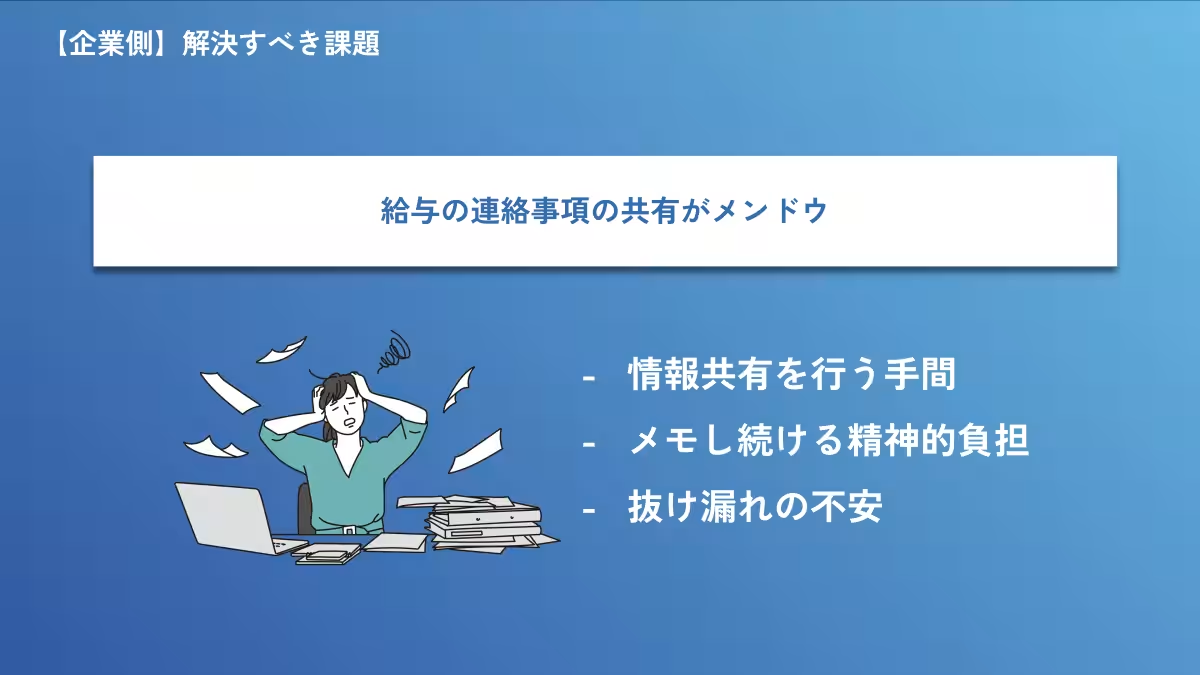
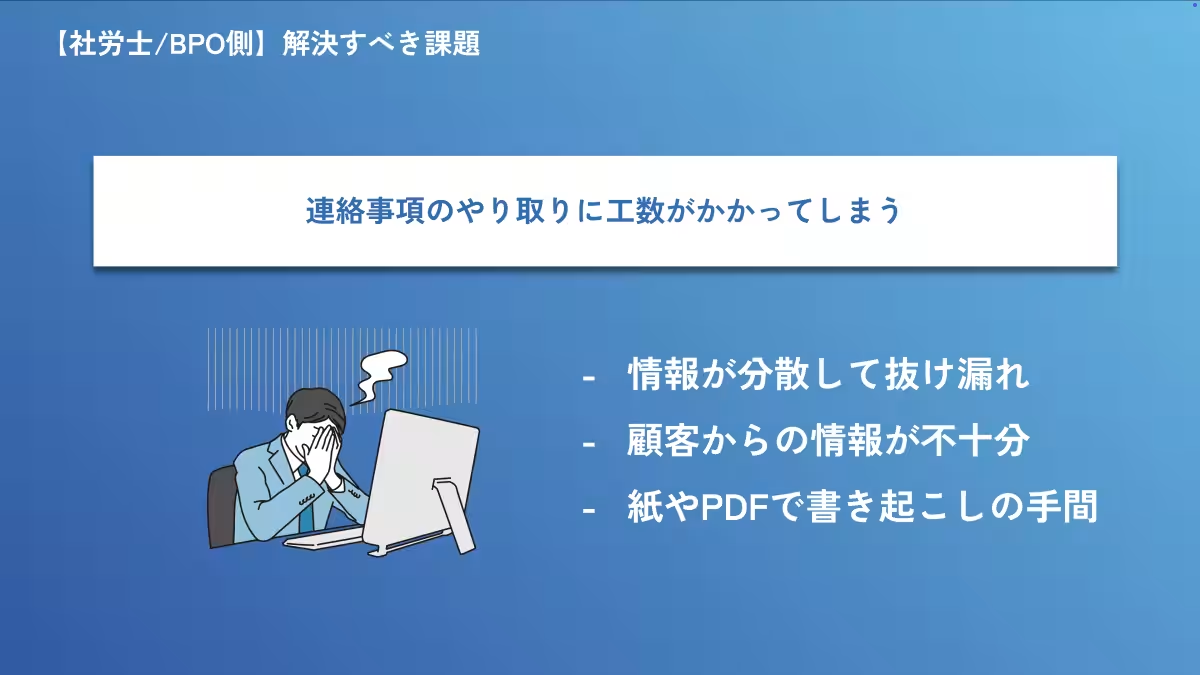
The introduction of AI Payroll Window address a significant issue within payroll processing. Organizing and sharing payroll-related communications often presents a formidable challenge, demanding substantial time and meticulous attention to detail. Gozal Inc. recognized this pain point and utilized its extensive expertise in payroll calculation and labor management, synchronizing it with cutting-edge AI technology to craft this pioneering service.
The beauty of the AI Payroll Window lies in its ability to interpret voice, text inputs, and image attachments. The AI not only comprehends diverse forms of communication but also automatically conducts follow-up queries when any information is incomplete. Consequently, the gathered insights are organized by months and categories, culminating in essential reports that can be rapidly shared with consultants and BPO vendors – all crucial components of effective payroll management.
Key Features
1. Voice Input Capability: Users can register payroll communications simply by speaking.
2. LLM Guided Information Collection: The system autonomously prompts for necessary additional details when needed.
3. Automated Organization: Communication records are arranged chronologically and categorically for effortless access.
4. Real-time BPO Collaboration: Ensures immediate sharing with consultants.
5. 24/7 Availability & Dashboard Access: Designed for usage flexibility at any time and from any location.
Advantages for Enterprises
With the AI Payroll Window, companies can expect a remarkable reduction of approximately 80% in the time spent on payroll communications, effectively minimizing human error and data omissions. This allows labor professionals to redirect their efforts toward more value-added tasks.
Insights from Leadership
CEO Motohisa Takaya shared his perspective on the importance of streamlining payroll processes: “Payroll calculations require aggregating a multitude of pieces of information, while also considering unique individual circumstances. Throughout conversations with many labor consultants and corporate HR representatives, it has become clear that the arduous task of structuring and conveying payroll-related communications often leads to mistakes. Our aim is to transform these workflows and enhance accuracy in payroll management.”
CTO Akihiro Kurose emphasized the innovative potential of AI: “Today’s AI can adeptly interpret vague information and organize it intelligently. We aspire to leverage this capability not just for simple automation, but to redefine the entire payroll processing experience. Many professionals still operate within a culture dominated by paper and phone communications. Thus, providing an engaging and user-friendly experience—where information is naturally organized through simple voice commands or file uploads—holds significant value.”
Customer Praise
Gozal’s dedication to enhancing the payroll communication process has garnered acclaim from existing users. Takayuki Hayashi, an esteemed labor consultant, remarked on the efficacy of AI Payroll Window as a unique service that digitalizes the last mile of analog communications. “In an era where digital transformation is paramount, the burden of remaining analog processes has felt heavier than ever. AI Payroll Window dismantles this final barrier, elevating our practices to minimize stress and maximizing efficiency,” he noted.
- ---
As organizations continue to evolve, the adoption of advanced tools like AI Payroll Window is poised to redefine payroll practices, drive productivity, and ultimately pave the way for a future where administrative burdens are significantly alleviated.
Topics Business Technology)
【About Using Articles】
You can freely use the title and article content by linking to the page where the article is posted.
※ Images cannot be used.
【About Links】
Links are free to use.