



V-CUBE Launches Disaster Prevention Tele-Cube on September 1st
Introduction
On September 1st, V-CUBE Co., Ltd. is set to launch its new "Disaster Prevention Tele-Cube" as part of its innovative corporate disaster management solutions. This initiative is aligned with Japan's Disaster Prevention Day and is informed by lessons learned from recent significant disasters.
The Concept of the Disaster Prevention Tele-Cube
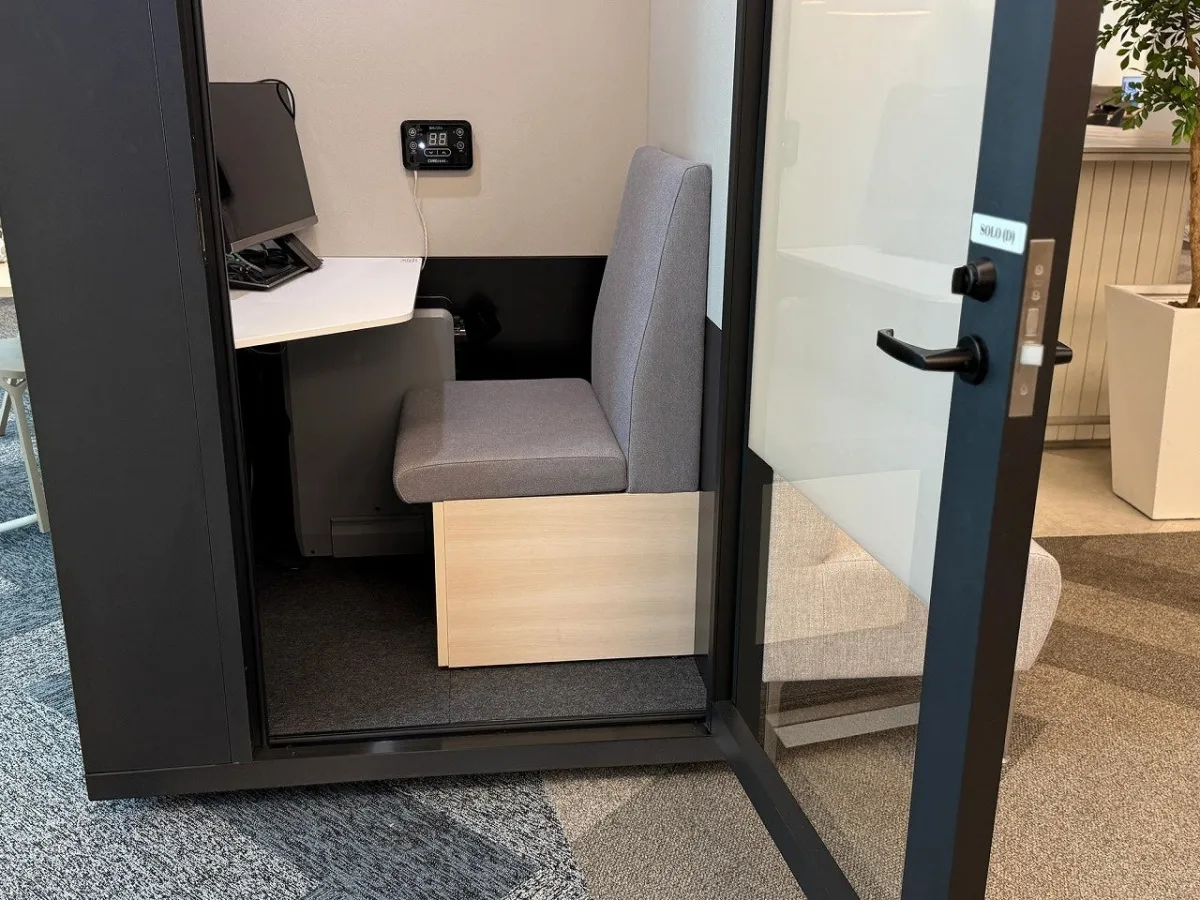
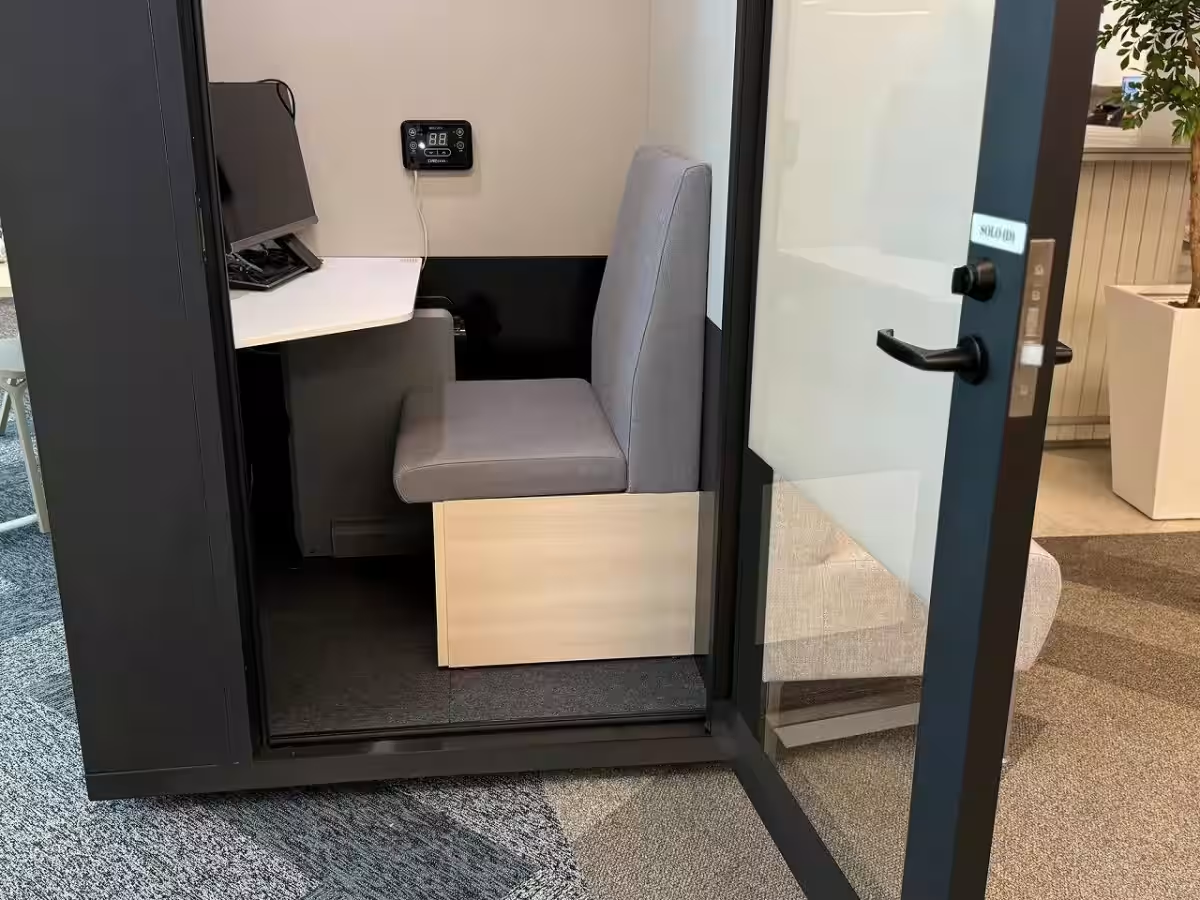
The Disaster Prevention Tele-Cube enhances the conventional soundproof meeting room by integrating essential features such as emergency power supply, storage for disaster supplies, privacy measures, and air conditioning. This allows companies to ensure communication channels and employee safety during crises, contributing to business continuity and employee assurance.
Background of the Launch
V-CUBE has been dedicated to addressing disaster risks through various solutions, including the free loan of Tele-Cubes for remote medical consultations during the Noto Peninsula earthquake, and creating cooling booths for outdoor workers in response to extreme summer heat. The company aims to tackle social issues through visual communication and utilizes its Tele-Cube to provide solutions for disaster preparedness. The timing of the launch coincides with Japan's Disaster Prevention Day, a vital opportunity for companies to reassess their business continuity plans (BCP) and disaster response protocols.
Key Challenges Addressed by the Tele-Cube
1. Exposure to Long-Term Power Outages: Extensive power outages and interruptions in communication infrastructure make it difficult for companies to maintain operations. Ensuring emergency power supply is crucial for minimal communication and subsequent recovery efforts.
2. Need for Privacy: In situations where employees cannot return home or need to wait in the office for extended periods, there is a demand for private spaces where they can rest, make safety calls, and change clothes comfortably.
3. Lack of Storage for Disaster Supplies: Many companies struggle with the challenge of securing storage space in the office for disaster kits and emergency power supplies.
Features of the Disaster Prevention Tele-Cube
The Disaster Prevention Tele-Cube expands the functionality of the existing Tele-Cube by offering standard and optional disaster preparedness features, thus providing enhanced value as a safety hub for employees during emergencies.
- - Emergency Power Supply: Unlike traditional methods of sourcing power, the Disaster Prevention Tele-Cube includes an inbuilt emergency power supply that allows charging of mobile phones and laptops during power outages, ensuring means of communication during critical moments.
- - Private Space: The design ensures soundproofing for private conversations and visual privacy, allowing employees to rest and handle calls without distractions.
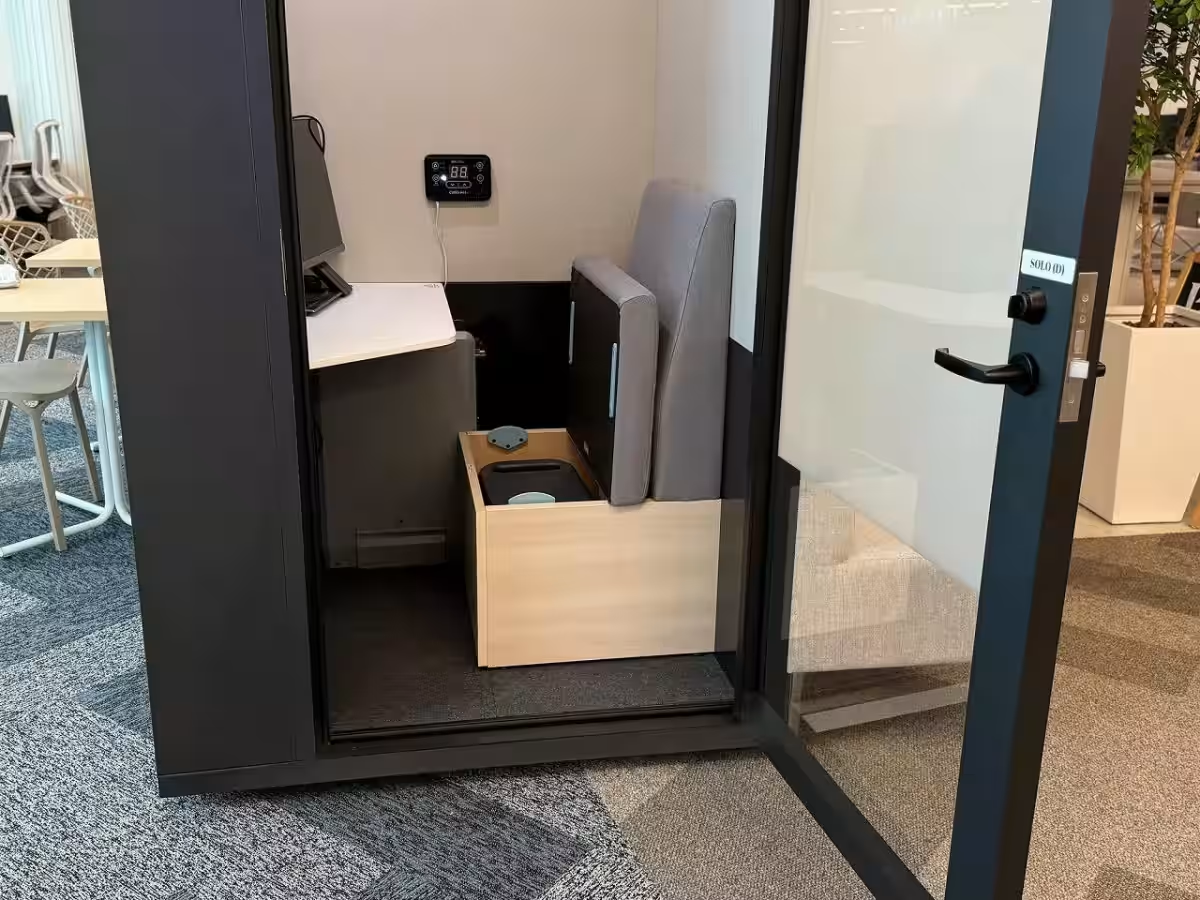
- - Efficient Storage: The Tele-Cube contains specialized storage for disaster kits, including sanitary items, portable toilets, and additional drinking water, capable of accommodating up to eight disaster kits within a compact space.
- - Heat Stroke Prevention: An air conditioning unit is incorporated to mitigate the risks associated with summer heat, thereby safeguarding employee well-being.
- - Dual-Use Design: During normal operations, the Tele-Cube serves as a soundproof meeting room and can be easily switched to a disaster preparedness unit in times of crisis, maximizing office space usage.
Future Developments
V-CUBE is committed to collaborating with businesses to develop solutions that enhance employee safety during disasters. The launch of the Disaster Prevention Tele-Cube marks the beginning of a broader initiative to expand their disaster preparedness solutions throughout the year, tailored to seasonal needs and varying types of disasters.
About V-CUBE
Established in 1998, V-CUBE has been a leading company in visual communication, offering services that adapt to various scenarios while striving for an equal society. With a mission to create equal opportunities, V-CUBE continuously tackles social issues such as demographic changes, long working hours, and disparities in education and healthcare, contributing toward a more equitable future for all.
Topics Business Technology)
【About Using Articles】
You can freely use the title and article content by linking to the page where the article is posted.
※ Images cannot be used.
【About Links】
Links are free to use.