



Vertex Collaborates with Osaka University on Underwater Reinforcement Scanner Development
Vertex and Osaka University Join Forces to Enhance Concrete Inspection Technology
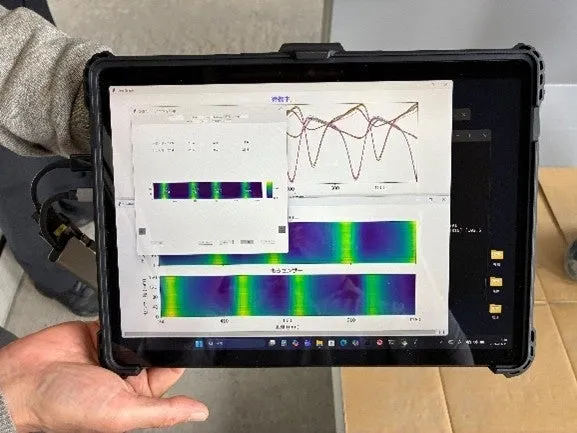
In a significant move towards advanced infrastructure maintenance, Vertex Corporation has partnered with Professor Daichi Chiba from Osaka University’s Institute of Industrial Science to embark on the development of a state-of-the-art reinforcement scanner for underwater exploration. The new device utilizes the innovative "Permanent Magnet Method" developed by Professor Chiba, which enables non-destructive, rapid, and precise visualization of the internal reinforcement status of concrete structures.
Addressing Infrastructure Challenges
Japan faces increasing challenges with infrastructure aging, particularly concerning concrete structures established during the economic growth era. Issues such as road subsidence have become a pressing concern for public safety. Effective prevention of such incidents necessitates accurate and rapid assessment of the internal condition of concrete, preferably through non-destructive methods.
The majority of concrete infrastructure in Japan, including those situated underground or underwater, functions in "moist environments" exposed to constant moisture. Traditional inspection methods often required drying the inspected areas, which has proved inefficient in accurately assessing structures submerged or enveloped in moisture. Some of the pertinent challenges associated with conventional inspection techniques include:
- - The necessity to halt functionality during inspections.
- - Extended time and costs associated with drainage activities.
- - Reduced measurement accuracy in wet conditions.
Additionally, the conventional electromagnetic wave radar method commonly employed in inspections is significantly impacted by moisture, making underwater scanning difficult and often slow when surveying extensive areas. Thus, maintaining efficiency and practicality in managing moisture-laden infrastructures presents a notable hurdle.
Innovative Features of the New Technology
Capabilities in Wet and Underwater Environments
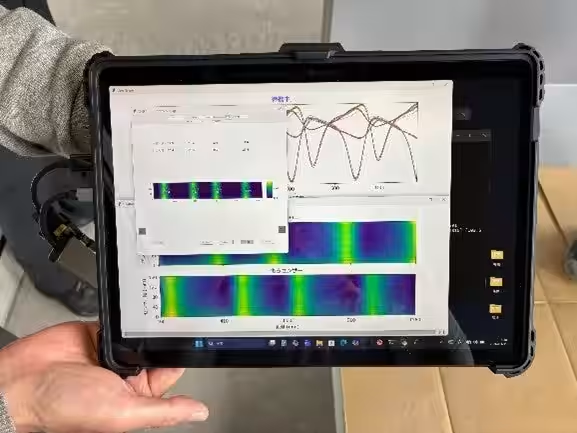
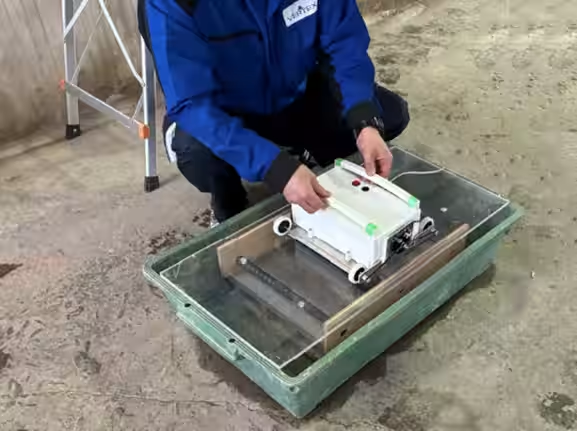
The new scanner adopts the "Permanent Magnet Method," which is minimally affected by water, allowing effective measurements under full and moist conditions. The technology can estimate critical parameters such as rebar positioning, cover thickness, and bar diameter even in challenging environments.
Efficient and Non-Destructive Exploration
By utilizing a scanning technique that runs along the surface of the concrete, this new technology can visualize the internal rebar configuration without causing any damage. Unlike traditional methods requiring extensive preparatory work, this approach promises to enhance the efficiency of inspections and diagnostics.
High-Precision Detection
Through the combination of permanent magnets and magnetic sensors, the technology can detect changes in the magnetic field surrounding the rebars, facilitating the estimation of their location and attributes. This feature notably differentiates it from the electromagnetic wave approach, which struggles under wet conditions.
Applications in Firewater Tank Inspections
The new technology holds tremendous potential in maintaining firewater tanks, an area where Vertex excels. Firewater tanks serve critical functions during emergencies, providing essential water sources when fire hydrants are inoperable. Their importance was starkly highlighted during incidents such as the Hanshin-Awaji Earthquake.
However, numerous on-site firewater tanks have seen over 50 years of service, necessitating regular and effective maintenance. Traditionally, inspections required draining the tanks, which is no longer necessary with the adoption of the new technology, leading to several anticipated benefits:
- - Internal conditions can be assessed without draining.
- - Firewater tank functionality is retained during inspections.
- - Time and costs associated with drainage tasks are minimized.
- - Enhanced efficiency and safety in inspection procedures.
This advancement will allow municipalities to maintain aging firewater tanks in a reliable state for utilization during critical situations.
Concept and Future Aspirations
The core concept of this technology is to visualize the internal structures of concrete without damaging the external integrity, thus facilitating enhanced efficiency and sophistication in maintenance practices. The collaboration between Vertex and Osaka University aims to dramatically evolve infrastructure management by streamlining maintenance processes.
Vertex is committed to addressing the entire lifecycle of infrastructure maintenance from investigation to management, ensuring that firewater tank operations remain effective. By utilizing this groundbreaking technology, the company strives for more efficient and reliable maintenance practices.
Future Developments
As the partnership continues, Vertex and Osaka University aim towards product commercialization within the current year. The scope of application for this technology extends beyond firewater tanks to encompass various infrastructural sectors, including sewage systems and tunnels. Through this innovation, the companies aspire to contribute to enhanced efficiency in infrastructure inspections, reduced maintenance costs, and sustained societal functionality during emergencies.
Contact Information
For inquiries regarding this development, please reach out to:
Vertex Corporation
TEL: 03-3556-0464
E-mail: [email protected]

Topics Consumer Products & Retail)
【About Using Articles】
You can freely use the title and article content by linking to the page where the article is posted.
※ Images cannot be used.
【About Links】
Links are free to use.