



Improving Reproducibility in Marine Biodegradability Testing for Plastics
Improving Reproducibility in Marine Biodegradability Testing for Plastics
To mitigate environmental impact from plastic waste, advances in biodegradable plastics are critical. However, their effectiveness must be rigorously evaluated in marine environments, where the possibility of pollution exists. The standard methods for assessing the biodegradability of plastics involve laboratory tests using actual seawater and sediments, which can lead to issues due to variability in microbial quantities and types depending on factors like sampling location and seasonal changes. This variability complicates achieving consistent results even for identical plastic materials. Therefore, understanding the type and amount of microorganisms present in the seawater used for these tests is vital for accurate interpretations.
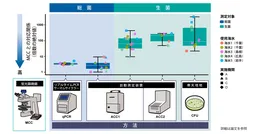
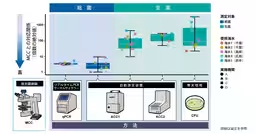
To address these challenges, a research team led by the National Institute of Technology and Evaluation (NITE) collaborated with Shizuoka Environmental Science Research Institute, National Institute of Advanced Industrial Science and Technology (AIST), and the Chemical Substance Evaluation Research Institute (CERI). Together, they investigated four key methods for measuring microbial quantities in seawater to determine which techniques are best suited for marine biodegradability assessments. The evaluated methods included:
1. Manual Cell Counting (MCC): This traditional method involves using a microscope to directly observe and count bacterial cells. It is well-established but may face challenges due to microbial clumping.
2. Automated Cell Counting (ACC): Similar to MCC, this technique employs automated machinery to count stained cells on a membrane filter, enabling rapid assessment.
3. Quantitative PCR (qPCR): This molecular technique quantifies genetic material concentrations in seawater samples, providing a stable measurement across different conditions.
4. Colony Forming Unit (CFU) Method: This low-cost method counts the number of microbial colonies developed on agar plates, which reflects viable, culturable organisms but may not represent the total microbial diversity.
The study demonstrated that MCC and qPCR provided robust and reproducible data across various seawater samples, making them appropriate choices for microbial quantification in marine biodegradability testing. They can serve as preliminary methods to ensure the reliability of results by establishing baseline microbial profiles before conducting biodegradability assessments.
In contrast, while ACC offers speed, its results may deviate in complex samples like seawater, which contains not only microorganisms but also various particulate matter that can interfere with counting accuracy. Refining measurement protocols could improve this method’s adaptability for seawater samples.
The CFU method, while straightforward, yielded variable results based on seawater composition, as it only reflects microorganisms capable of growth under laboratory conditions, which may not capture the full microbial community present in the marine environment.
Conclusively, proper evaluation of microbial quantities using suitable methods can significantly enhance the reproducibility of marine biodegradability tests. This will support more nuanced comparisons between materials and testing conditions beyond the binary outcomes of 'decomposed' or 'not decomposed.' Furthermore, as this study sets forth a guideline for optimal measurement techniques, it reinforces the connection between material design, decomposition trials, and standardization practices, ultimately bolstering marine biodegradability testing reliability in research and regulatory frameworks. The detailed findings of this research are published in the journal 'Bioscience, Biotechnology, and Biochemistry'.
References
- - For more insights into tackling marine plastic waste issues by NITE, visit their website.
- - The results are part of a project commissioned by NEDO to advance technological developments for implementing marine biodegradable plastics into society.
Topics Environment)
【About Using Articles】
You can freely use the title and article content by linking to the page where the article is posted.
※ Images cannot be used.
【About Links】
Links are free to use.