



Okayama University Engages with MEXT to Discuss Future of Regional Healthcare and Research Management
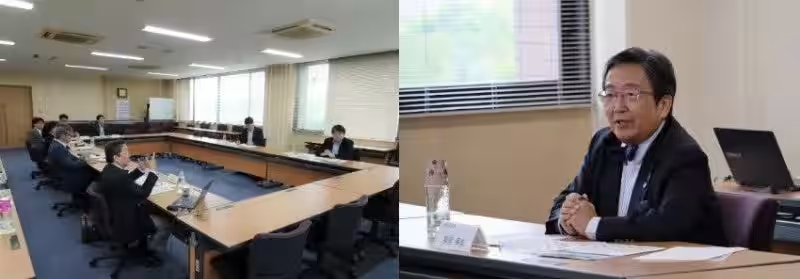
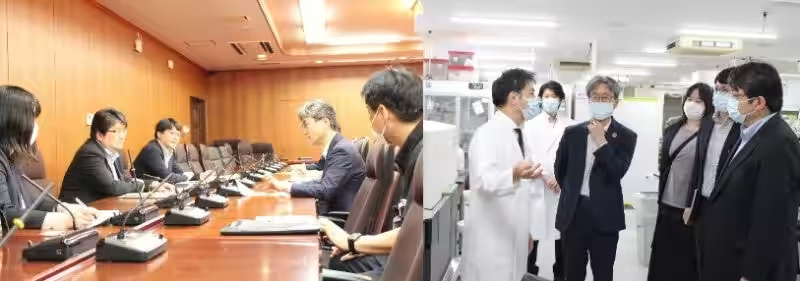
On September 26, 2025, Okayama University hosted a significant meeting involving Takubo Senzaki, the Director of the Ministry of Education, Culture, Sports, Science and Technology's (MEXT) Higher Education Bureau, and Hirokazu Kobayashi, a legislative officer in the same bureau. The visit aimed to discuss various strategic initiatives surrounding the development of research management personnel and the future of regional healthcare. President Yasutomo Nasu led the discussions, joined by key figures from the university, including Masanori Kawamoto, the Director of the Research and Innovation Collaborative Institute, and senior URAs (University Research Administrators).
As part of its ongoing commitment to enhancing its research capabilities, Okayama University is leveraging the support provided by MEXT through the J-PEAKS initiative (Promoting Strengthening of Regional Core and Characteristic Research Universities) in collaboration with the Japan Society for the Promotion of Science. This project serves as a framework to achieve the long-term vision set forth by the university by fostering a strategy to integrate innovative practices across various departments.
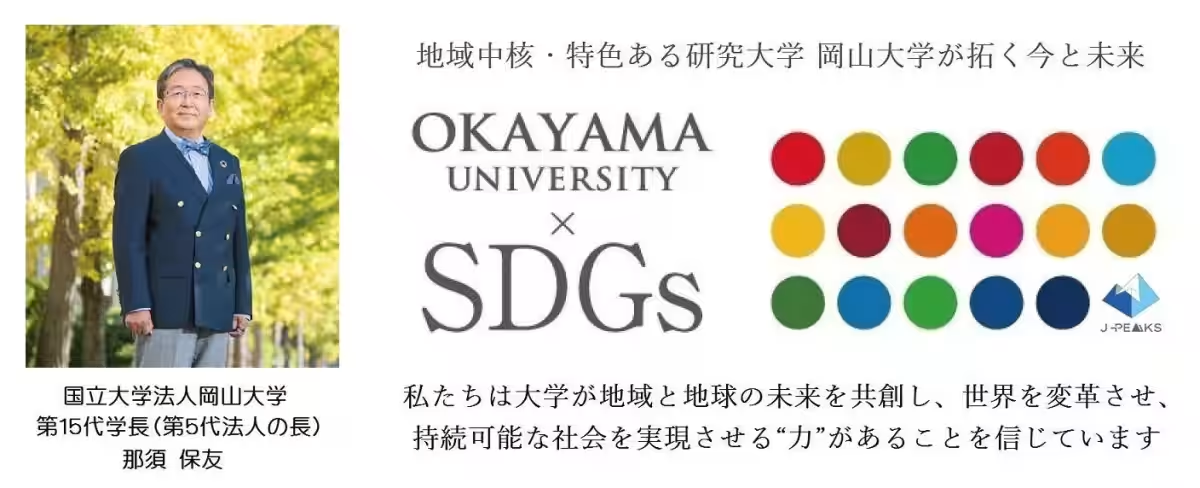
During the discussions, President Nasu explained their efforts in embedding the J-PEAKS initiative within the university’s activities, highlighting the proactive engagement through lectures and dialogues intended for all staff members. Topics discussed included strategies for institutional reform under J-PEAKS, organization and skill enhancement of technical staff, development of URAs, and ensuring access to higher education for decreasing youth demographics.
Starting in 2023, Okayama University initiated a comprehensive technical department to centralize personnel management and focus on resource allocation. Future plans include fostering talent circulation through personnel exchanges with other universities and companies, aiming to establish an environment where mutual learning can thrive. The significance of internal development for URAs was also brought up, emphasizing the necessity to attract upcoming talent. The university plans to promote the careers of technicians and URAs to doctoral students as well as undergraduate and high school students in the region—capturing their interest early on regarding future employment options.
Senzaki introduced the Advanced Placement program from the United States, which allows high school students to immerse themselves in college-level studies and emphasized the importance of targeted educational collaborations with high schools. The university explained its partnerships with local technical colleges as part of its endeavors to remain a competitive choice for prospective students, acknowledging demographic challenges.
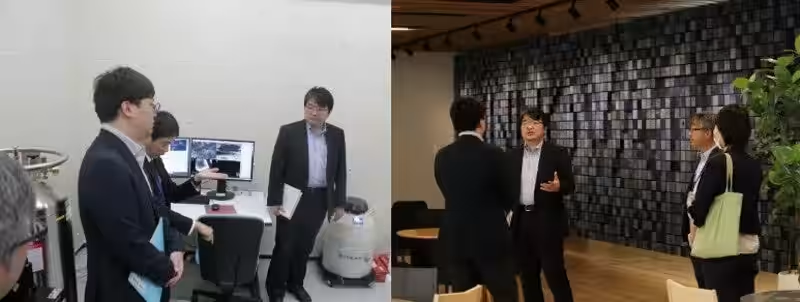
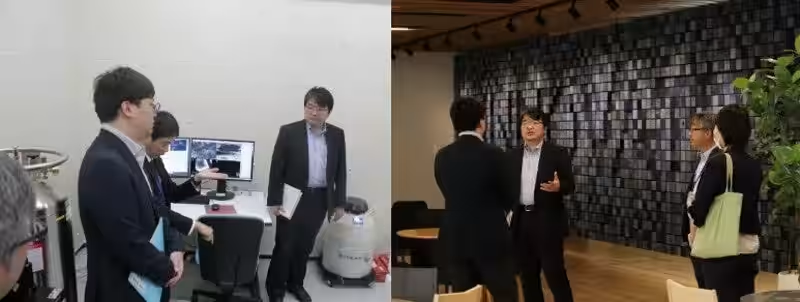
Following the talks, the delegates visited the Interdisciplinary Basic Science Research Institute and the KIBINOVE (Co-Creation Innovation Lab), where they observed cutting-edge facilities, including cryo-electron microscopes and cryo-electron tomography, with explanations from Associate Professor Osamu Numamoto on the equipment and its availability for shared use. Senzaki expressed his amazement that the booking for the cryo-electron microscope was full for three months and voiced anticipation for the upcoming shared usage of cryo-electron tomography in November.
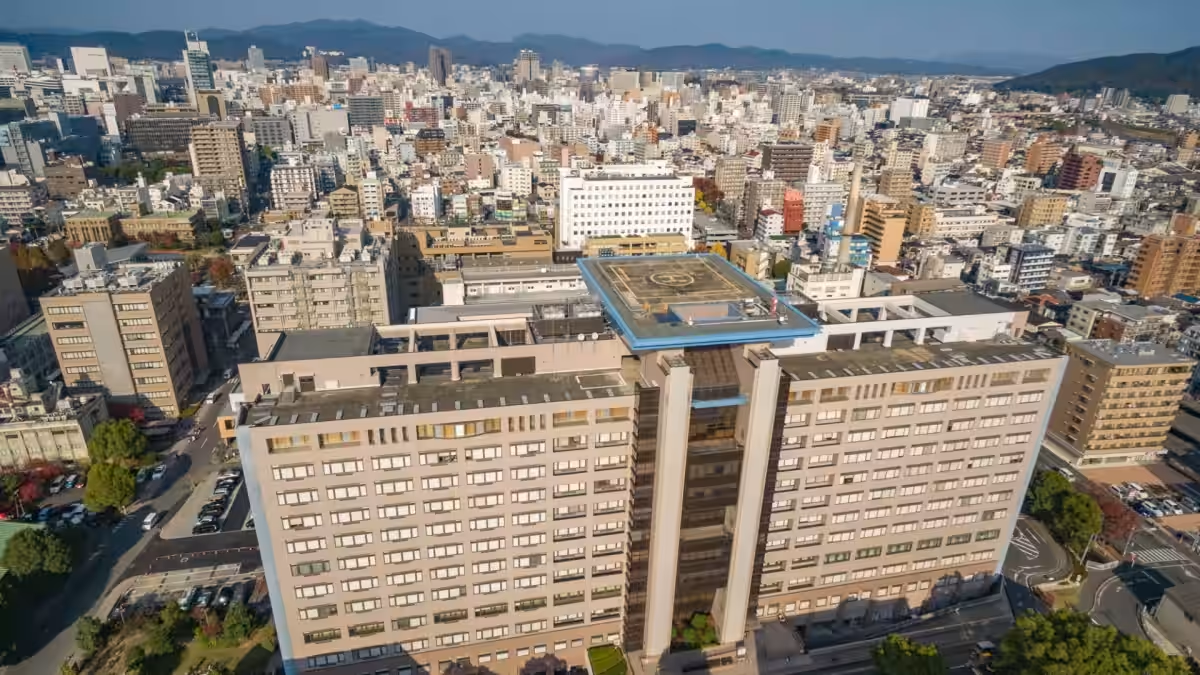
Transitioning to the Kadai Campus, Senzaki and Umeda Toshiko from the Higher Education Bureau’s Medical Education division toured Okayama University Hospital, engaging in discussions with Hospital Director Yoshinobu Maeda and other faculty regarding current hospital initiatives and the wider financial challenges faced by national university hospitals. Visits to the Genomic Medicine Comprehensive Promotion Center and ICU facilities further facilitated insight into the status of medical equipment and service capabilities, culminating in dialogues regarding infrastructural upgrades amid heightened focus on maintaining operational efficiency within aging facilities.
Senzaki highlighted the pivotal role university hospitals play in regional healthcare and the training of the next generation of medical professionals, urging explorations for support frameworks in this challenging landscape. Harnessing the J-PEAKS initiative, Okayama University is committed to the advanced development of research management personnel and shared facilities, which are deemed vital for inspiring innovation that can drive societal transformations.
As the leading research university in the region, Okayama University encourages the public to stay tuned for its ongoing breakthroughs and commitment to fostering a sustainable future through education and collaborative research.
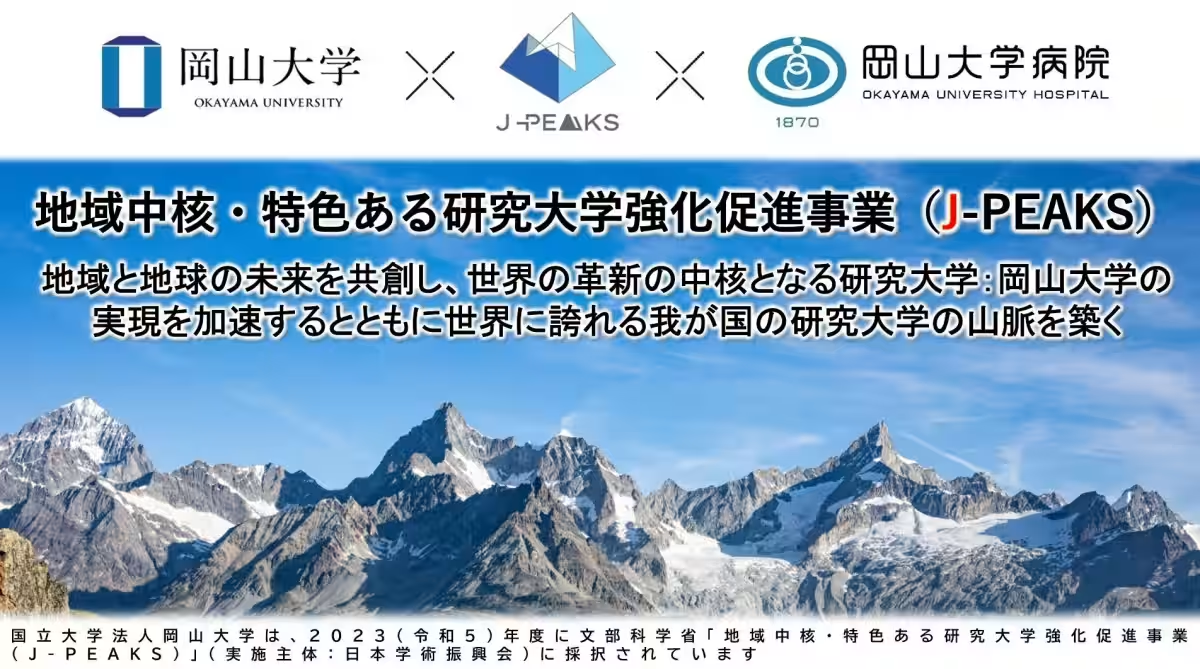
As part of its ongoing commitment to enhancing its research capabilities, Okayama University is leveraging the support provided by MEXT through the J-PEAKS initiative (Promoting Strengthening of Regional Core and Characteristic Research Universities) in collaboration with the Japan Society for the Promotion of Science. This project serves as a framework to achieve the long-term vision set forth by the university by fostering a strategy to integrate innovative practices across various departments.
During the discussions, President Nasu explained their efforts in embedding the J-PEAKS initiative within the university’s activities, highlighting the proactive engagement through lectures and dialogues intended for all staff members. Topics discussed included strategies for institutional reform under J-PEAKS, organization and skill enhancement of technical staff, development of URAs, and ensuring access to higher education for decreasing youth demographics.
Starting in 2023, Okayama University initiated a comprehensive technical department to centralize personnel management and focus on resource allocation. Future plans include fostering talent circulation through personnel exchanges with other universities and companies, aiming to establish an environment where mutual learning can thrive. The significance of internal development for URAs was also brought up, emphasizing the necessity to attract upcoming talent. The university plans to promote the careers of technicians and URAs to doctoral students as well as undergraduate and high school students in the region—capturing their interest early on regarding future employment options.
Senzaki introduced the Advanced Placement program from the United States, which allows high school students to immerse themselves in college-level studies and emphasized the importance of targeted educational collaborations with high schools. The university explained its partnerships with local technical colleges as part of its endeavors to remain a competitive choice for prospective students, acknowledging demographic challenges.
Following the talks, the delegates visited the Interdisciplinary Basic Science Research Institute and the KIBINOVE (Co-Creation Innovation Lab), where they observed cutting-edge facilities, including cryo-electron microscopes and cryo-electron tomography, with explanations from Associate Professor Osamu Numamoto on the equipment and its availability for shared use. Senzaki expressed his amazement that the booking for the cryo-electron microscope was full for three months and voiced anticipation for the upcoming shared usage of cryo-electron tomography in November.
Transitioning to the Kadai Campus, Senzaki and Umeda Toshiko from the Higher Education Bureau’s Medical Education division toured Okayama University Hospital, engaging in discussions with Hospital Director Yoshinobu Maeda and other faculty regarding current hospital initiatives and the wider financial challenges faced by national university hospitals. Visits to the Genomic Medicine Comprehensive Promotion Center and ICU facilities further facilitated insight into the status of medical equipment and service capabilities, culminating in dialogues regarding infrastructural upgrades amid heightened focus on maintaining operational efficiency within aging facilities.
Senzaki highlighted the pivotal role university hospitals play in regional healthcare and the training of the next generation of medical professionals, urging explorations for support frameworks in this challenging landscape. Harnessing the J-PEAKS initiative, Okayama University is committed to the advanced development of research management personnel and shared facilities, which are deemed vital for inspiring innovation that can drive societal transformations.
As the leading research university in the region, Okayama University encourages the public to stay tuned for its ongoing breakthroughs and commitment to fostering a sustainable future through education and collaborative research.
Topics Other)
【About Using Articles】
You can freely use the title and article content by linking to the page where the article is posted.
※ Images cannot be used.
【About Links】
Links are free to use.