



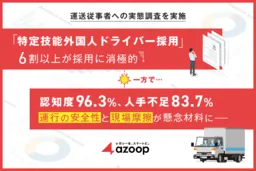
Azoop's Survey Reveals Challenges in Hiring Foreign Drivers Amid Labor Shortage in Japan
Azoop's Survey Insights on Foreign Driver Recruitment
A recent survey conducted by Azoop, a logistics company based in Minato, Tokyo, has shed light on the complexities of hiring foreign drivers under Japan's newly established special skills system. This survey targets the realities faced by transportation professionals and reveals a dichotomy between awareness and action regarding the foreign driver hiring initiative.
Survey Background
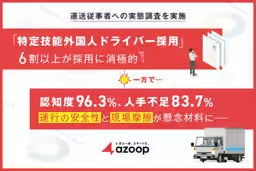
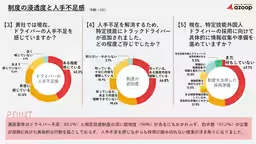
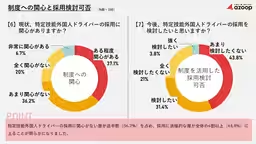
In December 2024, Japan introduced a new special skill system allowing foreign drivers to work in the logistics sector to combat its severe labor shortage. The program allows companies to recruit foreign talent capable of driving, provided they meet certain language and driving proficiency requirements. Despite 96.3% awareness of this program among the surveyed transportation workers, it was striking that more than 64.8% of these companies showed hesitance towards hiring foreign drivers.
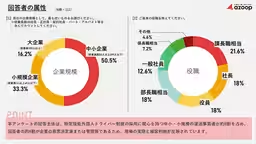
The survey included answers from 111 logistics operators, predominantly small to medium-sized enterprises, and revealed significant concerns around safety and cultural differences. Despite a high perception of the demand for labor, many companies are still hesitant to make concrete steps towards hiring foreign workers.
Key Findings
High Awareness with Low Engagement
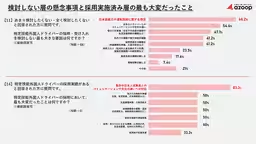
Although 96.3% of respondents acknowledge the special skill program, nearly half of the companies stated they had not yet taken any steps to enact foreign driver recruitment. This highlights a critical gap where acknowledged demand for drivers does not translate into action. The predominant hesitation comes from fears surrounding the performance and adaptability of non-Japanese drivers, particularly concerning Japanese language skills and driving competencies.
Safety and Workplace Concerns
Over 60% of companies expressed reservations about hiring foreign drivers, citing concerns about safety and potential workplace friction. Many were especially worried about the communication barriers that may arise between existing Japanese drivers and newly hired foreign drivers. The alignment of priorities towards safety within the industry is evident, emphasizing that companies are unwilling to compromise safety standards.
Reasons for Recruitment Hesitance
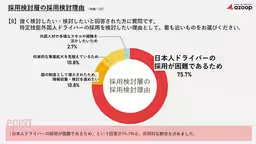
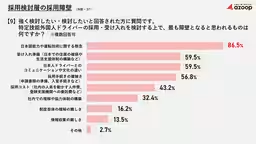
Among those contemplating the hire of foreign drivers, approximately 80% pointed to the difficulty of recruiting Japanese drivers as a primary factor motivating their exploration of hiring under the new system. Other referrals for interest included future business expansion and the desire to diversify skills, but these were significantly less common motivations.
Calls for Support
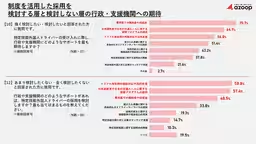
Both hesitant companies and those considering hiring foreign drivers indicated a strong demand for support from administrative and assistance organizations. The top three requests from the survey included financial assistance such as subsidies, educational programs aimed at improving language skills and familiarity with Japanese traffic regulations, and legal support in case of issues arising during employment.
Challenges in Procedures and Integration
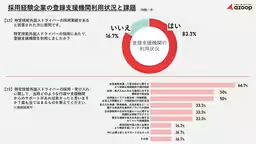
Companies that have experience hiring foreign drivers noted complications in administrative processes, particularly with visa applications and residency permissions. The complexities involved have compounded the hiring difficulties faced by logistics companies.
Conclusion
The data provided by Azoop's survey emphasizes a stark reality: while there is considerable awareness of the foreign driver visa program, actionable recruitment efforts are significantly lacking due primarily to safety concerns, communication barriers, and a reluctance to adapt existing organizational structures. The results suggest that for the special skill system to succeed in alleviating Japan's labor shortage, it will require a concerted effort from the government, support institutions, and logistics companies to address these concerns collaboratively.
Azoop is keen on supporting logistics organizations through its human resource programs, notably addressing the urgent need for sustainable solutions in the driver market. As the logistics sector remains critical to the economy, establishing a trustworthy workforce is an imperative challenge that requires immediate action.
Through initiatives like the Truckers Job service, Azoop aims to provide quality driver recruitment services to help companies navigate through the hiring maze, ensuring both foreign and Japanese driver placements have conducive working conditions.
Topics Consumer Products & Retail)
【About Using Articles】
You can freely use the title and article content by linking to the page where the article is posted.
※ Images cannot be used.
【About Links】
Links are free to use.