



Harnessing Bush Basil's Aroma to Boost Plant Defense Mechanisms for Sustainable Agriculture
Enhancing Plant Defense with Bush Basil
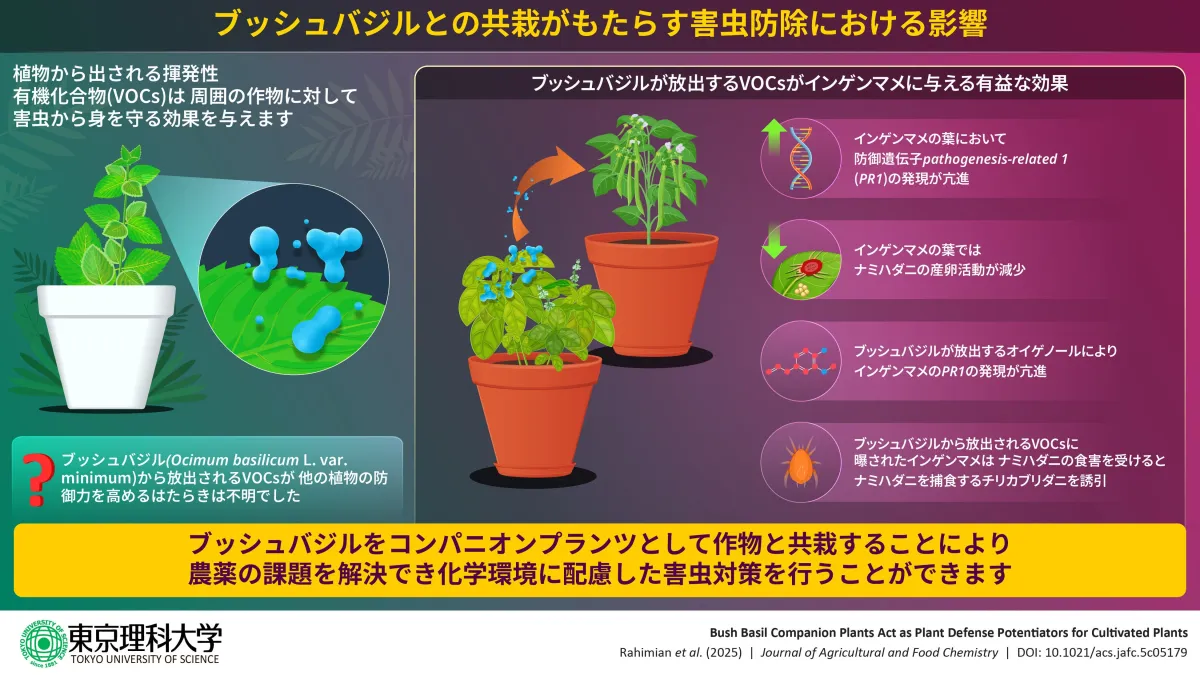
Recent research has highlighted the extraordinary potential of bush basil to bolster the defensive traits of plants, particularly green beans, through aroma communication. This phenomenon, termed 'Talking Plants,' suggests that plants can communicate distress signals via specific scent compounds, thereby enhancing the resistance of neighboring plants to pests.
Overview of the Research
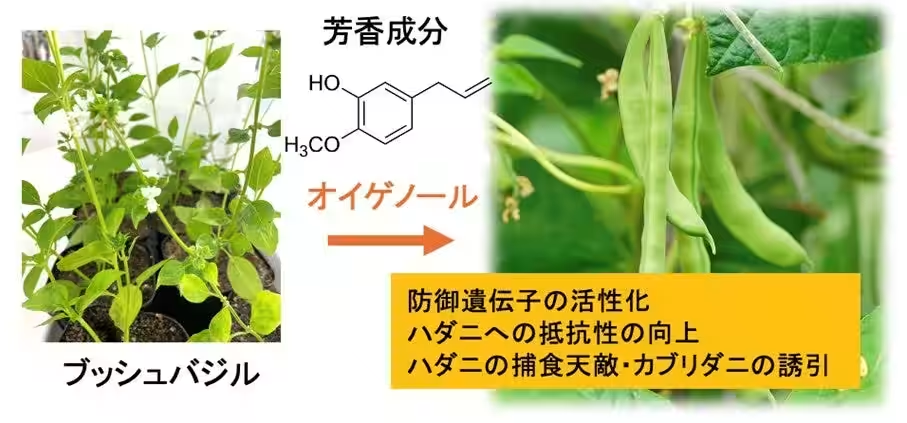
A team led by Professor Gen-ichiro Arimura at Tokyo University of Science's Department of Advanced Engineering has observed that the scent released by bush basil, particularly the compound eugenol, activates defense genes in green beans, increasing their resistance to the notorious pest spider mites. Furthermore, the research indicates that this scent also attracts natural predators of pests, such as predatory mites.
Significance of the Findings
The discovery that plants can subtly communicate through their scents opens the door for innovative agricultural techniques that are both cost-effective and environmentally friendly. Researchers believe that harnessing the defensive network established by Talking Plants can lead to the development of new organic farming techniques, significantly reducing reliance on chemical pesticides while promoting sustainable farming practices.
Historical Context
Historically, aromatic herbs, such as mint, have been renowned for their insect-repelling properties. Recent studies reinforce the importance of volatile organic compounds (VOCs) in enhancing the defense capabilities of nearby crops. For example, it has been noted that growing soybeans or pak choi near candy mint can activate defense genes and significantly increase their resistance to pests.
In essence, the scent components of these herbs do much more than repel pests; they facilitate communication between plants, helping them defend against threats together. This inter-plant communication is central to the concept of Talking Plants, which illustrates how certain plants can serve as companion plants, enhancing growth and protection against pests when grown together.
The Research Findings
To delve deeper into this inter-plant communication, the research focused on bush basil and its interaction with green beans. Initial screenings identified bush basil as a prime candidate due to its efficacy in boosting the defensive capabilities of green beans.
When bush basil was planted alongside green beans, researchers observed a significant increase in the expression of pathogenic-related proteins (PR-1), which are crucial for pest defense. This heightened expression can last for up to seven days, demonstrating not just a temporary boost in defense mechanisms but a potential lasting impact on crop health.
Further analyses revealed that bush basil emits two primary VOCs: linalool and eugenol, with eugenol being unique to bush basil. When eugenol was exposed to green beans in controlled experiments, it triggered a notable increase in the activation of defense genes, specifically in the signalling pathway known as the salicylic acid pathway.
Practical Application
Experiments also involved placing spider mite females on the leaves of green beans grown in proximity to bush basil versus those grown alone. The results were illuminating: green beans adjacent to bush basil not only showed significantly fewer spider mite eggs laid but also demonstrated enhanced resistance to spider mite attacks.
Moreover, in Y-tube olfactometry experiments, green beans infested with spider mites were found to attract predatory mites more effectively when grown near bush basil. Hence, the VOCs from bush basil function on two levels: enhancing the activation of green bean defense genes while simultaneously attracting natural pest predators.
Future Directions
Professor Arimura states, “This research aims to accumulate scientific insights into making the Talking Plants phenomenon viable for actual farming, paving the way for pest control strategies that exert minimal environmental impact.”
This research contributes significantly to the ongoing dialogue surrounding sustainable agriculture, emphasizing the importance of exploring natural, chemical-free pest deterrents. The findings were published online on July 4, 2025, in the Journal of Agricultural and Food Chemistry.
Funding and Support
This study was supported by grants from the Japan Society for the Promotion of Science (JSPS) and was conducted as part of collaborative programs with Okayama University's Institute of Plant Resources Science.
Conclusion
The study of how bush basil communicates through scent to enhance green bean resistance serves as a testament to nature's intrinsic methods of coexistence and defense. As researchers continue to unravel the complexities of plant communication, the practical implications for sustainable agriculture are both promising and exciting.
Topics Consumer Products & Retail)
【About Using Articles】
You can freely use the title and article content by linking to the page where the article is posted.
※ Images cannot be used.
【About Links】
Links are free to use.