



Japan Airlines Files for International Cargo Fuel Surcharge Effective September 2025
Japan Airlines Files for New International Cargo Fuel Surcharge
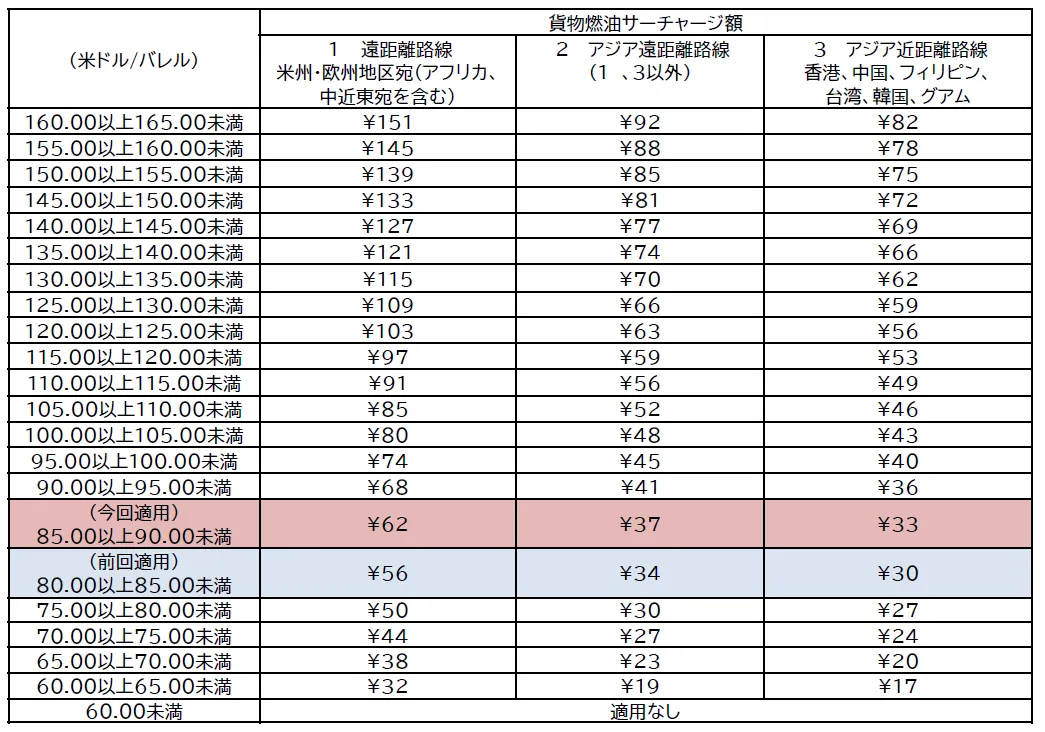
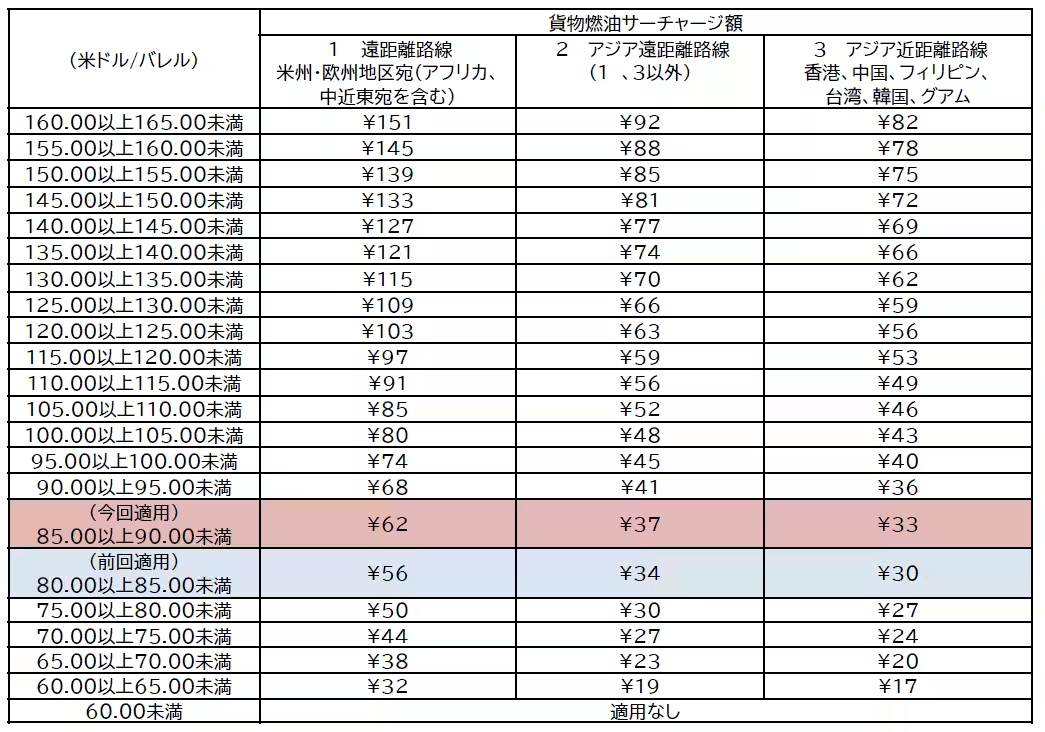
On August 21, 2025, Japan Airlines (JAL) submitted an application to the Ministry of Land, Infrastructure, Transport and Tourism for a revised international cargo fuel surcharge, which will take effect from September 1, 2025. This decision is based on the average price of jet fuel for July 2025, which stood at $87.16 per barrel.
The proposed fuel index price range is set between $85.00 and $90.00 per barrel. As a result, the surcharge structure is as follows:
- - ¥62 per kg for long-distance routes, including regions such as North America and Europe.
- - ¥37 per kg for long-distance routes to Asia.
- - ¥33 per kg for short-distance routes within Asia.
JAL aims to revise the international cargo fuel surcharge every month, totaling twelve adjustments a year. The surcharge amount for each month will be determined using the average price of jet fuel (kerosene) traded in Singapore for the month prior to the assessment. This system was introduced starting in April 2024 and will be reflected in a designated surcharge table, which outlines specific costs based on market conditions.
Implications of the New Surcharge
The implementation of this new fuel surcharge reflects not only the fluctuating costs associated with jet fuel but also JAL's commitment to maintaining transparency and operational efficiency in its cargo services. With global travel and trade continuing to evolve, the airline recognizes the importance of adapting to changing economic conditions while still providing reliable service to its customers.
Monitoring Fuel Prices
As jet fuel prices remain volatile in the global market, JAL emphasizes the necessity of this surcharge to ensure sustainability in its cargo operations. By adjusting the surcharge on a monthly basis and linking it to the average market prices, the airline is better positioned to absorb fluctuations in fuel costs without significantly impacting its cargo pricing strategy in the long run.
In essence, JAL’s approach aims to balance cost management and service reliability in the highly competitive international freight market. This move also underscores the importance of strategic pricing for businesses that rely on air cargo services for their logistics needs.
Future Considerations
Looking ahead, JAL will continue to monitor fuel prices closely and may adjust its surcharge policy as necessary. The airline is also exploring alternative fuel sources and looking into sustainability initiatives to lessen the environmental impact of its operations.
With this commitment, JAL is dedicated to not only delivering goods across the globe efficiently but also aligning with broader environmental goals. The implementation of this new surcharge marks another step in that direction, allowing the airline to remain competitive while adhering to principles of sustainability and operational excellence.
Topics Consumer Products & Retail)
【About Using Articles】
You can freely use the title and article content by linking to the page where the article is posted.
※ Images cannot be used.
【About Links】
Links are free to use.