



Innovative Wearable Technology to Prevent Heat Stroke at Construction Sites
Ensuring Safety in Construction: GenVital LTE Implementation
Asahi Kogyo Co., Ltd., headquartered in Minato, Tokyo, is taking a proactive step towards enhancing the safety of its workers in response to rising temperatures and the increased risk of heat-related illnesses, specifically heat stroke. Beginning in May 2026, the company will implement a cutting-edge health management system using the wearable device, GenVital LTE, targeting around 500 employees from partner companies involved in construction work.
This initiative is particularly timely, as during the month following the start of operation, real-time monitoring of vital data will facilitate timely intervention for early breaks before symptoms manifest, significantly improving safety protocols at work sites. As the peak of summer approaches, the company aims to bolster its safety management systems further and is considering expanding the program across all operational sites after evaluating its effectiveness and challenges encountered during the initial rollout.
Background of the Initiative
The construction industry has one of the highest incidences of heat stroke-related injuries and fatalities. As such, immediate attention to mitigating these risks is crucial. Construction sites, particularly in air conditioning and sanitation installations, often present challenging working conditions, including poorly ventilated areas like machine rooms and ceilings, which can exacerbate the risks associated with working in extreme heat.
In recent years, Asahi Kogyo has adopted several fundamental measures to combat heat stroke, including enforcing work restrictions based on WBGT (Wet Bulb Globe Temperature) readings, installing large blowers, and ensuring adequate salt and fluid intake among workers. They've mandated the use of cooling vests for all employees and established a “Heat Stroke Management Sheet” for daily checks of breakfast consumption and sleep quality, providing personalized oversight of each worker’s health. This summer, the company is intensifying its comprehensive efforts by introducing GenVital LTE, allowing for real-time visualization of individual physical stress levels. By combining analog methods with digital innovations, an effective layered safety management system will be established.
Expected Outcomes from Implementation
- - Detection of Early Warning Signs: The system detects rising physical stress and provides real-time alerts, prompting early breaks before heat stroke can occur.
- - Prevention of Serious Cases: Through timely interventions, the program aims to eliminate incidents of heat stroke or serious complications at the implemented sites.
- - Increased Management Efficiency: Utilizing remote monitoring to streamline the time spent by site managers on safety checks will enhance overall operational efficiency.
Future Prospects
Guided by its Sustainability Policy, Asahi Kogyo is dedicated to fostering a work environment where individuals can operate safely and thrive. Moving forward, the data accumulated from this system will be analyzed and utilized in collaboration with partner companies, contributing to the development of a 'sustainable construction site' that balances enhanced safety with productivity.
About GenVital LTE
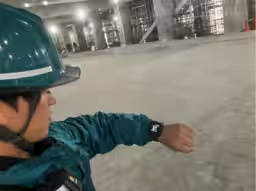
The GenVital LTE system, developed by GRIFFY, is a wristband device that collects workers' heart rates and location data, alongside their age and the WBGT index on-site. Using a health management assessment algorithm, it calculates the heat stroke risk for each worker. When risk indicators exceed a specified threshold, instant alerts are dispatched to both the worker and their supervisor. This proactive mechanism allows for early detection of potential issues, improving safety and reducing the workload associated with monitoring.
About Asahi Kogyo Co., Ltd.
Founded in 1925, Asahi Kogyo is committed to creating optimal environments based on advanced technology in air, water, and heat management. The company engages in equipment construction and manufacturing operations, designing and executing HVAC and sanitation systems for various facilities, including factories, research labs, and data centers. Their expertise extends to developing precision environmental control devices for semiconductor and LCD manufacturers, demonstrating a steadfast commitment to creating comfortable and optimal spaces.
Topics Consumer Products & Retail)
【About Using Articles】
You can freely use the title and article content by linking to the page where the article is posted.
※ Images cannot be used.
【About Links】
Links are free to use.