



Exploring the Distinctive Growth Trajectories of High-Growth Companies at CES Keynote
Understanding the High-Growth Companies Through CES Keynote Analysis
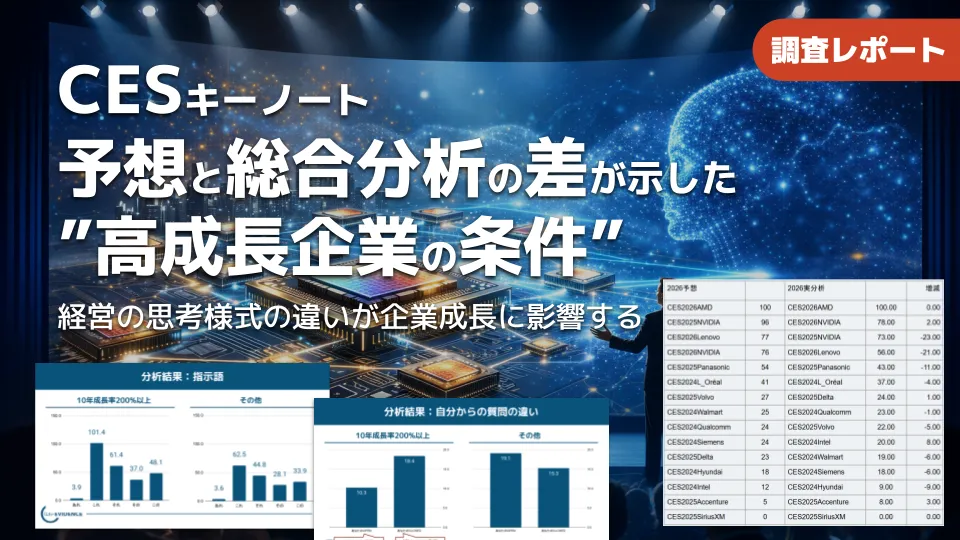
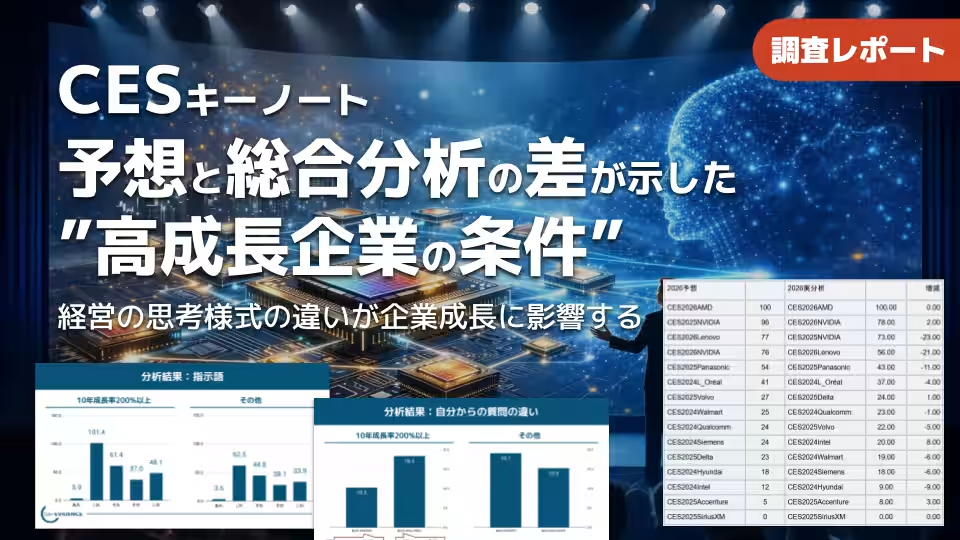
Cognitee Inc., based in Shinagawa, Tokyo, has utilized advanced knowledge representation AI to visualize organizational challenges through conversation and written data. Their latest study focuses on the Keynote speeches delivered by corporate leaders at CES 2025 and 2026. By comparing the results of a predictive analysis of the 2026 Keynote against a comprehensive analysis of the combined years 2025 and 2026, notable distinctions have emerged. The findings reveal that behind the shared 'narrative structures' fostering company growth over the past decade lies a fundamental divergence in their 'ways of thinking.' This report particularly resonates with the notion that the differences seen in the Keynote structures stem from how companies choose to either 'follow trends' or 'drive them forward.'
Key Findings from CES Keynote Analysis
Predictive vs Comprehensive Analysis on Keynote Scores of NVIDIA, AMD, and Lenovo
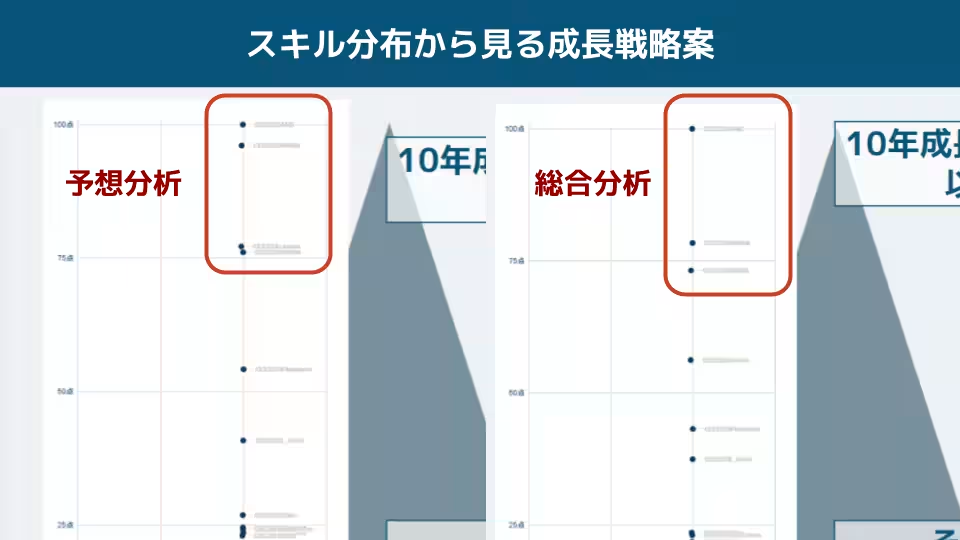
In the predictive analysis grounded on CES Keynote trends leading up to 2025, companies like NVIDIA, AMD, and Lenovo initially received high scores. However, when evaluating the comprehensive analysis integrating data from 2025 and 2026, stark differences became apparent.
- - NVIDIA: Despite a strong early prediction, its score dropped by over 20 points in the comprehensive review, signaling a potential misalignment in evolving market dynamics.
- - AMD: Demonstrated impressive consistency with both analyses yielding a perfect score of 100. It has successfully widened the lead over its competitors due to its enhanced presentation strategies.
- - Lenovo: The company achieved solid scores in the predictive analysis but similarly faced a regression of over 20 points during the comprehensive evaluation.
These discrepancies cannot merely be attributed to differences in technology or scale. While predictive analyses rated all companies highly, AMD notably maintained its score, with NVIDIA and Lenovo experiencing significant declines. This variance highlights a divergence not merely in technological performance, but in the 'thinking styles' around how these companies envision and engage with market trends — a critical factor that shaped the structural scores across their Keynote discussions.
AMD: Evolving Thinking Over Evolving Narratives
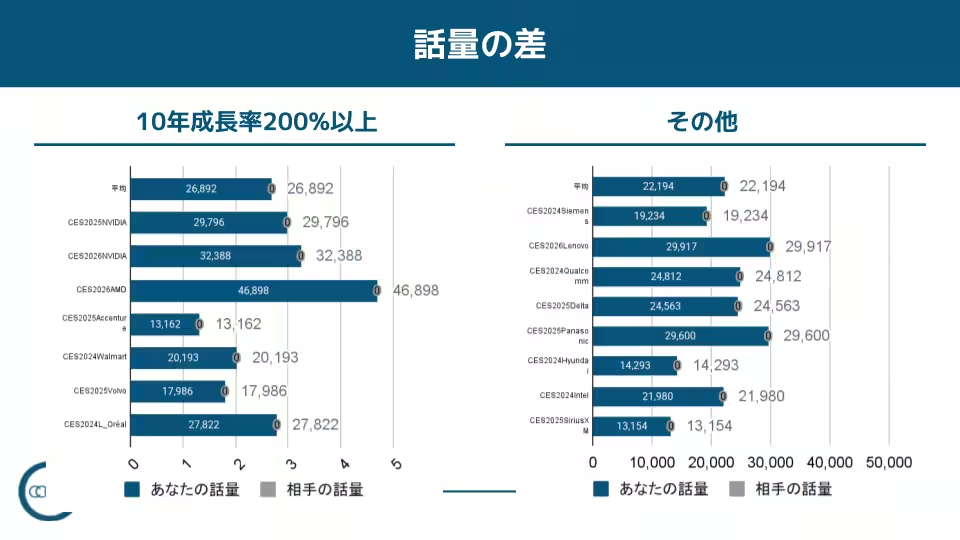
The robust performance of AMD can be attributed not just to its adherence to trends but to an underlying shift in mindset, one that drives their narrative around technology advancements. AMD's presentations at the 2026 Keynote illustrated an increase in engagement, displayed through higher speech volume and questioning techniques that invited audience involvement. Such strategies allowed AMD to depict a more visionary future, effectively differentiating itself from its peers.
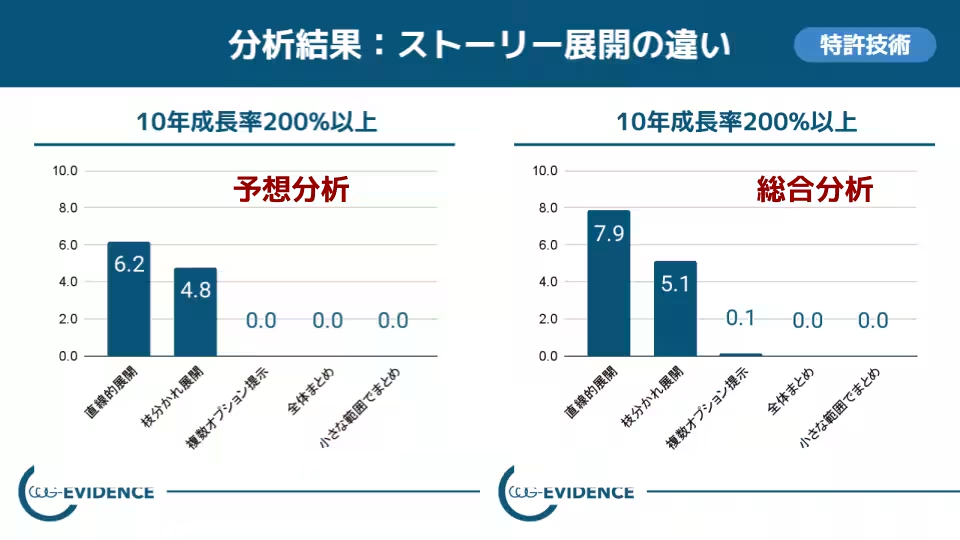
The analysis suggests that AMD hasn't simply refined its presentation style; instead, it has evolved the fundamental perspectives surrounding the benefits of AI and its implications for society and industry. The data indicates a thickening of narrative structures, as revealed by the increasing complexity in storylines crafted throughout the speeches.
NVIDIA: Struggling with Accelerated Trends
NVIDIA, while also maintaining a focus on trending subjects in its 2026 Keynote, fell behind as per the comprehensive analysis results. Even though its volume of speech increased alongside the use of engagement tactics, it didn't exhibit the same evolution as AMD did. This reflects a potential stagnation in effectively transforming trends into actionable narratives.
Lenovo: A Mixed Performance with Growth Potential
Lenovo's 10-year growth rate of 144% places it within a competitive zone but not among the top-tier of high-growth companies. Remarkably, in evaluating Keynote structure scores, Lenovo surpassed many companies exceeding the 200% mark, suggesting that it possesses considerable potential that could be realized with an effective narrative strategy moving forward. During its presentations, Lenovo's platform development narrative, especially with influence from AMD and NVIDIA's strategies, showcased an ecosystem approach but also exposed gaps in its vision for leadership and evolution.
As a result, Lenovo’s future success hinges on its capacity to leverage existing strengths while embedding a proactive stance regarding technological advancements into its Keynote narrative structures. This strategy will be crucial in making the platform constructs a fundamental driver of growth and innovation.
Bridging Insights from Past Analyses
Cognitee previously reported that companies demonstrating growth over a decade are distinguished by their ability to articulate visions, mobilize ecosystems, and assume central leadership in ongoing developments. The follow-up analysis captures an essential nuance — even among companies presenting seemingly similar structures, key distinctions manifest in their predictive versus comprehensive assessments, reflecting deeper evolutions in their underlying thought processes.
Final Thoughts from Cognitee
In conclusion, the CES Keynote analysis serves as a vital tool to gauge not just presentation quality, but the philosophical frameworks businesses adopt in navigating and shaping industry trends. Successful growth-oriented companies need to formulate robust narratives that are constantly refreshed, underpinning these narratives with an actionable insight into the evolving marketplace. Cognitee remains committed to providing structured analyses of qualitative information, offering critical insights into the mid- to long-term strategic directions of enterprises.
Exclusive Analysis Report
Cognitee's recent analyses on CES Keynote 2025 and 2026 remain exclusive. Interested parties seeking detailed individual company scores—including aspects like speech volume and structural coherence—are encouraged to reach out for personalized insights and discussions regarding improvement strategies.
Topics Business Technology)
【About Using Articles】
You can freely use the title and article content by linking to the page where the article is posted.
※ Images cannot be used.
【About Links】
Links are free to use.