



Librizer Supports KiCad: Revolutionizing Circuit Library Creation with AI
Librizer Integrates with KiCad to Automate Circuit Library Development
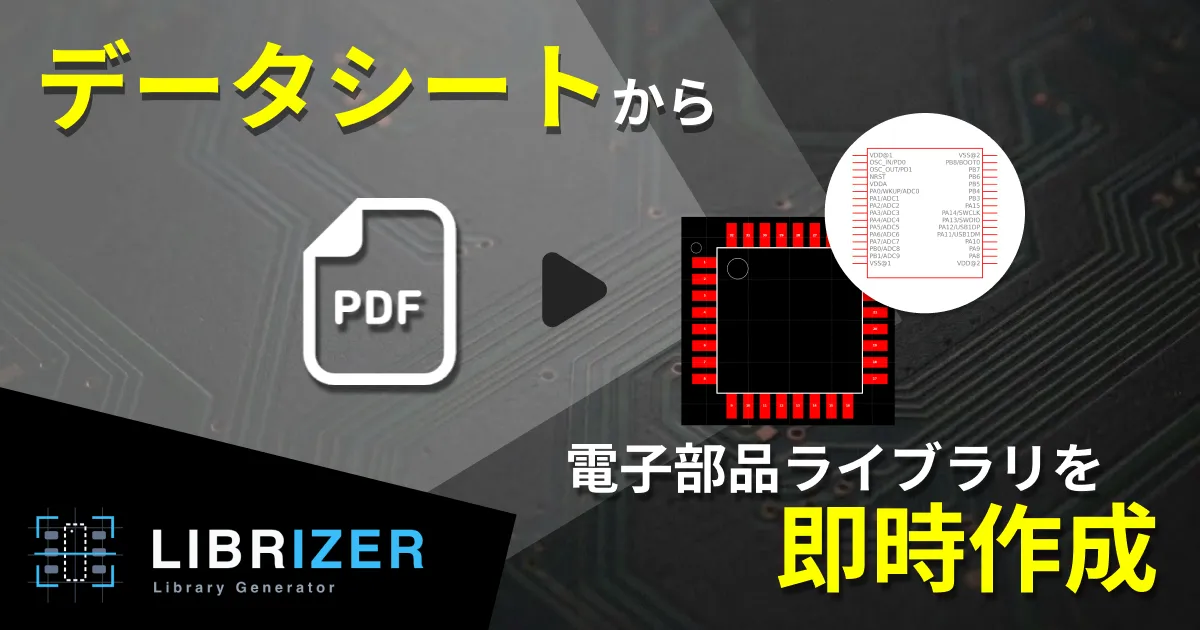
Leacron, a startup emerging from Tokyo University of Science, has officially announced that their innovative AI-powered design aid, Librizer, is now compatible with KiCad. This groundbreaking tool automatically generates circuit schematic symbols and PCB footprints from electronic component data sheets (PDFs), significantly reducing the time and effort required in the design process.
Enhancing Design Efficiency with AI
Librizer is specifically designed to help engineers automate the creation of necessary component libraries in electronic circuit design. Until now, when new components were introduced, designers had to manually verify various details such as pin numbers, names, package information, and dimensions from data sheets. Existing Electronic Design Automation (EDA) tools often come with pre-installed component libraries; however, many times, new or specialized components are not included. In such situations, designers would need to refer to data sheets and painstakingly create circuit symbols and footprints manually. Particularly in research and development settings, the process of creating component libraries can become a significant bottleneck in the overall design workflow.
Leacron identified this challenge while advancing its own hardware development and sought to automate this process via software, allowing engineers to dedicate more time to essential circuit design and validation. Recognizing KiCad as a widely used EDA tool among individual developers, researchers, startups, educational institutions, and open-source hardware developers, the integration of Librizer with KiCad makes it easier for more designers to incorporate this cutting-edge tool into their workflows.
Key Features of Librizer
1. Automatic Generation of Circuit Schematics
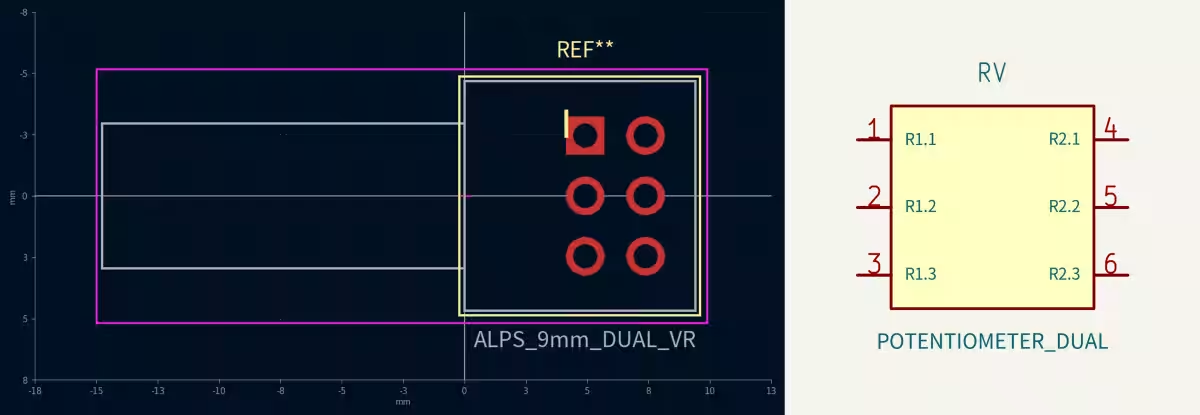
Librizer intelligently analyzes the pin information contained in data sheets to autonomously create circuit schematic symbols. By processing details like pin numbers, names, and arrangements, it generates component symbols that are easily usable within EDA tools, drastically reducing the labor-intensive nature of pin input and symbol creation.
2. Automatic PCB Footprint Generation
Utilizing package information from data sheets, Librizer seamlessly creates the footprints used in PCB designs. It carefully analyzes pad arrangements, pin pitches, and overall dimensions, significantly optimizing the initial stages of PCB design. Designers can now avoid the tedious task of manually entering dimensions by hand while checking the data sheets.
3. Batch Generation of Schematics and Footprints
Librizer provides the capability to generate both circuit schematic symbols and PCB footprints in bulk, enabling designers to create an entire components library that is compatible with EDA tools within a short time frame. This feature substantially shortens the start-up time required for electronic circuit design, allowing engineers to focus on their core design activities.
Utilizing a Hybrid Approach to Tackle AI Limitations
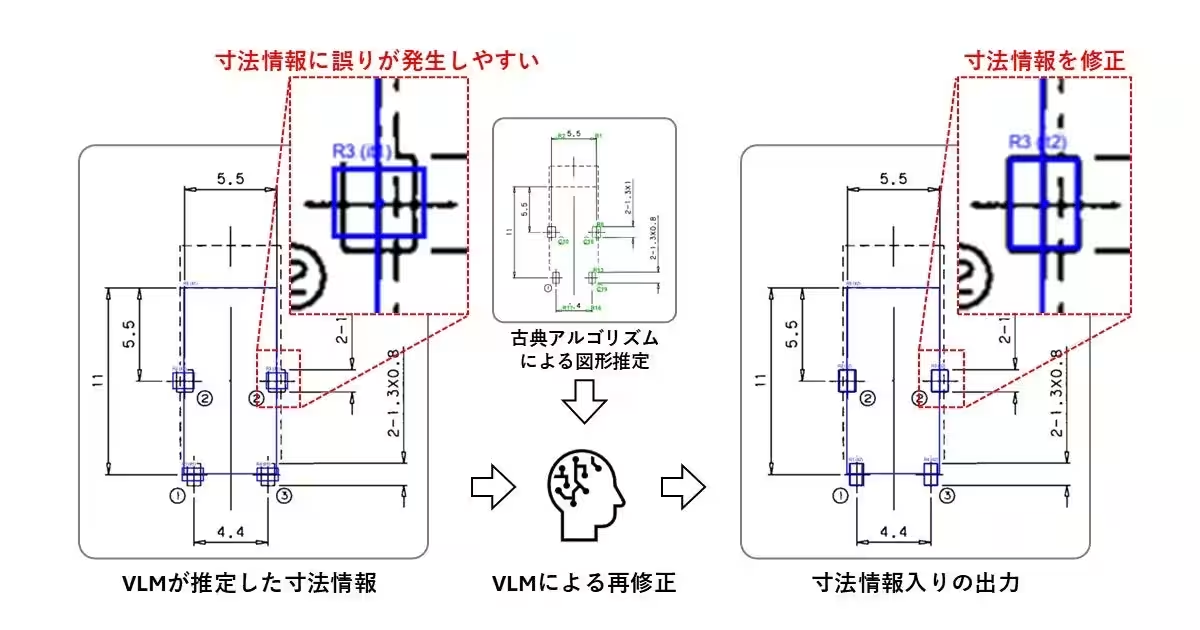
To ensure high precision in PCB footprint generation, Librizer employs a hybrid approach that combines AI analysis with classical geometric processing. The system follows a three-step methodology to capture dimensional information:
1. Acquisition of dimensions using VLM (Vision Language Model).
2. Shape estimation using classical algorithms.
3. Verification of dimension information through VLM based on the shape estimation results.
This combination helps to eliminate common errors that may arise from relying solely on VLM for data extraction, enhancing the overall accuracy of the dimension retrieval process.
Future Developments
Leacron is committed to evolving Librizer beyond just an electronic component library generation tool. Future updates will focus on enabling users to verify and modify generated symbols and footprints, ensuring greater reliability in their design processes. The validation of pin arrangements, dimensions, and footprint shapes is a crucial aspect of electronic circuit design that Librizer aims to comprehensively support.
Moreover, the core drawing analysis technology underlying Librizer has the potential for applications beyond electronic component data sheets. It could be adapted for structuring various technical drawings such as architectural designs, mechanical schematics, and patent diagrams. Leacron will continue to advance research and development efforts aimed at structuring information from PDF drawings, enhancing efficiency in design and development tasks.
Company Overview
Company Name: Leacron Inc.
CEO: Yuuta Takayasu
Headquarters: 5F, EX Ebisu West Building, 2-8-4 Ebisunishi, Shibuya, Tokyo
Founded: January 30, 2025
Corporate Website: https://www.leacron.com/
Contact Information
For inquiries, please utilize our contact form.
Topics Consumer Technology)
【About Using Articles】
You can freely use the title and article content by linking to the page where the article is posted.
※ Images cannot be used.
【About Links】
Links are free to use.