



Exploring the Attitudes Towards Side Jobs in Modern Work Culture
Exploring the Attitudes Towards Side Jobs in Modern Work Culture
The increasing acceptance of side jobs in Japan is largely driven by recent changes in work culture and rising living costs. A comprehensive survey conducted by For-IT, which operates the affiliate platform afb, gathered insights from 2,000 respondents aged 20 to over 60 regarding their perspectives on side jobs. The results reflect a nuanced understanding of desire, hesitance, and the potential of side work as a viable income source.
The Driving Forces Behind Side Job Adoption
The backdrop for this study is marked by a notable shift in workplace policies favoring flexibility, alongside the economic pressures faced due to rising prices. Individuals are more inclined to seek additional income, prompting discussions about side jobs. Despite a general interest, many express uncertainty—whether it's about finding suitable opportunities or simply taking the first step.
Survey Overview
Conducted in April 2026, the survey engaged 2,000 adults nationwide through online research methods. Participants answered a pivotal question: "What do you hope to achieve through self-investment?" Responses varied, with most falling into neutral or positive categories.
Key Findings: Perspectives on Side Jobs
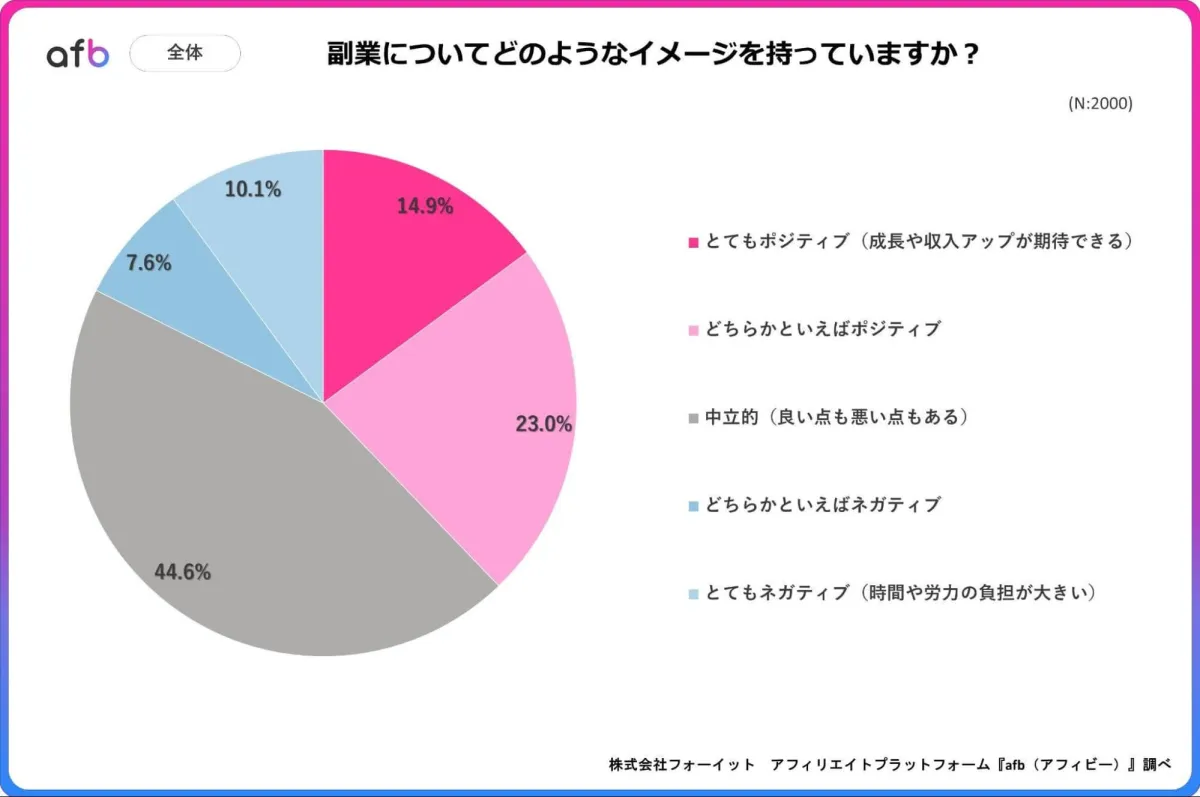
Approximately 38% of those surveyed possess a positive view towards side jobs, with 14.9% feeling very positive and 23.0% leaning towards positivity. Interestingly, the majority (44.6%) expressed a neutral stance, suggesting that many believe the outcomes depend on personal circumstances and the nature of the work involved. In contrast, negative sentiment was relatively low, with only 18% holding negative views.
Age and Gender Dynamics
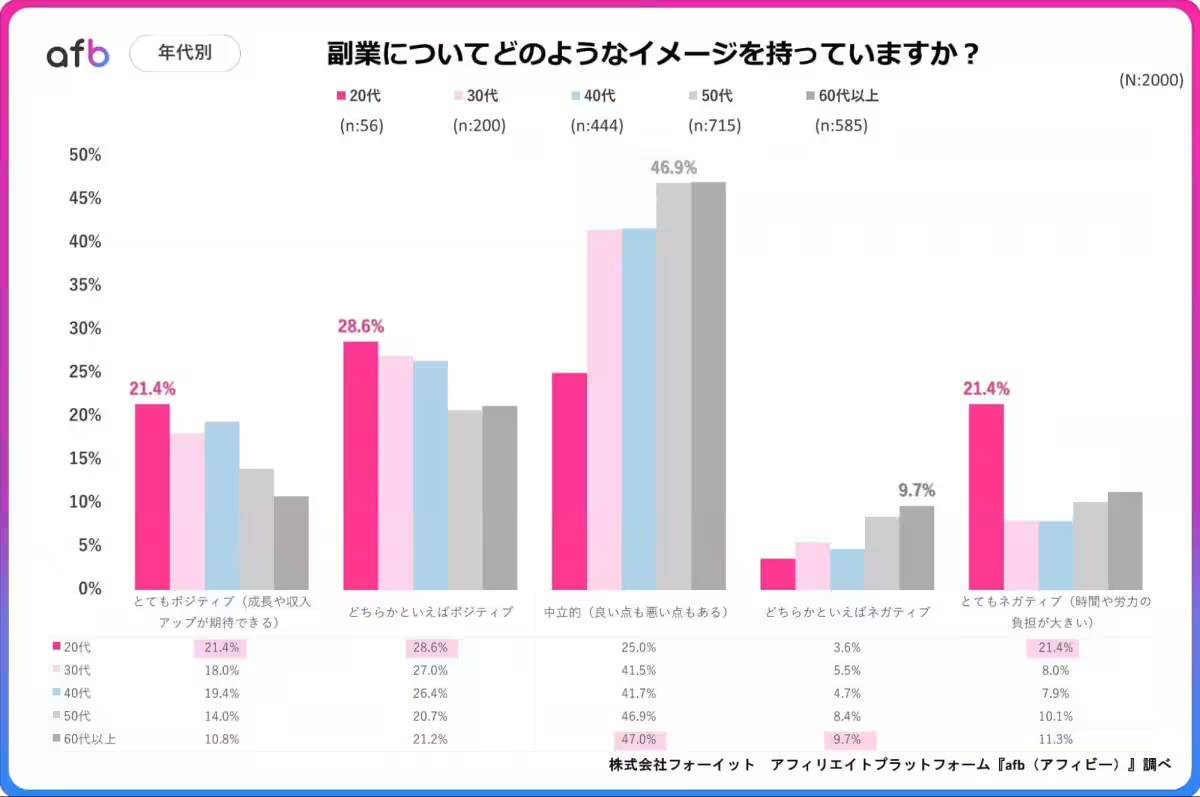
Delving deeper into age demographics, 21.4% of people in their twenties reported feeling very positive about side jobs, making them the most optimistic group, while members of older generations showcased a more neutral attitude. The younger generation engages more with internet resources, leading them to view side employment as a viable avenue for growth and income.
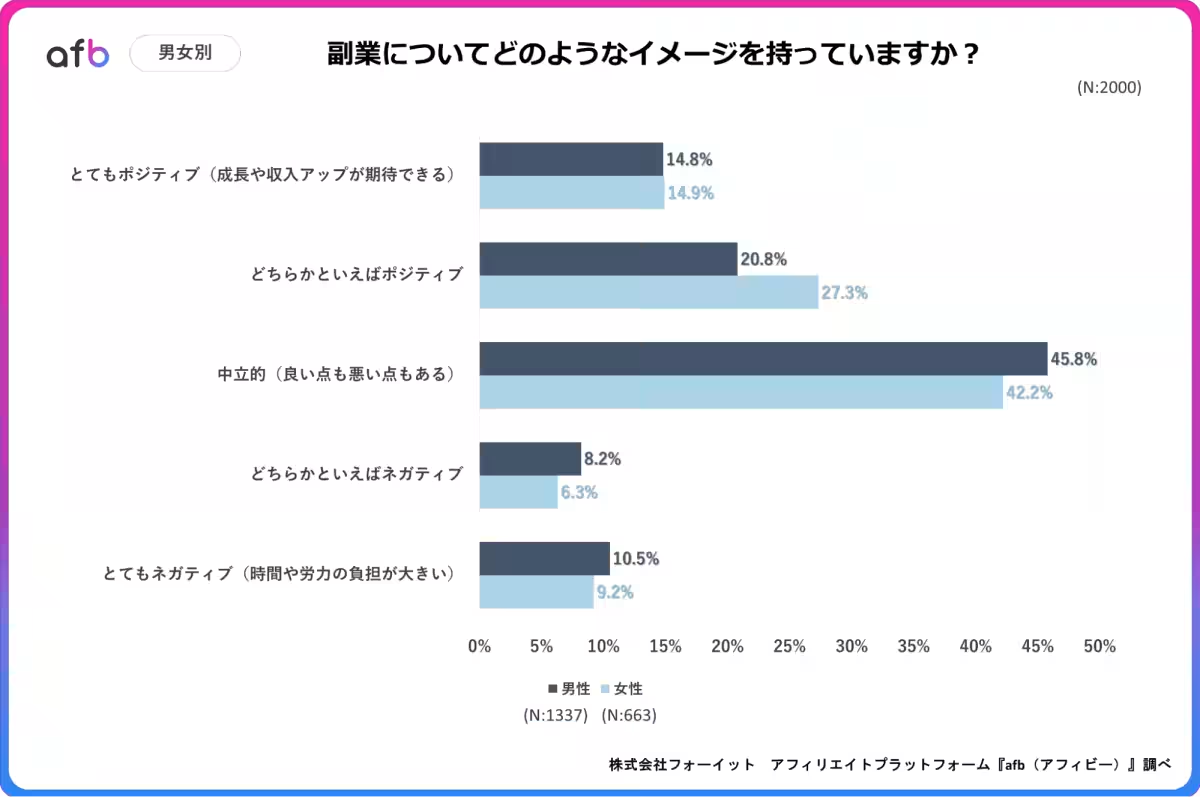
Despite males and females showing similar levels of positivity, women exhibited a slightly higher acceptance of side jobs. This trend indicates that women might be more open to integrating side work into their career paths while men tend to adopt a more cautious, neutral perspective.
Variations by Occupation and Income Levels
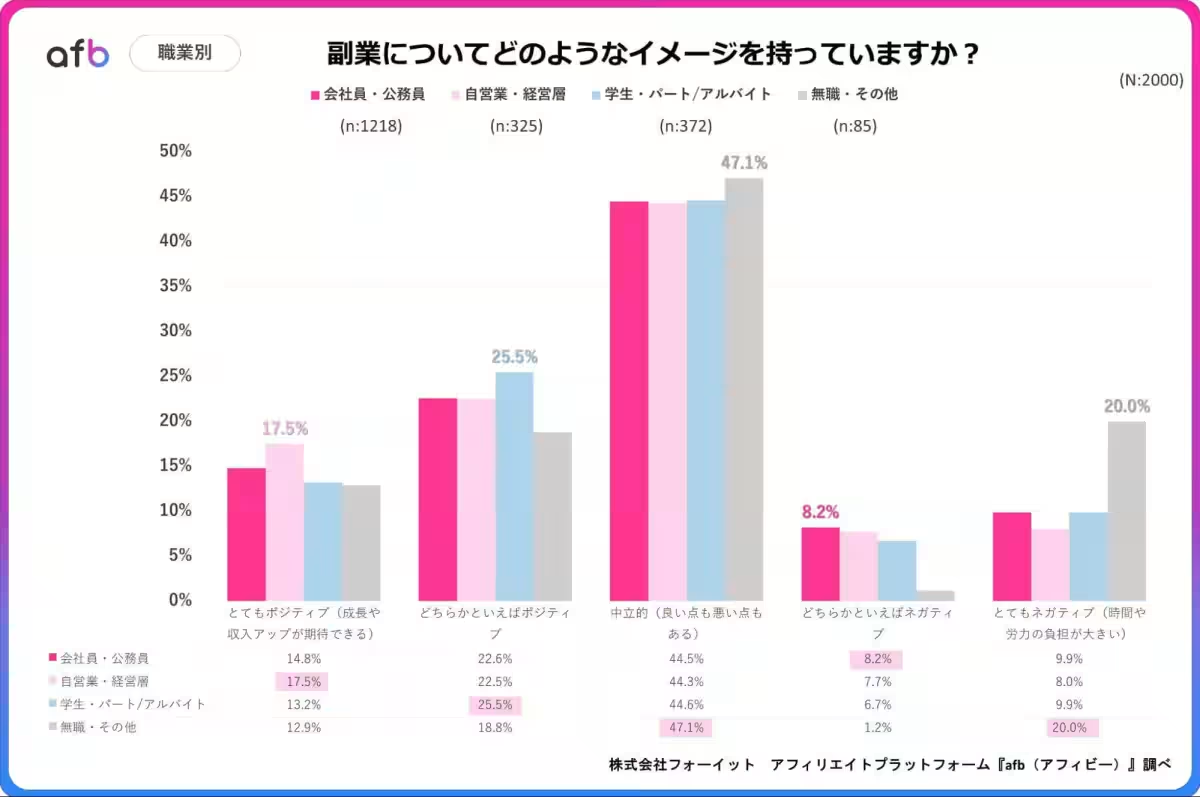
Responses also varied significantly across occupations. Self-employed individuals, or those in management, demonstrated the highest positivity about side jobs (17.5%). Conversely, students and part-time workers reflected a mix of openness and caution, showcasing a balanced view that acknowledges potential while remaining observant. Interestingly, those unemployed expressed higher negativity towards side jobs, indicating barriers stemming from their current jobless status.
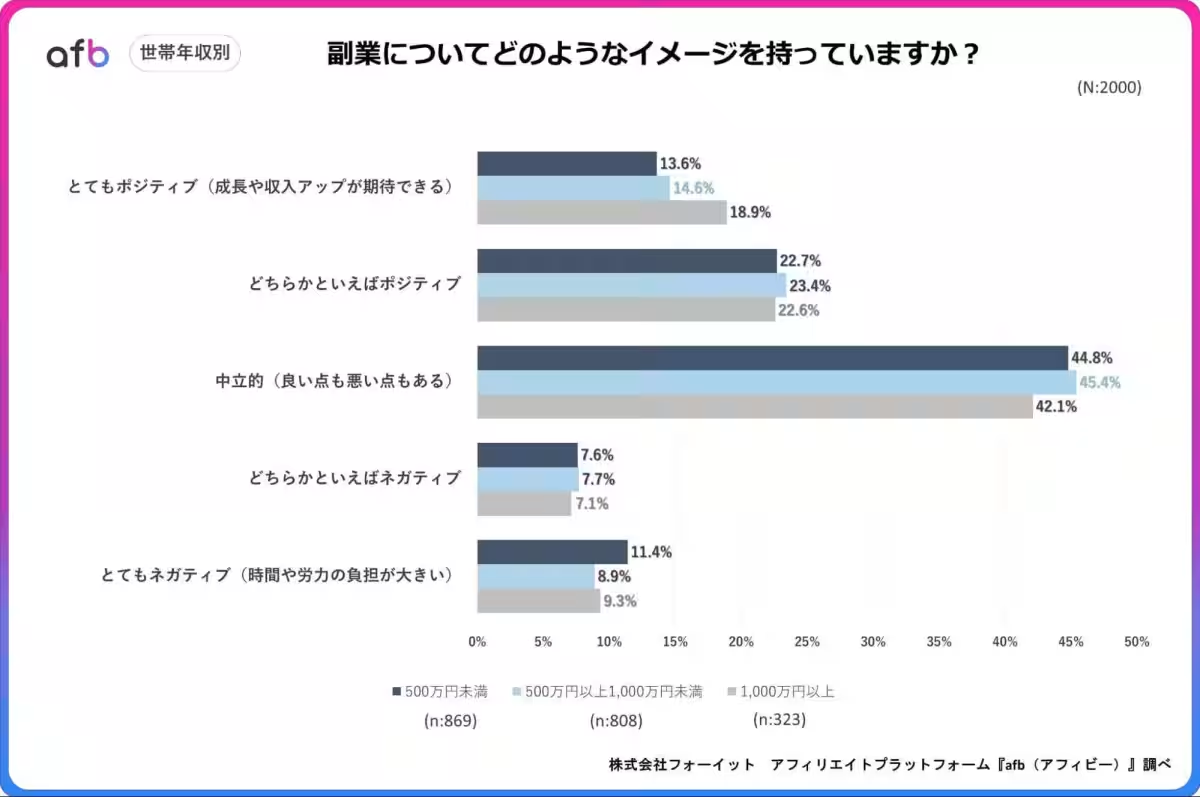
Income also played a crucial role in shaping perceptions; individuals with higher income levels tended to be more optimistic about side jobs. In contrast, those with lower incomes expressed both interest and apprehension, reflecting concerns about the burdens of side work.
Conclusion: An Evolving Landscape for Side Jobs
The overall sentiment towards side jobs is predominantly neutral, indicating that many individuals maintain a flexible approach, willing to explore side work tailored to their existing lifestyles. This survey sheds light on the latent desire for personal and financial growth through side jobs, revealing an appetite for further exploration of various avenues.
Amidst the changing landscape of work, it is paramount that potential side job seekers find modalities that resonate with their personal circumstances, fostering a supportive environment for innovative career paths. The data provided could serve as a valuable foundation for understanding and leveraging side jobs, enriching personal finance and career development opportunities for many in the near future.
For more details on the survey and insights, visit afb.


Topics Business Technology)
【About Using Articles】
You can freely use the title and article content by linking to the page where the article is posted.
※ Images cannot be used.
【About Links】
Links are free to use.