



Innovative Food Supply System for Okinawa's Schools Launched by Tetra Pak
Addressing Logistic Challenges in Remote Islands
In a pioneering effort, Tetra Pak and the Kumamoto Prefectural Dairy Cooperative Association (Rakunou Mothers) have initiated a practical experiment in the Taketomi Town of Okinawa. Beginning August 27, 2026, this innovative trial mixes chilled milk with long-life milk as part of the school lunch program, aiming to ensure a stable supply of dairy products amidst the distinct logistic challenges faced by remote islands.
The Logistic Challenge of Taketomi Town
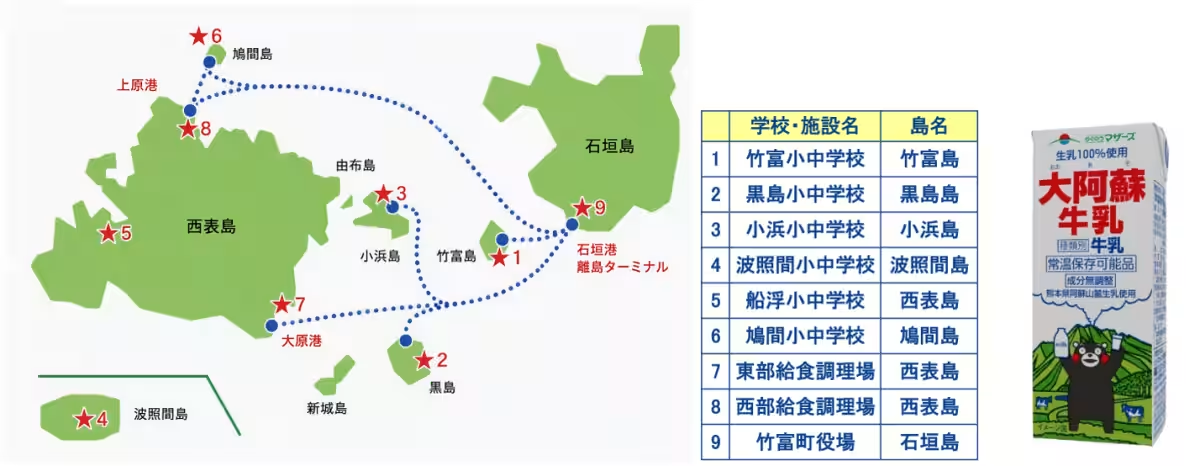
Taketomi Town, consisting of nine inhabited and several uninhabited islands, relies mainly on chilled milk delivered by regular ferry services. However, natural calamities like typhoons can disrupt these deliveries, making it difficult to provide children with the necessary nutrients through school meals. For instance, the cancellation rates recorded for certain ferry routes between September 2025 and February 2026 showed disruptions as high as 58% for some islands.
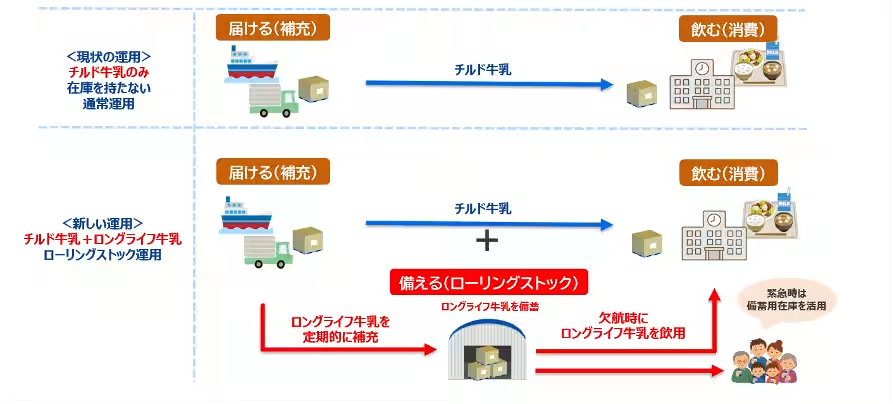
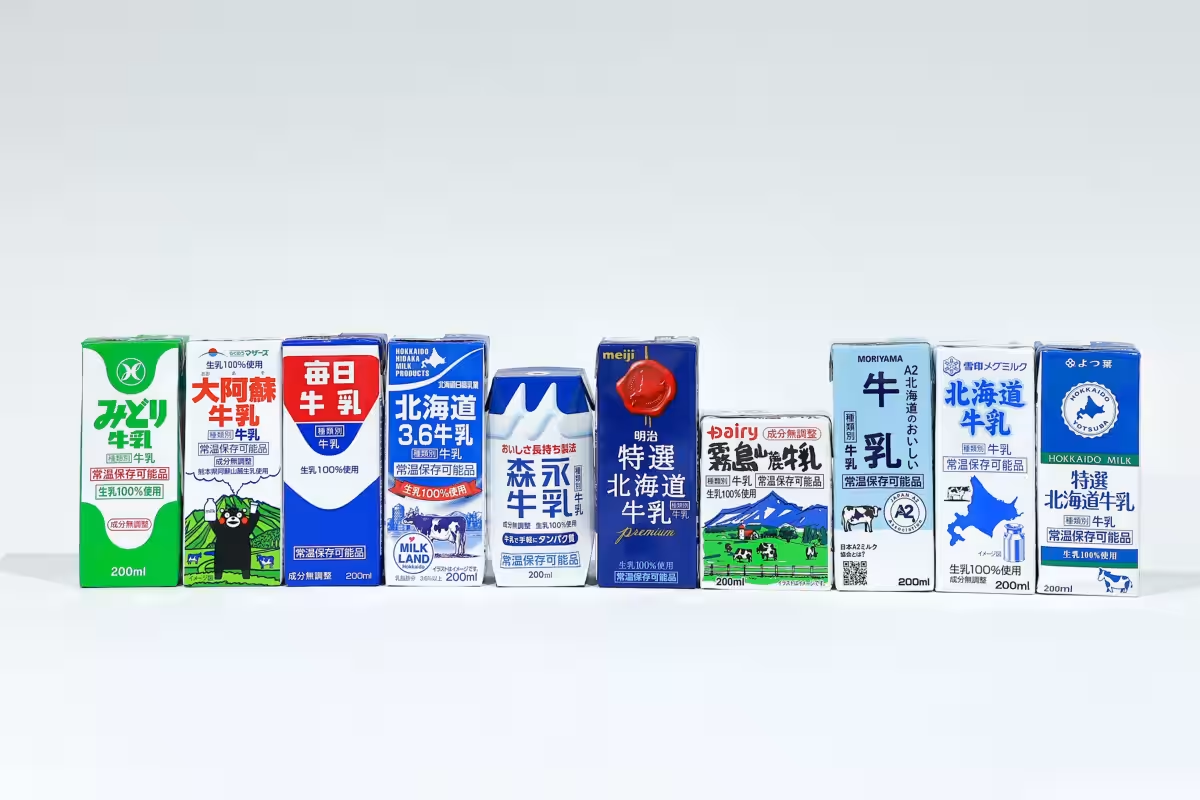
This volatile environment necessitates an alternative food supply strategy. The trial aims to introduce a dual milk supply system whereby long-life milk can be utilized in instances of disrupted shipments, enhancing both the consistency of school meals and the emergency food supplies available to the community. This program marks Japan's first attempt at integrating chilled and long-life milk within a school lunch rolling stock operation model.
The Practical Experiment
The hybrid operation underlines the importance of both chilled and long-life milk, initially focusing on chilled options while establishing a comfortable reserve of long-life milk. This combination is intended to serve as an adaptable model, ensuring milk availability during normal conditions as well as in emergencies.
During unpredictable shipping interruptions, long-life milk will be deployed in place of chilled milk, sustaining the nourishment provided to students. Moreover, surplus long-life milk will be directed toward community food reserves, thereby evolving into an essential resource during emergencies or natural disasters. This strategy emphasizes the importance of efficient resource management and aims to minimize food waste through timely consumption before the expiration date.
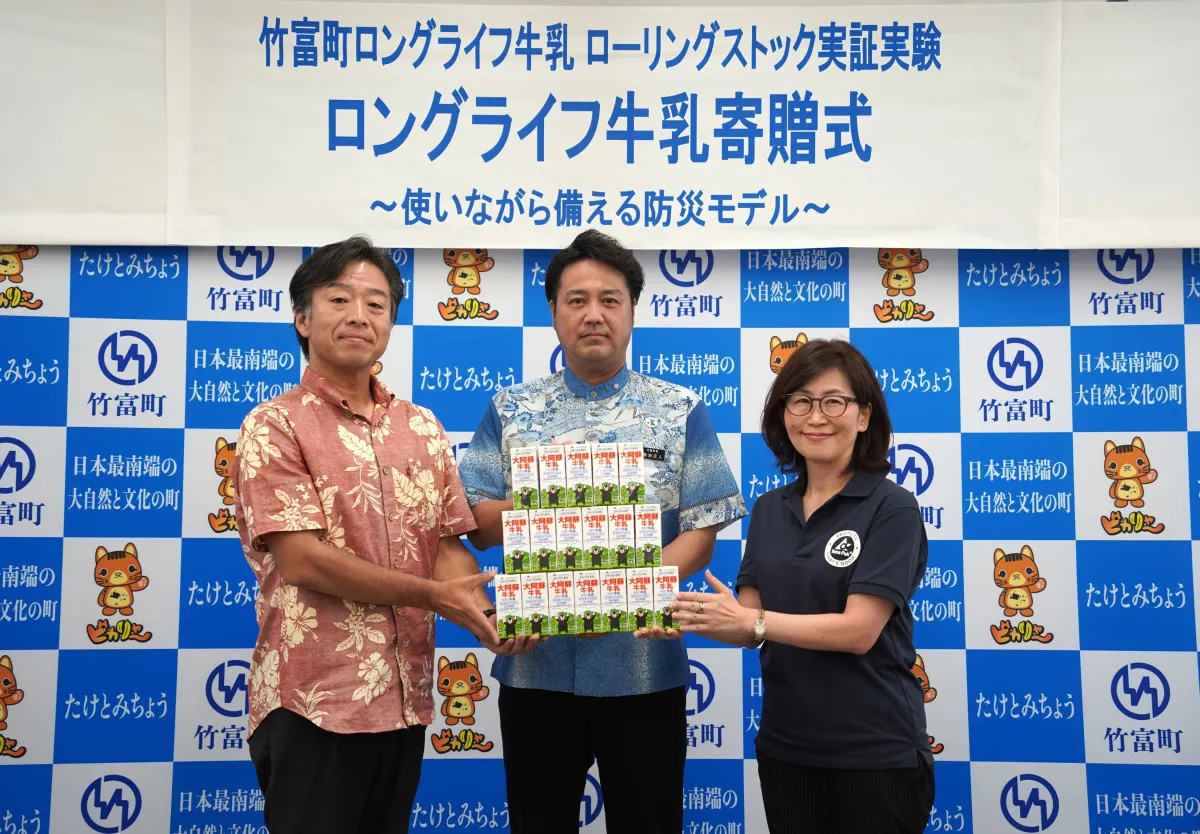
As part of the project's inception, Tetra Pak and Rakunou Mothers have committed to aligning their expertise for this initiative, contributing significantly to the provision of milk and bolstering emergency preparedness in Taketomi Town. Tetra Pak has donated 7,560 cartons of Rakunou Mothers’ long-life milk, while logistical expenses for transporting these goods will be shouldered by Rakunou Mothers.
Essential Objectives and Outcomes
The trial will last until mid-February 2027, involving all 12 elementary and junior high schools in Taketomi Town. Specific targets include maintaining effective inventory management, ensuring fresh supplies, and verifying the practical integration of the milk through community feedback.
This endeavor is also aligned with broader efforts seen throughout Japan, prompting local governments to improve their disaster preparedness by innovating existing food supply systems. By leveraging school meal programs, the Taketomi initiative could potentially serve as a valuable case study for other municipalities grappling with similar logistical hurdles in remote island settings.
Stakeholder Insights
Masato Maedaku, Mayor of Taketomi Town, emphasized the critical nature of shipping reliability for local provisions and community sustenance. The experiment builds upon past efforts in disaster management, aspiring not only to sustain school lunches but also to fortify community resilience.
Yasuhiro Sazato, Director of Education, expressed his commitment to providing stable nutrition for children, reflecting on the significant role school lunches play in childhood development. He highlighted the educational opportunity this trial also offers in disaster preparedness.
Teruhiko Seiryo, Head of Sales for Rakunou Mothers, recognized the organization’s responsibility in ensuring quality dairy supplies while augmenting logistical capabilities to meet the demands of Okinawa.
Yoko Kaji, Director of Marketing at Tetra Pak, reaffirmed the company's mission to ensure food safety and availability, showcasing how long-life milk can transform school meal programs while addressing critical food supply issues in isolated communities.
In conclusion, this innovative trial not only aims to address the immediate needs of Taketomi's school lunch program but also serves as a potential model for future approaches to food security in similar isolated regions worldwide.
Topics Consumer Products & Retail)
【About Using Articles】
You can freely use the title and article content by linking to the page where the article is posted.
※ Images cannot be used.
【About Links】
Links are free to use.