



Introduction of LTS and SI's Fit to Standard Adaptability Diagnostic Service.
Launch of "Fit to Standard Adaptability Diagnostic Service"
In collaboration with System Integrator Co., Ltd. (SI), LTS Co., Ltd. has recently inaugurated a service aimed at assessing organizations' adaptability to transformations. This diagnostic service, known as the "Fit to Standard Adaptability Diagnostic Service," seeks to visualize the adaptability of organizations undergoing change and propose optimal approaches for ERP (Enterprise Resource Planning) implementation.
Overview of the Diagnostic Service
As a growing number of companies set forth initiatives under the banner of "Fit to Standard" when refreshing core systems, it becomes increasingly crucial for them to understand their organizational adaptability and achieve consensus among stakeholders. The Fit to Standard service evaluates stakeholders' views and recognizes challenges, determining whether any obstacles exist in executing a project under this framework and identifying the most suitable IT introduction approach tailored to the organization. Additionally, it offers examples of potential ERP packages to consider during the implementation phase.
Background of Service Launch
The launch of this new service marks the first step in a strategic collaboration that began between LTS and SI in October 2025 within the realm of ERP consulting. By blending LTS's neutral strategic planning expertise with multiple ERP systems and SI's extensive experience in implementing domestic ERPs such as "GRANDIT" and international solutions like "SAP Cloud ERP," the service aims to provide optimal ERP diagnostics that take into account the businesses and organizational cultures of companies seeking to refresh their core systems.
This diagnostic service targets mid-sized and large enterprises that are contemplating a core system refresh. It is particularly beneficial for organizations facing the need for system integration due to mergers and acquisitions or business expansion, as well as for manufacturers, trading companies, and retailers looking to accelerate their global deployments while integrating cloud ERP solutions. The service acts as a stepping stone for businesses struggling with systemic transformation considerations.
Steps of the Diagnostic Process
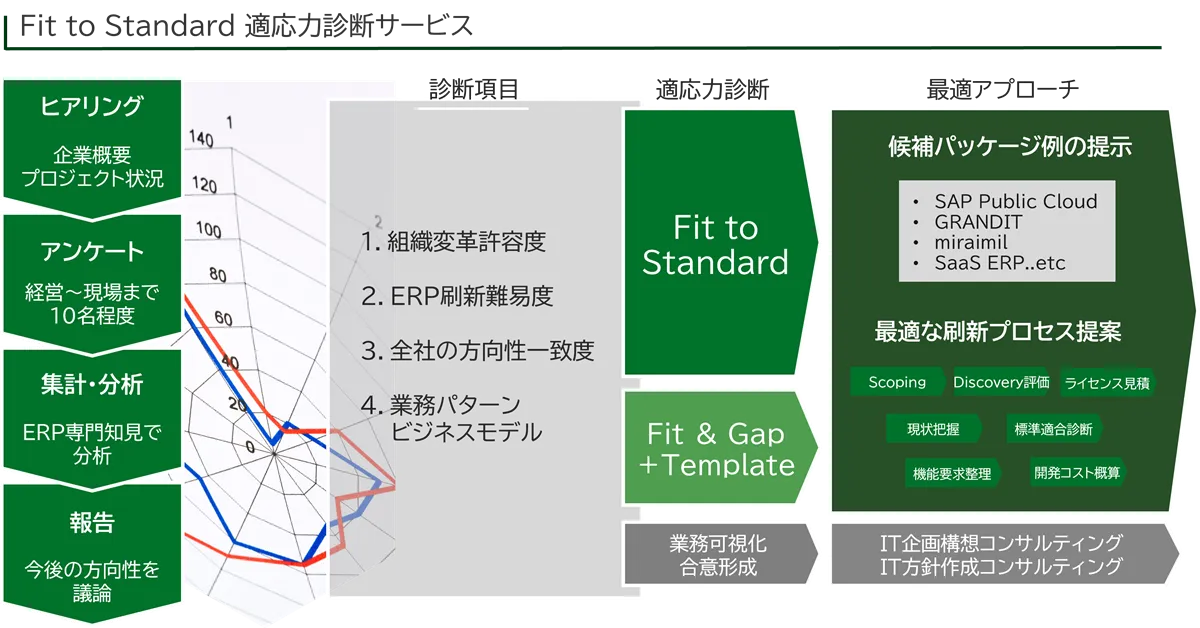
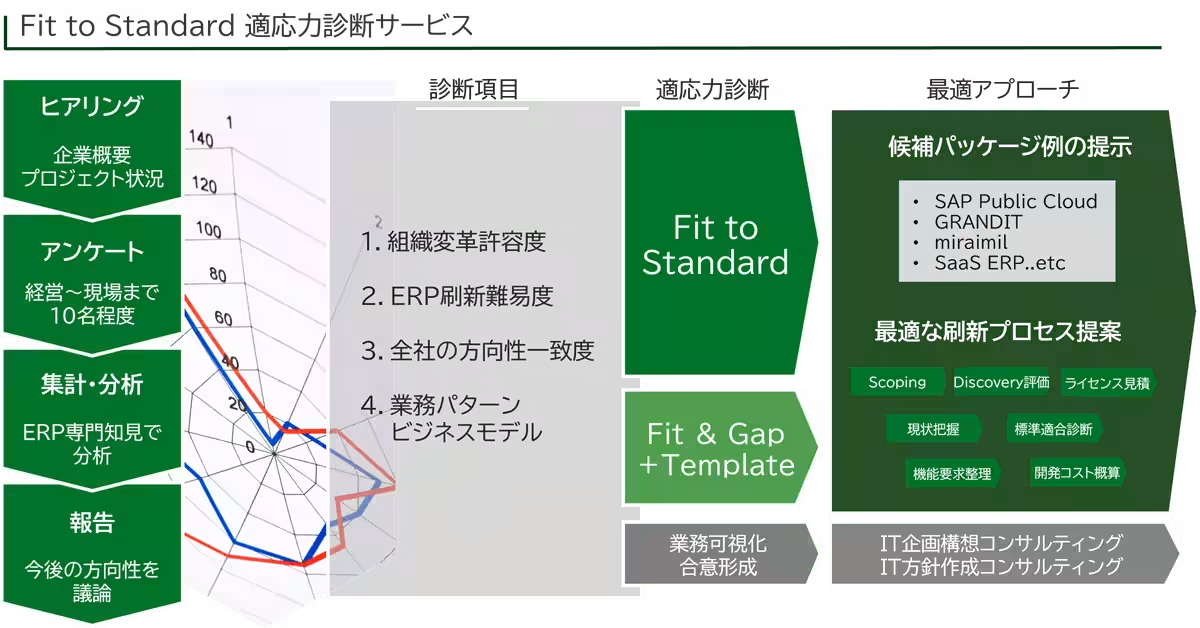
The diagnostic process is designed to be completed over a span of about one month, beginning with a comprehensive report based on the findings of the assessment.
1. Initial Hearing: During the first session, a meeting will take place to gather the customer's business overview and the project status, which includes details like the business model, annual sales volume, number of locations, total number of employees, current project status, targeted system update areas, organizational structure, budget, schedule, and existing challenges.
2. Survey and Response: Stakeholders, including project advancement office members, executives, and key personnel on the ground will be invited to respond to a questionnaire (estimated participation from around 3 individuals from each group, with a maximum of 10 participants).
3. Aggregation and Analysis: The responses collected from the survey will undergo thorough aggregation and analysis for about two weeks.
4. Reporting and Discussion: A report will be prepared summarizing findings, followed by one or two discussion meetings to explore recommendations based on results and potential package examples.
Diagnostic Items
The diagnostic will assess various aspects including:
- - Organizational Adaptability: An evaluation of the organization's ability to adapt to transformations, grounded in the self-recognition of each key person involved.
- - Project Difficulty: A simplified assessment of the challenges associated with the core system renewal project planned ahead.
- - Alignment of Key Stakeholders' Visions: A review of agreements on each stakeholder's aspirations, issue recognitions, and policy directions.
- - Key Business Models and Patterns: An understanding of the critical business models and operational patterns relevant when selecting ERP packages.
About System Integrator Co., Ltd.
Trading on the Tokyo Stock Exchange Standard market (stock code: 3826), System Integrator Co., Ltd. is dedicated to continuously creating software that gives time back to businesses. With nearly 30 years of experience and expertise in ERP development, the company promotes efficiency in corporate back-office operations and aims for sustainable growth through innovation.
About LTS Co., Ltd.
Trading on the Tokyo Stock Exchange Prime market (stock code: 6560), LTS Co., Ltd. leverages professional services focusing on consulting to enhance clients' capacity for transformation while connecting IT businesses and talent to create new business opportunities in the digital age.
Topics Business Technology)
【About Using Articles】
You can freely use the title and article content by linking to the page where the article is posted.
※ Images cannot be used.
【About Links】
Links are free to use.