



Exploring the 2026 Survey on Solo Living and Homecoming Plans
Insights from the 2026 Solo Living Homecoming Survey
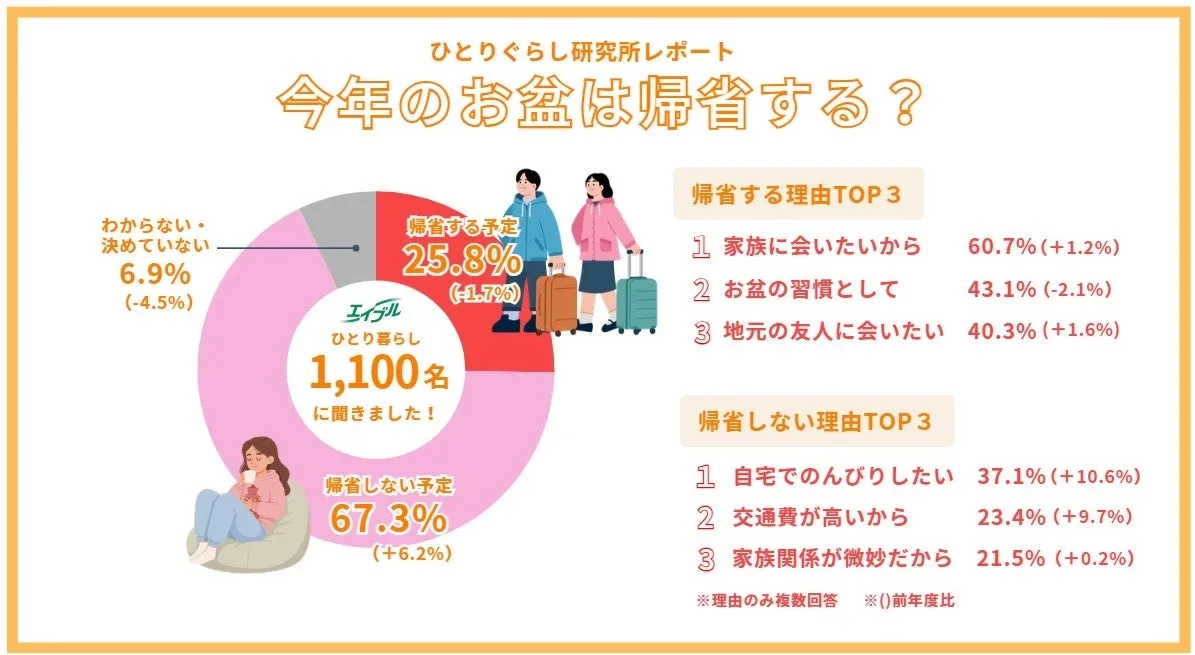
In an insightful exploration of solo living dynamics, the Hitogura Lab, operated by Able Holdings based in Minato, Tokyo, recently conducted a survey involving approximately 1,100 individuals currently living alone. This survey aimed to gauge the intentions of these individuals regarding their return home during the upcoming Obon holiday in 2026.
Survey Overview
The survey, which ran from July 3 to July 5, 2026, assessed individuals aged 20 to 49 living in Japan. It resulted in the following key findings:
- - Only 25.8% of respondents expressed intentions to return to their family homes during Obon, marking a 1.7% decrease from the previous year.
- - Conversely, a significant 67.3% of participants have decided against homecoming, reflecting a 6.2% rise from last year.
The main reasons for opting out of the traditional return include a desire to relax at home (37.1%, up 10.6% from last year) and concerns over high transportation costs (23.4%, up 9.7%). On the other hand, those planning to return cited family connections as the primary motivation (60.7%), followed by traditional customs (43.1%, down 2.1%) and meeting local friends (40.3%, up 1.6%).
Age-Related Insights
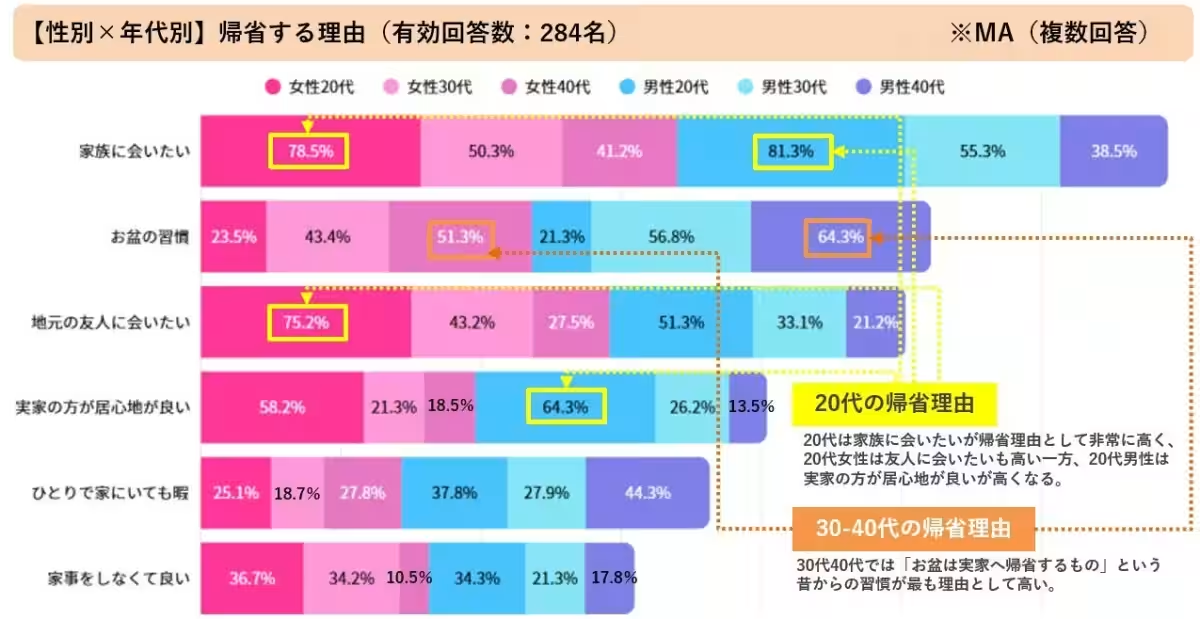
The survey results revealed intriguing generational differences. Among respondents in their 20s, a remarkable 80% indicated a desire to see their families. Female participants showed a tendency to prioritize meeting local friends, while males were more inclined to appreciate the comfort of their family homes. This indicates that many 20-somethings have just embarked on their solo journeys and continue to favor local connections and comfort.
In contrast, as respondents hit their 30s and 40s, motivations for homecoming shifted significantly. Here, the urge to reconnect with family and friends diminishes, likely due to established relationships in their current locales or circumstances like marriage among friends, complicating the gathering during Obon. For individuals in their 30s and 40s, the most common reason turned out to be tradition, particularly among males aged 40, where 64.3% noted that their return was generally for this purpose.
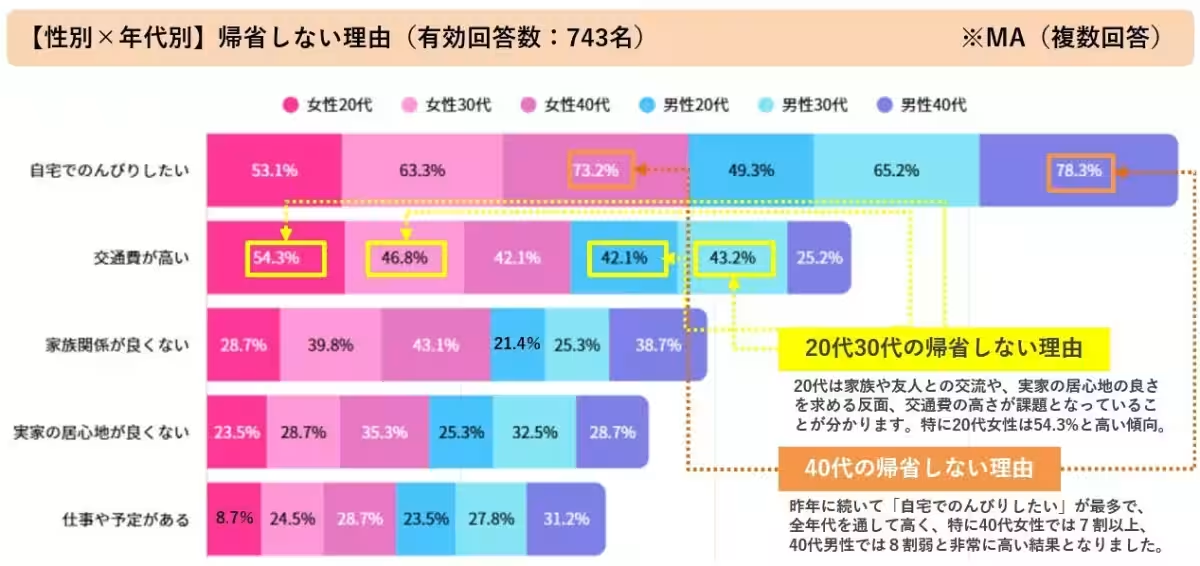
Interestingly, the desire to relax at home emerged as the most prevalent motivation across all genders, growing stronger with age. By the time respondents reached their 40s, over 70% expressed a preference for staying in, shedding light on changing attitudes towards family visits.
Economic Influences and Changing Traditions
The survey also highlighted economic concerns, with younger respondents, particularly females in their 20s, citing high transport costs as a significant deterrent. Furthermore, issues surrounding family dynamics, such as poor relationships or discomfort in their family homes, were more frequently mentioned by women than men.
Overall, the inclination of individuals living alone to return home for Obon has dwindled, with only one in four choosing to do so. This shift may be attributed to economic pressures, combined with changing societal norms that encourage flexibility in vacation planning. While reasons for returning may have become more personal rather than obligatory, the sentimental desire to connect with family remains a warm and robust sentiment.
Closing Thoughts
The insights gathered from this survey reveal much about the evolving landscape of solo living and homecoming during traditional holidays in Japan. You can explore the detailed findings and other initiatives by Hitogura on their official website.
Learn More
For further understanding of solo living dynamics, visit the Hitogura Lab's official website: Hitogura. Follow them on X: Hitogura X and TikTok: Hitogura TikTok.

Topics People & Culture)


【About Using Articles】
You can freely use the title and article content by linking to the page where the article is posted.
※ Images cannot be used.
【About Links】
Links are free to use.