



Japan's Ministry of Land, Infrastructure, Transport and Tourism Approves Autonomous Logistics Initiative
Japan's Innovative Autonomous Logistics Project
In a significant step towards the future of logistics, the Japanese Ministry of Land, Infrastructure, Transport and Tourism (MLIT) has sanctioned a groundbreaking project leveraging autonomous vehicles for intra-logistics transportation facilities. This initiative involves five key players in the industry: Hitomail, Tokyo Distribution Center (TRC), Dynamic Map Platform, Macnica, and Hacobu. Together, they aim to explore the potential of using digital technology and autonomous vehicles to revolutionize logistics operations.
Project Overview
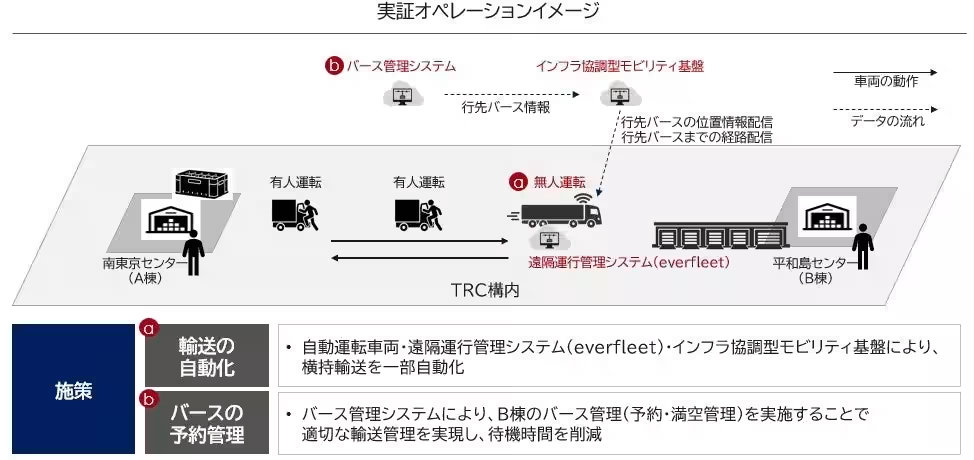
The approved project is centered around evaluating the feasibility of implementing autonomous logistics operations at the TRC site in Ota Ward, Tokyo. The focus is on intralogistics transportation—specifically, transporting empty beverage containers between different facilities within the logistics center.
This initiative is not just a test; it is designed to integrate multiple systems for efficient operations. The collaboration includes vehicle management systems, berth (dock) management systems, and mobility infrastructure. This holistic approach aims to optimize the transportation processes and associated operations within the logistics facilities, promoting both labor-saving and efficiency improvements.
Driving Forces Behind the Project
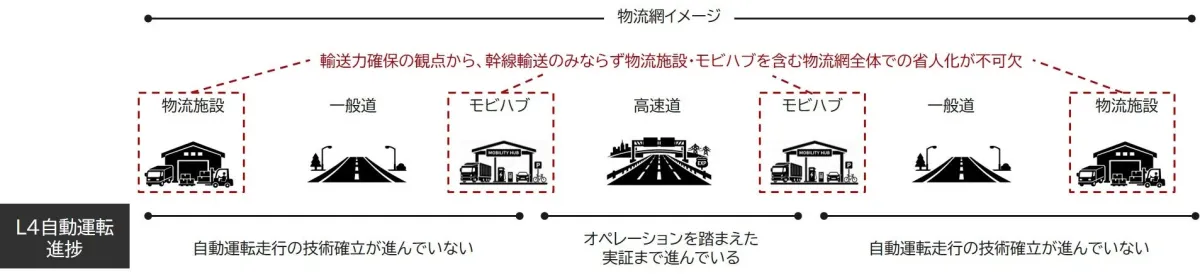
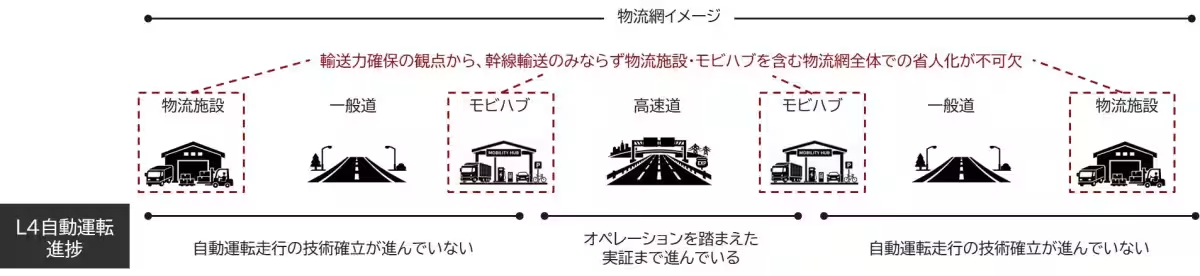
The logistics sector in Japan faces daunting challenges such as a shortage of truck drivers and stricter labor regulations. As projected by MLIT, by 2030 the country could see a 34% shortfall in transport capacity compared to 2025. Thus, establishing a sustainable logistics system has become imperative. While advances have been made with autonomous trucks on highways, the application of automation in short-distance transport between logistics facilities is still in its infancy. The successful integration of humanoid automation within logistics facilities—which are more conducive environments than public roads for such initiatives—marks a crucial step in addressing these challenges.
Features of the Initiative
The project is distinguished by three principal aspects:
1. Integrated System Collaboration: The project will assess real operational scenarios by aligning various systems, including autonomous vehicle technology and digital management tools, ensuring their seamless interaction.
2. Level 4 Autonomous Transportation: The aim is not only to harness automation but also to realize Level 4 autonomy in everyday transport operations within the facility, particularly concerning the transportation of empty beverage containers, which occurs frequently.
3. Cross-Industry Collaboration: By including logistics operators, facility managers, and technology providers, the initiative emphasizes a cohesive approach to testing, underpinned by the shared goal of operational viability.
Proposed Operations
The logistics field trial will be conducted between the Minami Tokyo Center and the Heiwajima Center, utilizing autonomous vehicles provided by Macnica, accompanied by Hacobu’s truck reservation system to manage berth scheduling and status. Optimal routing will be generated through the integration of geographic data from the Dynamic Map Platform’s infrastructure model, allowing for automated navigation to the designated points within the facility.
Expected Outcomes
Through this endeavor, the five companies aim to gather insights that could facilitate broader implementation of autonomous operations in logistics. They plan to analyze the effectiveness of their collaborative systems and operational strategies, focusing on reducing downtime and enhancing overall logistics efficiencies. Ultimately, they aspire to contribute to the sustainable development of logistics operations throughout Japan.
Participating Companies
- - Hitomail Co., Ltd.: The project lead and logistics provider, specializing in a one-stop platform that supports order fulfillment through to delivery and payment.
- - Tokyo Distribution Center (TRC): Hosts the trial site and oversees logistical operations within the center.
- - Dynamic Map Platform, Inc.: Provides the mobility infrastructure to synchronize various data inputs for improving route efficiency.
- - Macnica, Inc.: Supplies the autonomous vehicles and management system technology for the project.
- - Hacobu, Inc.: Offers truck reservation services crucial for managing logistics workflows effectively.
The collaborative nature of this project is emblematic of the future where technology and logistics converge, potentially reshaping how goods are transported and managed across societies. As Japan ventures into this unmapped territory of logistics, the outcomes of this trial could inform best practices and facilitate nationwide adoption of autonomous systems in the logistics sector.

Topics Consumer Products & Retail)








【About Using Articles】
You can freely use the title and article content by linking to the page where the article is posted.
※ Images cannot be used.
【About Links】
Links are free to use.