



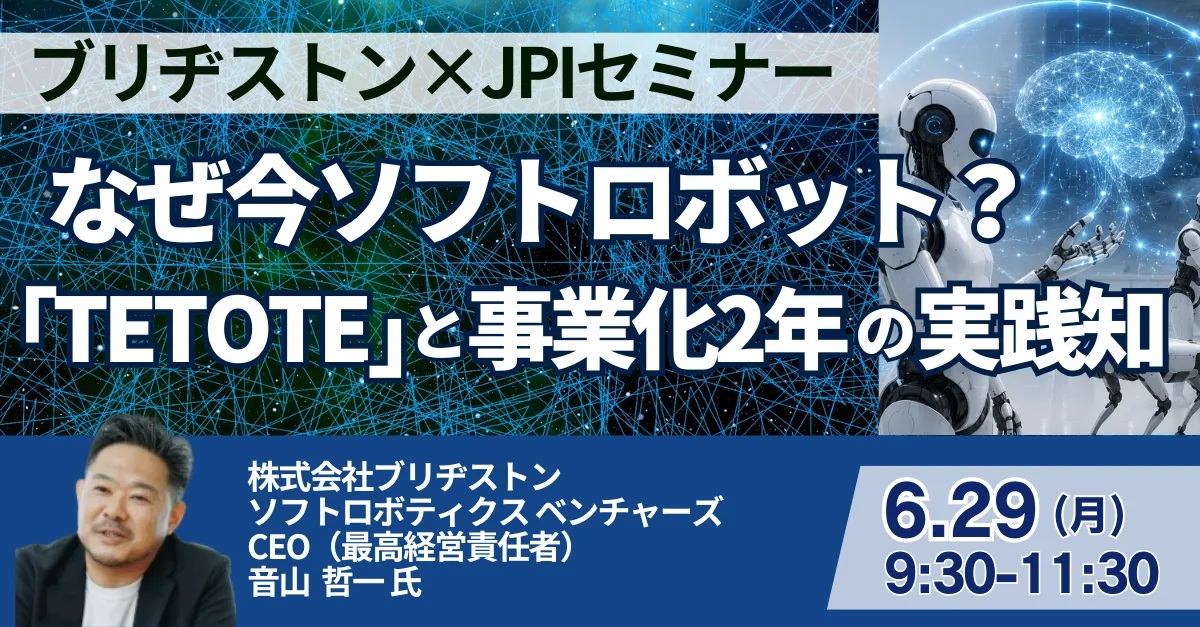
Understanding the Significance of Soft Robotics and TETOTE: Bridgestone's Innovative Journey
Bridgestone's Exploration of Soft Robotics in the Modern Market
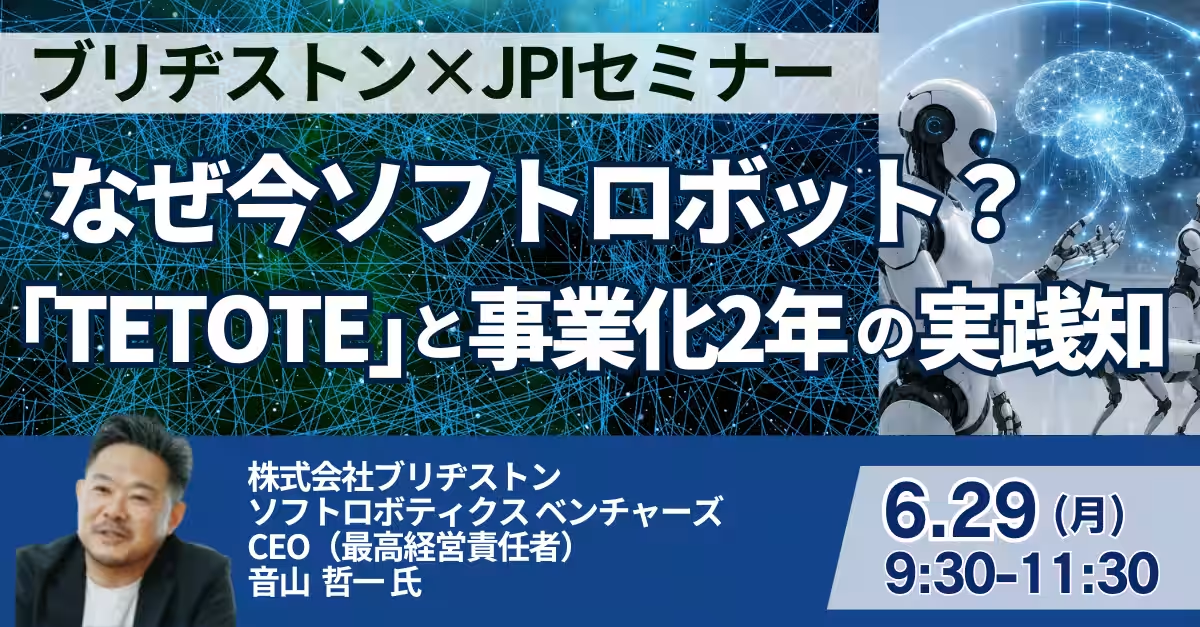
On June 29, 2026, JPI (Japan Planning Institute) hosted a significant seminar featuring Tetsuichi Otoyama, CEO of Bridgestone's Soft Robotics Ventures. This event delved into the pivotal reasons behind the rising relevance of soft robotics today and highlighted Bridgestone's innovative product, TETOTE.
The Emergence of Soft Robotics
Soft robotics has presented itself as a revolutionary approach that combines the flexibility and safety needed for harmonious coexistence between humans and machines. Bridgestone's TETOTE exemplifies an advancement in this field, leading to new applications across various industries. Throughout the seminar, Otoyama shared insights into the market dynamics fueling the demand for soft robotics, emphasizing its transformative impact on sectors like manufacturing and logistics.
TETOTE – Bridgestone’s Groundbreaking Soft Robot Hand
TETOTE, a versatile soft robotic hand developed by Bridgestone, was designed to operate safely alongside humans and handled various tasks with unprecedented ease. Constructed using cutting-edge material technology, TETOTE showcases how soft robotics can enhance operational efficiency and safety. Otoyama explained how this product was born from a thorough understanding of market needs and technological advancements over just two short years.
The Journey of Commercializing Soft Robotics
The seminar also served as a platform for Otoyama to describe the rigorous processes involved in transforming an innovative idea into a commercially viable product. Bridgestone’s Soft Robotics Ventures, as its first in-house startup, faced numerous challenges in its pursuit to commercialize soft robotics technology. From ideation to strategizing, forming partnerships, and executing plans, the journey was filled with practical lessons that can guide other corporations aiming to innovate.
Challenges and Strategies
Otoyama outlined specific stages in the commercialization process:
1. Concept Development: Identifying the need for soft robotics.
2. Building a Strategy: Creating a plan that leverages existing resources.
3. Execution: Bringing the product to market successfully.
Through workshops and Q&A sessions, participants were not only privy to Otoyama’s expertise but also engaged in peer networking, providing a rich environment for discussion on the nuances of soft robotics and its applications.
Networking and Knowledge Sharing
One notable aspect of the seminar was the platform it provided for direct interaction between attendees and the speaker. Participants took advantage of this unique opportunity to gain deeper insights into soft robotics and potential collaborative endeavors across different industries. This networking opportunity elevated the seminar experience, encouraging new connections and fostering discussions that can lead to innovative partnerships.
Conclusion
The seminar illustrated the significant role that soft robotics, spearheaded by projects like TETOTE, will play in shaping future industries. Bridgestone’s proactive approach not only stands as a model for corporate innovation but serves as a reminder of the vital understanding of market needs and technological capabilities.
For those who missed the live event, JPI offers recorded sessions, ensuring that interested parties can still access this invaluable information and insights shared by Otoyama.
For more details or to register for upcoming seminars, individuals can visit the JPI website at Japan Planning Institute.

Topics Consumer Technology)
【About Using Articles】
You can freely use the title and article content by linking to the page where the article is posted.
※ Images cannot be used.
【About Links】
Links are free to use.