



Matsuya Foods and Tack Japan Create a Sustainable Food Cycle Model Using Food Waste for Decarbonized Rice
Matsuya Foods and Tack Japan: A Circular Food Chain Model
In a remarkable collaboration, Matsuya Foods Holdings and Tack Japan have embarked on a bold initiative to create a sustainable food supply chain that not only combats food waste but also promotes environmentally friendly practices in agriculture. This partnership aims to recycle food waste generated from Matsuya's restaurants and factories into high-quality compost, which will then be utilized by rice producers certified under the J Credit system to grow domestically-sourced rice.
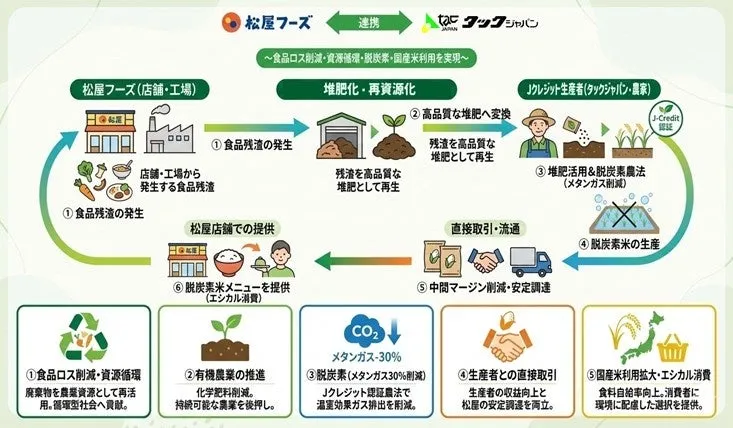
The Circular Scheme Explained
This innovative circular system encompasses several key steps:
1. Composting Food Waste: Matsuya will take all the food leftovers produced in their branches and factories and convert them into compost, diverting them from waste disposal and repurposing them as a valuable agricultural resource.
2. Connecting with Rice Producers: The compost will be introduced to rice farmers associated with Tack Japan, who manage approximately 2,000 hectares of farmland under J Credit farming practices. These farmers will use Matsuya's compost to enhance soil quality and engage in organic farming methods.
3. Direct Transactions: Matsuya will engage in direct transactions with these producers, cutting out intermediaries. This approach not only reduces costs associated with distribution but also boosts the farmers' profitability and ensures a stable supply of rice for Matsuya.
4. Serving Sustainable Rice: The rice grown using this compost and J Credit certified methods will be featured in Matsuya's menu offerings, allowing consumers to partake in and appreciate the benefits of this sustainable farming practice.
Addressing Key Social Issues
This initiative targets multiple social concerns concurrently, including:
1. Reducing Food Waste and Promoting Resource Recycling: By reusing what would otherwise be discarded, Matsuya is actively contributing to the creation of a circular society.
2. Advancing Organic Farming: The use of compost from food waste means lowering reliance on chemical fertilizers and fostering environmentally friendly farming techniques.
3. Decarbonization Efforts: This initiative is expected to reduce methane gas emissions linked to rice cultivation by about 30%, showcasing Matsuya's commitment to enhancing its environmental value as a corporate entity.
4. Stabilizing Supply through Direct Trade: By bypassing traditional supply chains, the relationship established through direct trade will fortify the economic well-being of farmers while ensuring Matsuya can count on a consistent supply of quality rice.
5. Promoting Domestic Rice Use and Ethical Consumption: Enhanced domestic rice utilization will contribute to improving food self-sufficiency rates in Japan. Consumers will also be presented with an environmentally conscious choice in their dining options.
The Companies Involved
Matsuya Foods Holdings
Founded in Musashino, Tokyo, Matsuya Foods is renowned for its beef bowl restaurants and tonkatsu establishments, boasting approximately 1,400 locations both domestically and internationally. The company not only excels in the dining sector but also leads in food recycling efforts, repurposing around 22,000 tons of food waste annually into fertilizers and livestock feed.
Tack Japan
Established in 1951, Tack Japan specializes in supplying livestock feed and farming supplies to producers nationwide. Recently, the company has formed partnerships with institutions to advance carbon credit initiatives and facilitate the decarbonization of agriculture, particularly through the promotion of J Credit methods among farmers.
Through this strategic partnership, Matsuya Foods and Tack Japan are exemplifying how businesses can successfully combine economic viability with environmental responsibility, paving the way for future initiatives in sustainable food production.
Topics Consumer Products & Retail)
【About Using Articles】
You can freely use the title and article content by linking to the page where the article is posted.
※ Images cannot be used.
【About Links】
Links are free to use.