



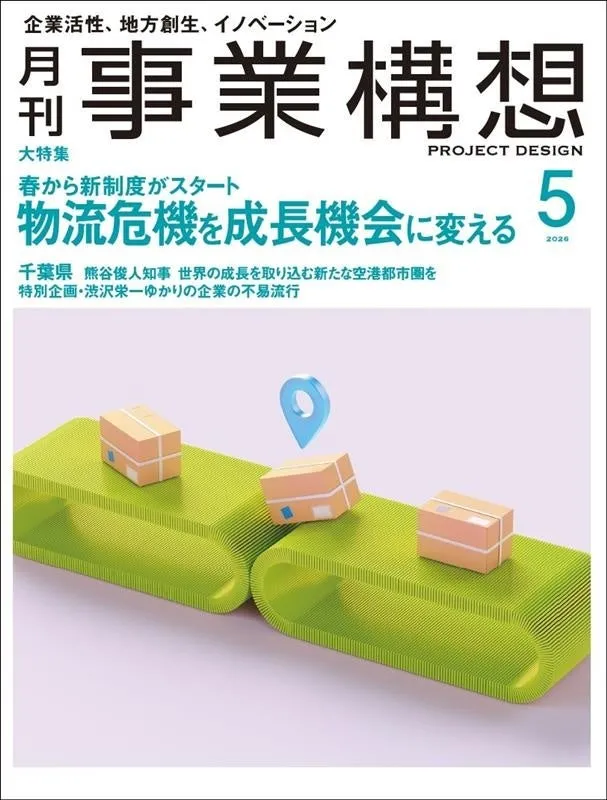
Transforming the Logistics Crisis into Growth Opportunities: Insights from May 2026 Edition
Transforming the Logistics Crisis into Growth Opportunities
The logistics sector is currently facing significant challenges due to various global disruptions. However, these challenges can also be seen as opportunities for businesses willing to adapt and innovate. The newly released May 2026 issue of the monthly publication, Project Design, delves into this idea, showing ways organizations can transform this crisis into growth opportunities. Published by the Advanced Educational Corporation's Project Design Graduate School in Tokyo, this issue offers valuable insights into the new logistics landscape shaped by recent regulatory changes.
Major Feature: Capturing Growth amid the Logistics Crisis
With the budget reforms of April 2026 marking a turning point in logistics regulation in Japan, many companies are now adopting roles such as Chief Logistics Officer (CLO) to streamline operations. This issue offers an in-depth analysis of the newly adjusted logistics efficiency laws and discusses various innovative approaches to tackle the industry's challenges. Key topics include strategies such as collaborative transportation logistics, maritime modal shifts, and digital transformation (DX) initiatives that modernize operations through automation and digital address management.
Several industrial leaders weigh in on the challenges and opportunities presented by these new regulations. Takada Ryuu, the head of Logistics Policy at Japan's Ministry of Land, Infrastructure, Transport and Tourism, emphasizes the pace of transformation initiated by the revised laws, encouraging companies to view it as a catalyst for structural reform in logistics. Saito Hidechika, CEO of Mitsubishi Logistics, agrees, highlighting how regulatory changes provide companies with the impetus to pivot from defensive to proactive strategies in their logistics operations.
Additionally, interviews with CEOs from various sectors showcase how collaboration in logistics can lead to shared efficiencies. Sakamoto Jiro, head of F-LINE, asserts the need for competitive product markets while fostering collaborative logistics, thus highlighting the balance between competition and cooperation in the industry.
Regional Feature: Chiba Prefecture's Airport City Vision
Alongside national logistics reforms, the spotlight turns to Chiba Prefecture's ambitious SORATO NRT Airport City project, aimed at establishing an international industrial hub linked to Narita International Airport. The expansion of a third runway at Narita Airport has ushered in plans to develop a large-scale airport city that will foster industries such as aviation maintenance, precision machinery, healthcare, tourism, and agriculture.
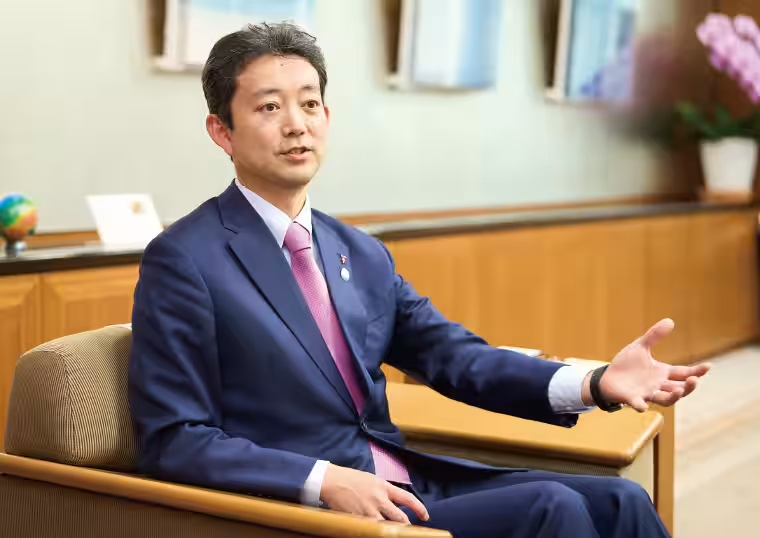
Chiba's vision seeks to not only position itself as a critical logistical hub connecting Asia and North America but also to enhance its social contribution to Japanese society. Governor Kumagai Toshito expressed that the project underscores their commitment to integrating international growth into the local economy, combining agricultural progression, coastal area regeneration, AI-driven welfare, and countermeasures against declining birth rates.
Companies operating within this vibrant region, such as KURKKU FIELDS, are pioneering sustainable approaches by promoting eco-friendly practices in food and agriculture. Their innovative initiatives serve as a model for future growth in this eco-conscious era. Moreover, IKEA Japan's president, Petra Fahle, aims to ensure that their offices and homes echo comfort and sustainability for the residents of Chiba, further echoing the airport city's ethos.
Special Project: The Relevance of Shibusawa Eiichi's Philosophy Today
The magazine also reflects on the enduring philosophies of Shibusawa Eiichi, emphasizing the need for businesses to adapt while upholding core values amidst ongoing societal transformations. Japanese companies that he influenced are challenged to consider what aspects of their operations should remain constant and which should evolve. Notable leaders reflect on how Shibusawa's ideals can guide sustainable growth, with topics ranging from carbon neutrality to innovation in logistics and beyond.
Additional features cover various sectors, including healthcare innovations in business implementations and urban development strategies aimed at fostering new enterprises. Ultimately, this issue encapsulates the modern business landscape's dynamic interplay between innovation, sustainability, and resilience in addressing the challenges posed by the logistics crisis.









Topics Business Technology)
【About Using Articles】
You can freely use the title and article content by linking to the page where the article is posted.
※ Images cannot be used.
【About Links】
Links are free to use.