



Understanding Job Satisfaction Among IT Engineers Despite Salary Decreases: Insights from a New Survey
A Shift in Perspectives: IT Engineers Value Growth Over Salary
In a transformative survey conducted by Kikkake Creation, it was revealed that a significant number of IT engineers have opted for job changes that resulted in lower salaries, yet they express high satisfaction levels with their decisions. The survey focused on 100 IT engineers who transitioned jobs within the last five years, highlighting a shift in what constitutes success in this competitive field.
Key Findings
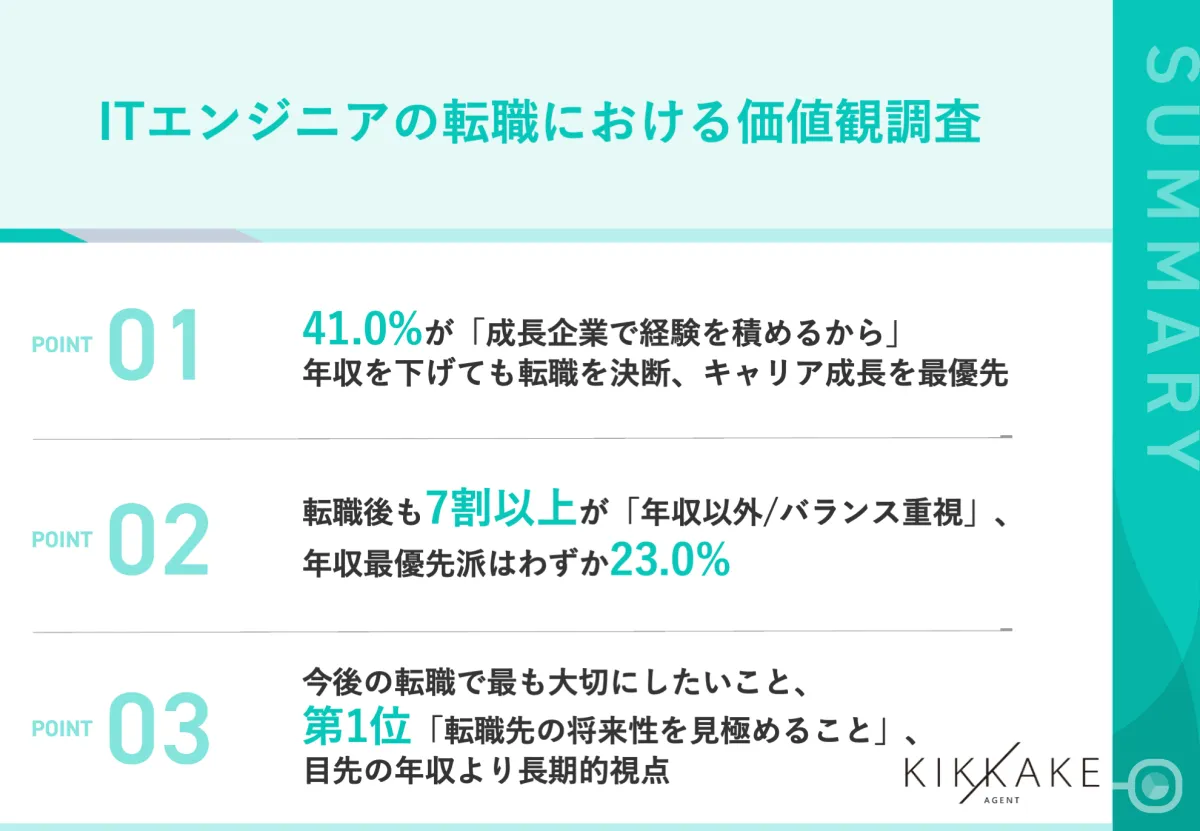
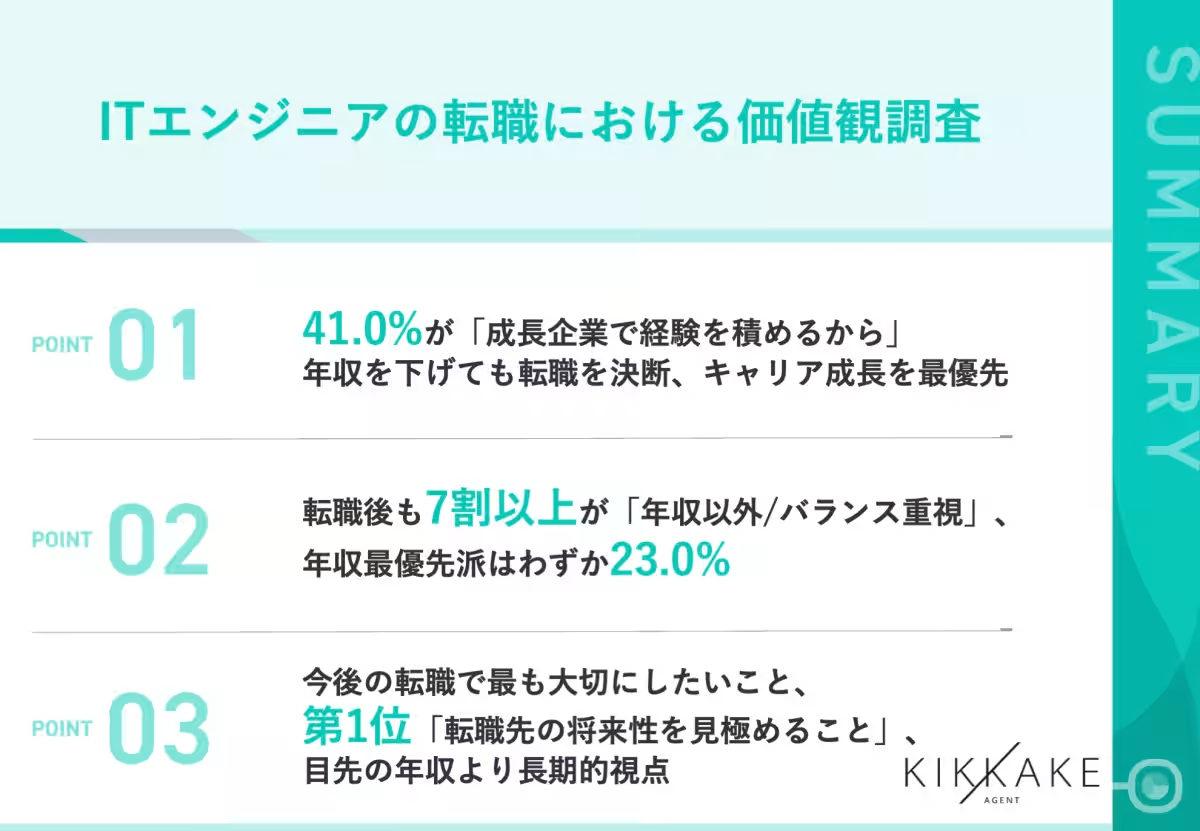
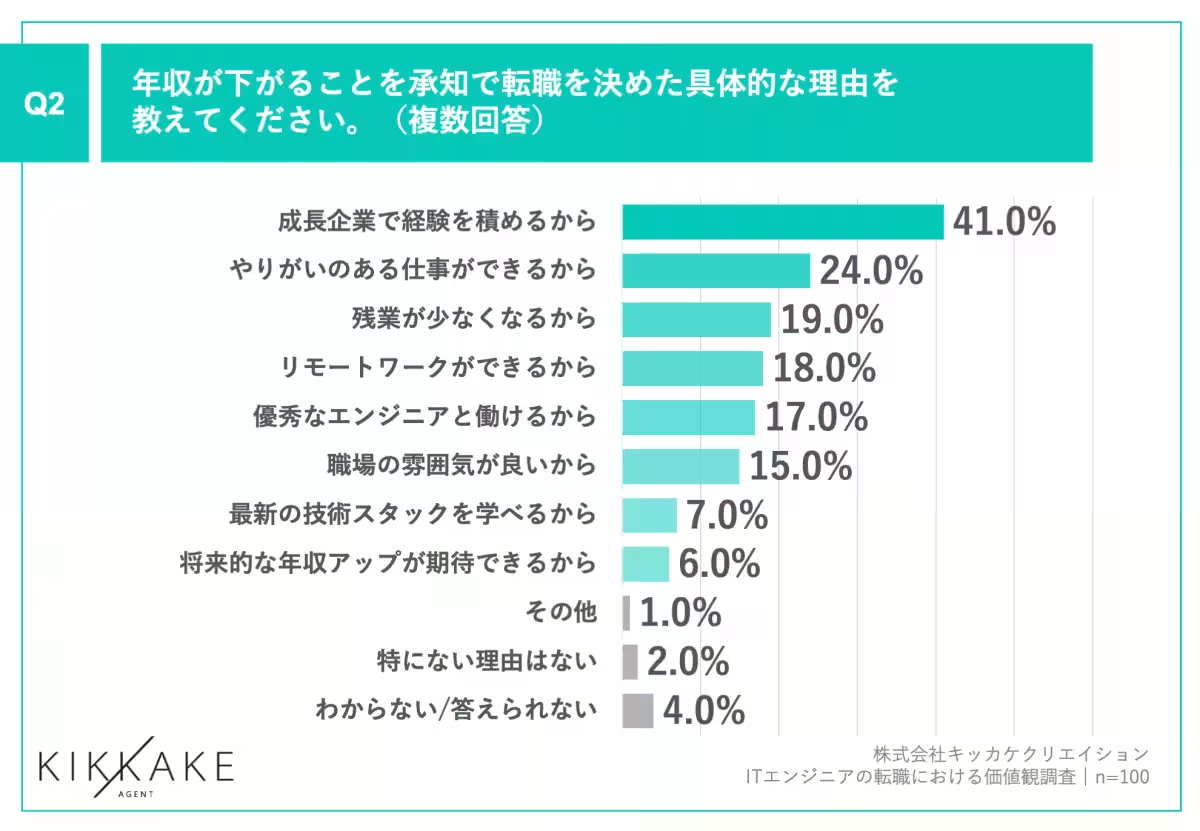
1. Growth Opportunities Are Paramount (41.0%): A remarkable 41% of respondents noted that their motivation to switch jobs was driven by the desire to gain experience in a growth-oriented company, even if it meant accepting a lower salary. This underscores a crucial shift away from measuring success solely by salary figures towards valuing professional development and growth.
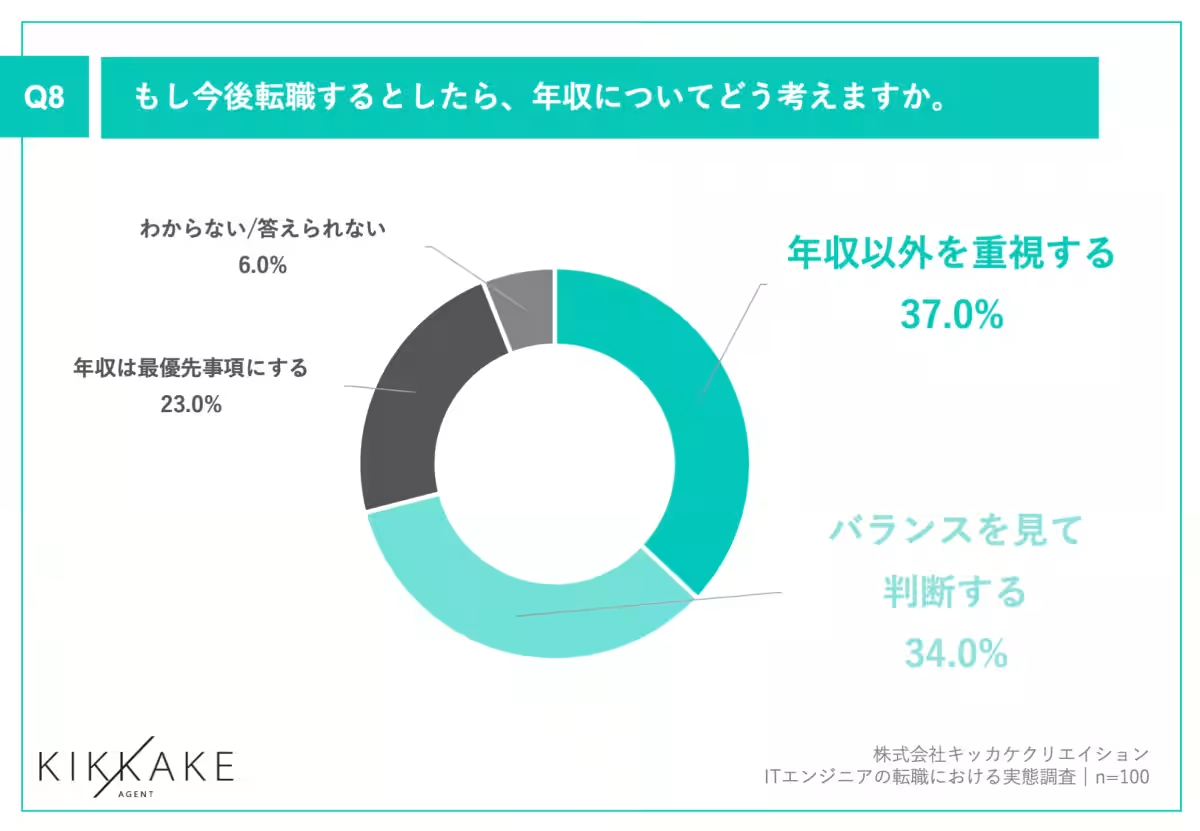
2. Balance Over Salary: A significant 71% of participants indicated they prioritize factors other than salary in their job satisfaction assessments. Only 23% identified salary as their top priority. This compelling statistic signals a broader trend where work-life balance and personal fulfillment hold substantial weight in career decisions.
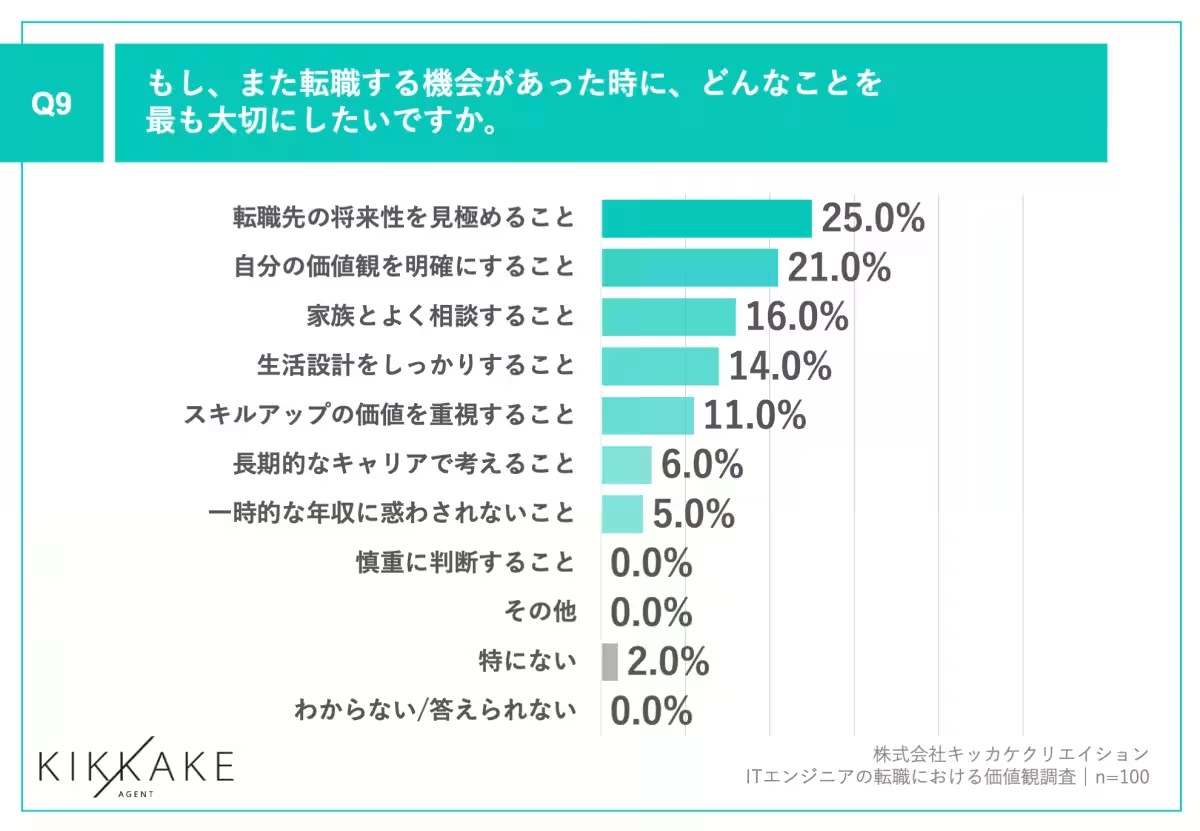
3. Future Considerations: When asked what they would prioritize in future job changes, a striking 25% of respondents emphasized the importance of assessing a company’s future prospects, indicating a long-term strategic view. This aligns with their collective desire to advance their careers thoughtfully rather than reactively.
Reasons for Job Satisfaction Despite Salary Cuts
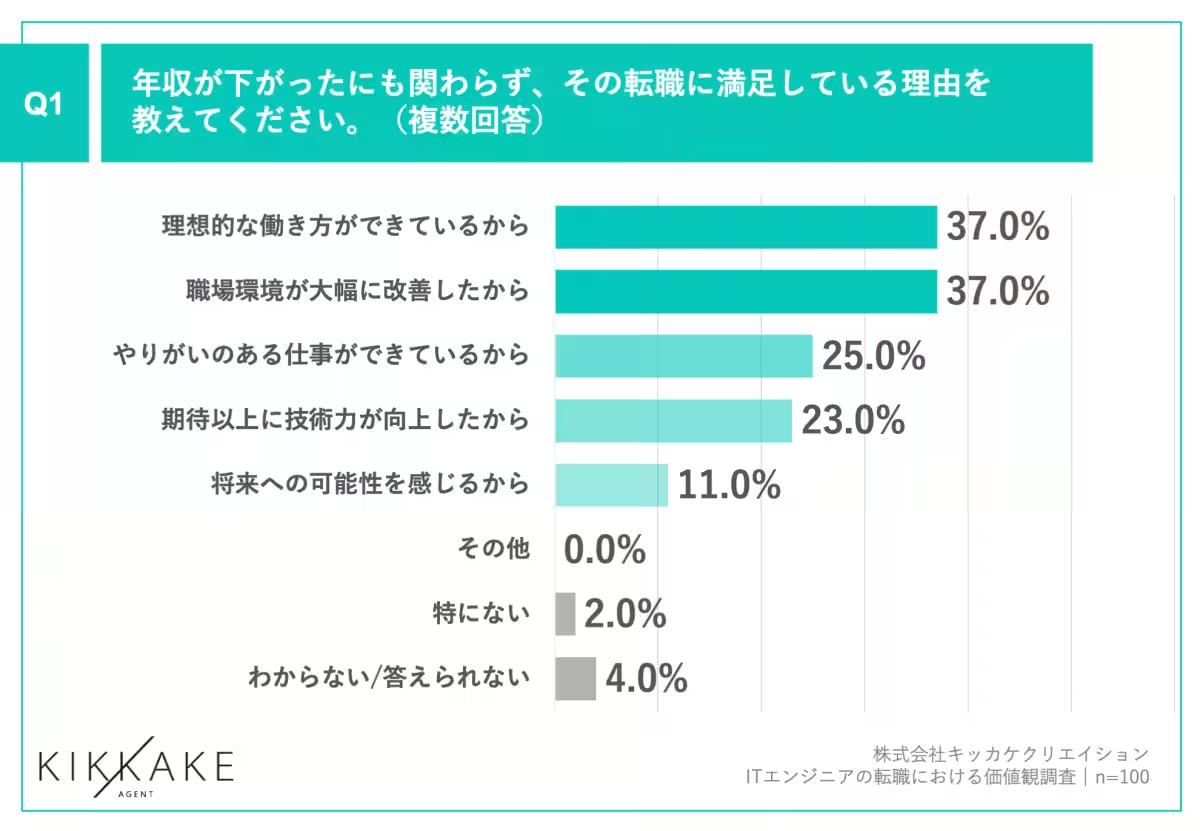
- - Ideal Work Environment: Many engineers highlighted that their satisfaction stemmed from creating an ideal work-life balance (37.0%) and significant improvements in workplace conditions (37.0%).
- - Meaningful Work: Another considerable number of these professionals (25.0%) felt more fulfilled due to the level of engagement in their work, suggesting that job satisfaction is intrinsically tied to the quality of the work one does, rather than the financial rewards.
Concerns Triggering Job Changes
Several engineers also expressed that job changes stemmed from concerns regarding company viability and workplace relationships. Some cited feelings of uncertainty about their company’s economic stability or a desire for a healthier work dynamic as motivations for transitioning, even at the expense of immediate salary gain.
Long-term Effects of Job Transition
Post-transition, respondents noted significant developments in their careers:
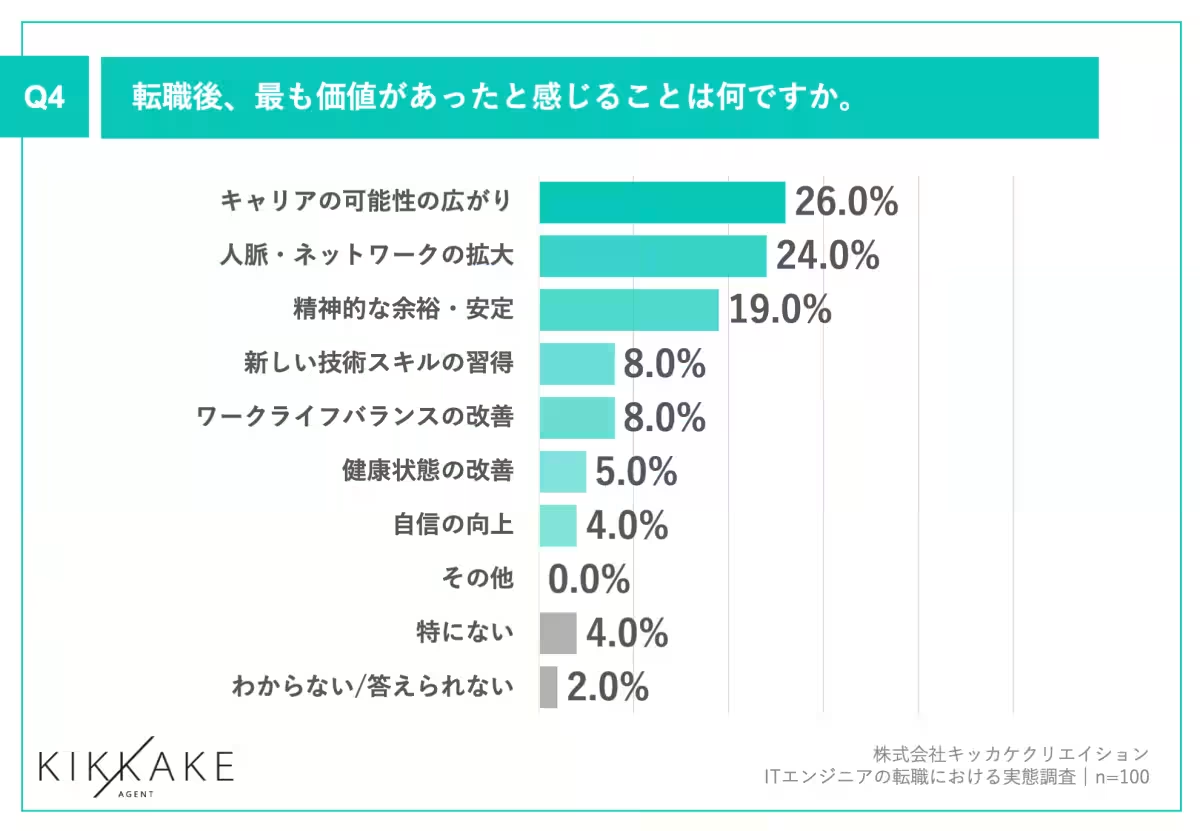
- - Expanded Networks: 24.0% felt they had expanded their professional networks significantly, a crucial factor in today’s interconnected job market.
- - Career Options: Over 26.0% recognized a broader array of career possibilities, contributing to a more enriched professional life.
The Role of Family and Self-Assessment
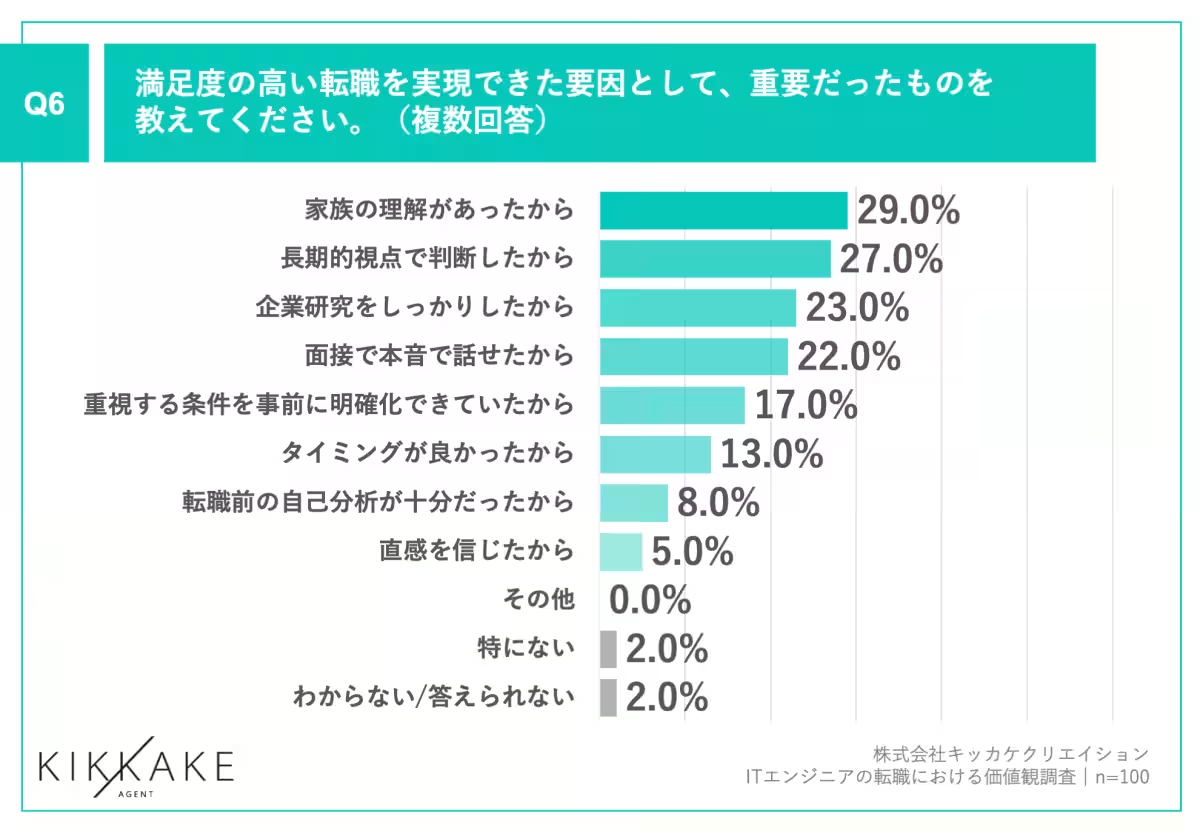
The survey also illustrated the essential role of familial support and self-evaluation in achieving job satisfaction. Approximately 29% stated that having family support was crucial for their decision-making process, while 27% credited their satisfaction to thorough self-assessment prior to transitioning. This reinforced the idea that both personal and external factors weigh heavily in the job search and acceptance process.
Conclusion
The survey conducted by Kikkake Creation has unveiled a paradigm shift within the IT engineering field. As engineers continue to prioritize personal fulfillment, professional growth opportunities, and supportive work environments over immediate financial compensation, employers must adapt to meet these evolving expectations. Companies focusing solely on monetary incentives risk alienating talent that seeks meaning beyond their paycheck.
In a labor market increasingly influenced by individual priorities and quality of life considerations, this survey serves as a reminder for professionals to align their career paths with their values and aspirations. As they navigate their careers, IT engineers should conduct thorough evaluations of potential job opportunities, ensuring that their choices reflect their long-term personal and professional goals.
For further insights into this research, click here.

Topics People & Culture)


【About Using Articles】
You can freely use the title and article content by linking to the page where the article is posted.
※ Images cannot be used.
【About Links】
Links are free to use.