



IGS Launches 'Ai GROW India': A Revolutionary Education Support Program for Enhancing Non-Cognitive Skills in Students
IGS Introduces 'Ai GROW India' Program
Institution for a Global Society (IGS), headquartered in Shibuya, Tokyo, has taken a significant step forward in education by launching 'Ai GROW India.' This educational support program is designed to quantitatively assess the non-cognitive abilities of children and students, enabling educators to utilize this data to foster development in academic settings.
The program's introduction comes after a successful proof-of-concept (PoC) phase undertaken in August 2025, supported by Japan's Ministry of Economy, Trade and Industry. With India's National Education Policy (NEP 2020) in mind, this initiative aims to penetrate one of the world's largest educational frameworks, consisting of approximately 250 million children and around 1.47 million schools. The main objective is to enhance the visibility and support for non-cognitive skills in this vast landscape.
Key Features of 'Ai GROW India'
1. Official Launch of 'Ai GROW India'
The program supports multilingual assessments, offering services in both English and Hindi. It provides a one-stop training solution for teachers to effectively implement the measurement data in their classes. The ultimate goal is to establish a comprehensive process of 'measuring and nurturing' non-cognitive skills within the local educational context.
2. Educational Background
Reflecting the shift prompted by NEP 2020, which emphasizes non-cognitive skills and 21st-century competencies over mere academic achievement, 'Ai GROW India' responds to the emerging need to develop a measurable framework in Indian schools. Insights gathered from the PoC phase indicated significant differences between Japanese and Indian students in terms of self-efficacy, thus highlighting distinct educational characteristics that require tailored approaches.
3. Future Expansion Plans
The program aims to gradually expand its reach until 2026, focusing on forming partnerships and increasing the number of participating schools. Key performance indicators including the number of schools adopted, candidates tested, and retention rates will be transparently shared to enhance accountability and long-term success.
Context and Adaptation of 'Ai GROW India'
With the NEP 2020 recognizing the importance of soft skills, there is a surge in demand for effective systems in the K-12 segment, which caters to one of the largest populations globally. In response, IGS has successfully localized the 'Ai GROW' evaluation model, which previously yielded positive results in Japan through the adoption of around 500 schools. The program's approach incorporates measuring, visualizing, teacher training, student development, and re-assessment, forming a feedback loop tailored to local needs.
Specific Characteristics:
- - Multilingual Assessment: Offers English and Hindi options for test participants, ensuring accessibility.
- - Data-Driven Support: The program doesn’t just gauge performance; it also equips teachers with training to apply this data effectively in their teaching methods.
- - Ease of Integration: Designed to seamlessly fit into existing school workflows without causing disruptions.
- - Decision-Making Support: Utilizes dashboards to facilitate class, grade, and school level comparisons for continuous improvement.
Insights from the Proof of Concept
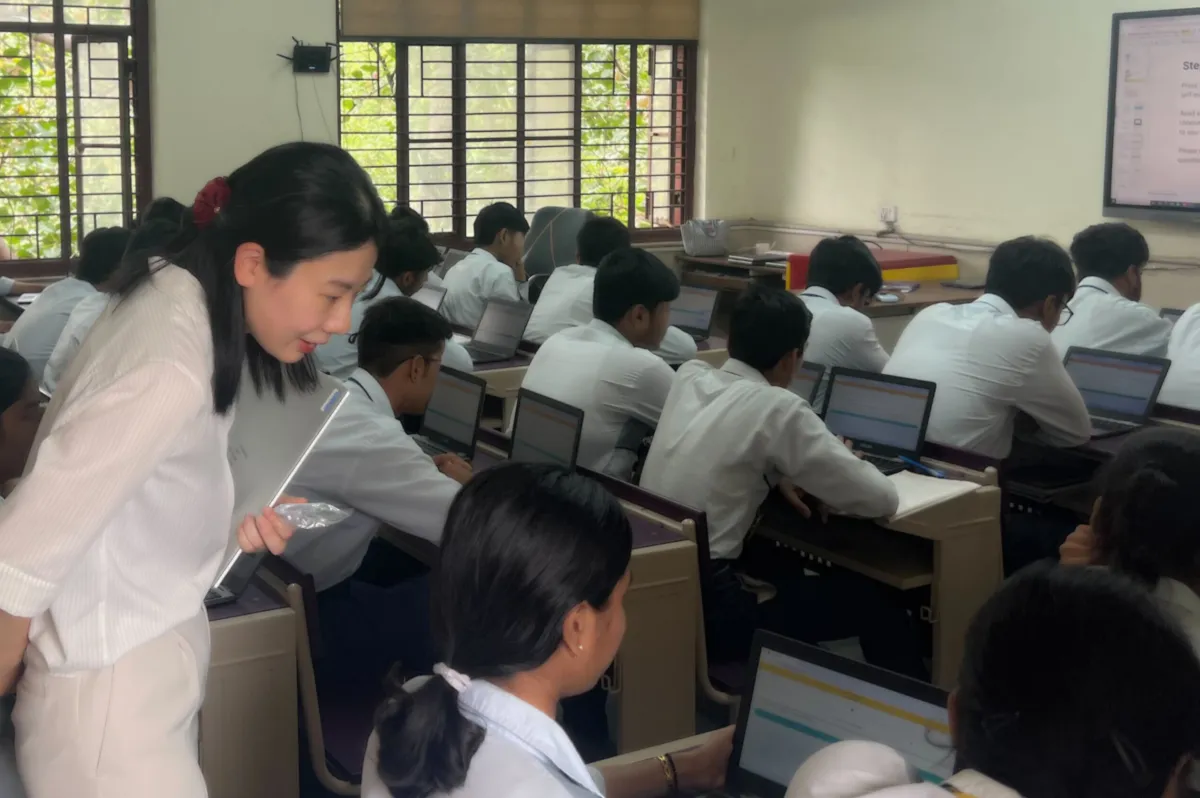
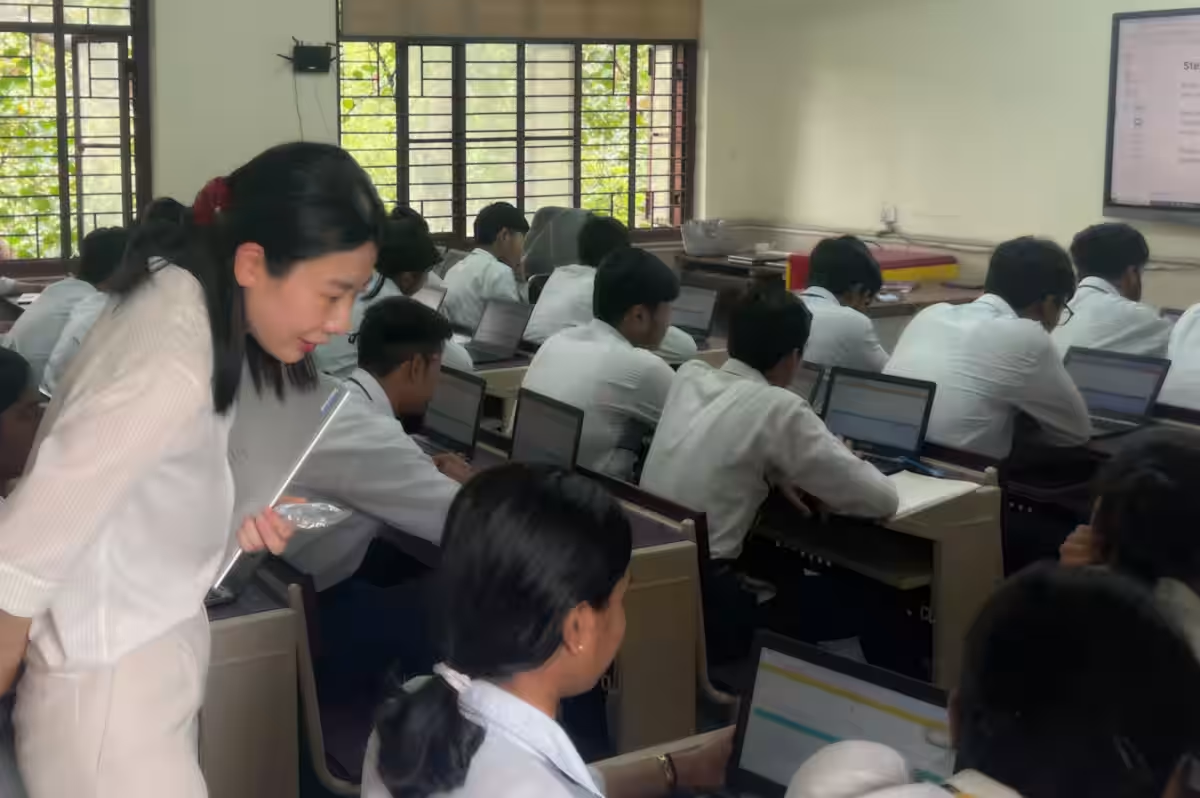
In August 2025, IGS partnered with two schools in India to conduct the PoC, resulting in valuable insights into the local educational landscape. Students exhibited notably higher self-efficacy compared to their Japanese counterparts, while their collaborative skills were relatively lacking. This discrepancy may reflect cultural and pedagogical differences, underscoring the necessity for a tailored approach to developing non-cognitive skills in varying contexts.
Educational Significance
These findings clarify that the structure of non-cognitive skills can vary significantly across different nations and regions. Instead of emphasizing high or low scores, the focus should be on accurately understanding each school's student characteristics through data, which can then inform developmental strategies. Schools participating in the initiative have praised the program for its potential to translate objective data into actionable teaching practices that play to students' strengths while addressing their weaknesses.
PoC Highlights
- - Participating Schools: 2
- - Number of Students: 666 (Middle and High School)
- - Number of Participating Teachers: 20
Feedback from Schools:
- -
Topics Other)
【About Using Articles】
You can freely use the title and article content by linking to the page where the article is posted.
※ Images cannot be used.
【About Links】
Links are free to use.