



The Growing Low Voltage DC Circuit Breaker Market Reaches $2.52 Billion by 2030
The Rising Demand for Low Voltage DC Circuit Breakers
The global market for low voltage DC circuit breakers is experiencing a significant surge, with projections estimating growth from USD 1.80 billion in 2025 to a staggering USD 2.52 billion by 2030. This anticipated growth reflects a remarkable compound annual growth rate (CAGR) of 7.0% during the forecast period. The driving force behind this expansion can be attributed to several key factors, prominently featuring the burgeoning electric vehicle (EV) charging infrastructure.
The Impact of EV Charging Infrastructure
As the world shifts towards electric mobility, the necessity for reliable and efficient DC protection devices has become increasingly apparent. EV chargers, especially those operating at higher currents, demand robust circuit breakers that can manage potential overloads and prevent short circuits. Governments and private organizations are recognizing the importance of developing public and commercial EV charging stations to facilitate this transition, thereby boosting demand for low voltage DC circuit breakers equipped with rapid interruption capabilities.
This trend is particularly noticeable in urban mobility initiatives, highway systems, and commercial vehicle fleet management, all contributing significantly to the adoption of advanced low-voltage DC circuit breakers, thus shaping the future of energy distribution.
The Role of Hybrid Circuit Breakers
Among the various types of circuit breakers, hybrid models are projected to witness the second-fastest growth rate in the market. These innovative devices combine the benefits of mechanical and solid-state technologies, utilizing power electronics for ultra-fast fault interruption while maintaining mechanical contacts for regular operations. The rising demand for swift fault isolation and heightened reliability in DC applications—especially in contexts like EV charging stations, battery energy storage systems (BESS), and data centers—positions hybrid breakers as a preferred choice in modern DC network designs.
Furthermore, as manufacturers continue to reduce the costs associated with power semiconductor devices, the standardization of hybrid protection solutions is on track to gain more traction across commercial and industrial sectors.
Solar Power: A Leading End User
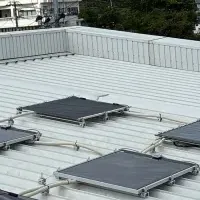
Solar photovoltaic installations are expected to dominate the end-user market during this growth period. The intrinsic DC nature of solar energy generation demands that complex protections are implemented for panels, inverters, and energy storage interfaces. With global incentives for renewable energy and decarbonization goals driving an increase in solar capacity, the reliability and compliance of low-voltage DC circuit breakers become critical—especially as photovoltaic systems operate at ever-higher DC voltages, up to 1,500 V.
The integration of solar PV with battery storage and DC microgrids further emphasizes the necessity for robust DC protection solutions, solidifying the role of solar energy installations as the largest consumer segment in this market.
North America’s Position in the Market
During the forecast phase, North America is expected to emerge as the second-largest market for low voltage DC circuit breakers. The region is witnessing substantial investments in EV infrastructure, renewable energy projects, and data centers that are pivotal in shaping demand. The explosion of fast-charging networks boosts the urgent need for reliable DC protection devices that can operate efficiently under high current and frequent switching operations.
Moreover, the rapid growth of hyperscale data centers driven by cloud computing and artificial intelligence is catalyzing a shift towards DC power architecture for improved energy efficiency. Both utility-scale and distributed solar PV installations serve as critical drivers for demand within the U.S. and Canadian markets.
Key Players in the Industry
Significant participants in the low voltage DC circuit breaker market include major companies like Eaton (Ireland), Schneider Electric (France), and Siemens (Germany). These firms are at the forefront of innovations that cater to growing energy demands and compliance with international safety standards.
For instance, ABB is notable for fortifying its offerings in energy-efficient and sustainable solutions to meet the evolving challenges of DC protection in various applications, including EV infrastructure and solar energy. Similarly, Schneider Electric aligns its product lines with the global emphasis on electrification and digitalization, ensuring its circuit breakers meet the needs of modern power architectures.
Conclusion
As the low voltage DC circuit breaker market continues to evolve, with a strong trajectory toward significant economic growth, stakeholders—including manufacturers, policy-makers, and consumers—must remain attuned to the emerging trends that impact this sector. The interplay between technological advancements, regulatory frameworks, and consumer preferences will undoubtedly shape the landscape of low voltage DC circuit protection in the years to come.
Topics Energy)

【About Using Articles】
You can freely use the title and article content by linking to the page where the article is posted.
※ Images cannot be used.
【About Links】
Links are free to use.