



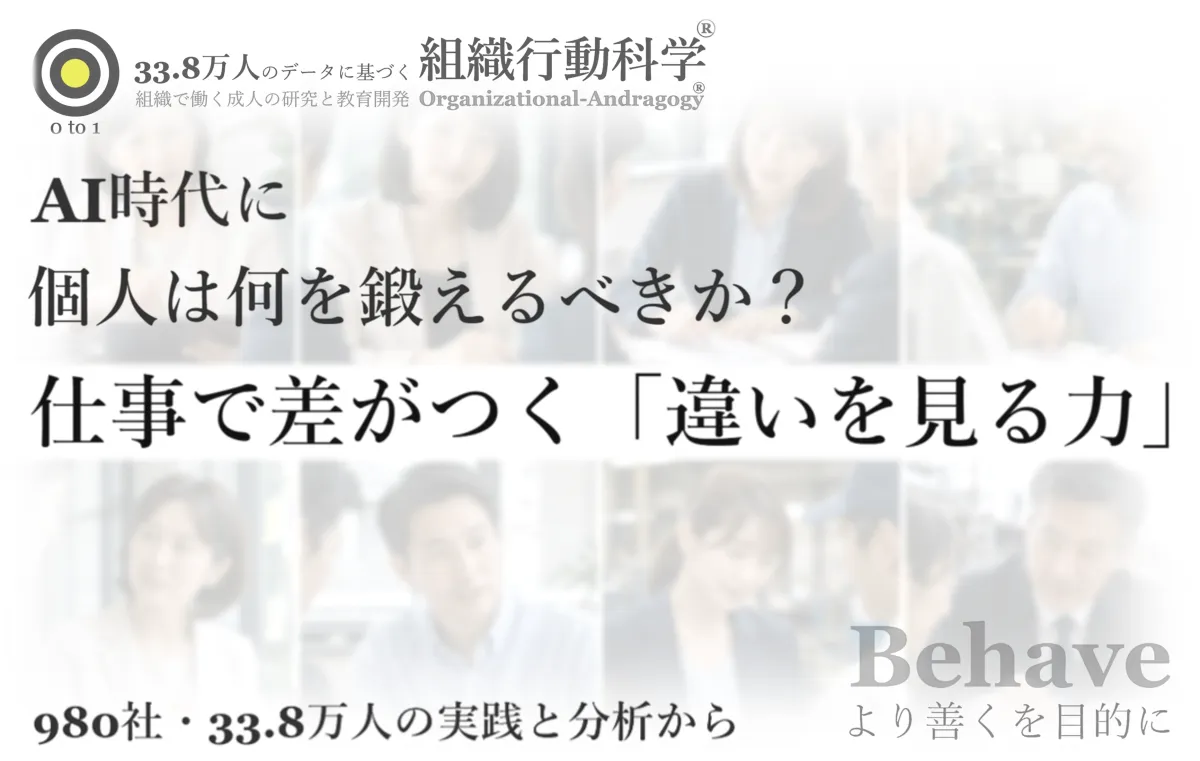
What Skills Should Individuals Develop in the Age of AI?
What Skills Should Individuals Develop in the Age of AI?
As artificial intelligence continues to evolve, the question many are asking is: what competencies should we focus on enhancing as individuals?
Request Corporation, headquartered in Shinjuku, Tokyo, has recently published a report discussing the skills that will become increasingly valuable in the AI era, particularly emphasizing the importance of “the ability to see differences.”
The Rise of AI and Its Implications
The emergence of generative AI has made it faster and easier to research knowledge, summarize answers, organize information, and follow standardized procedures. However, many individuals are finding that, despite increasing their knowledge, feelings of anxiety still persist. Phrases like “I am learning but don’t understand why I still lag behind” are becoming common.
This incongruity arises from the reality that success in the workplace will no longer hinge solely on one's database of knowledge or ability to recall correct answers. In jobs that vary from client to client, project to project, and stakeholder to stakeholder, the necessity grows to analyze what differentiates each scenario, to contemplate what needs confirmation, understand the underlying reasons, and make sound judgments based on these observations.
Analyzing the Shift in Needed Skills
The report outlines that the new measure of competency in the workplace will increasingly favor those who can think critically about the distinctions in their environments rather than those with merely extensive knowledge. In essence, while AI excels in handling “existing answers,” it becomes clear that merely possessing information will no longer suffice.
For instance, generative AI is adept at responding based on pre-existing knowledge, organizing information, and presenting standardized options. Tasks like explaining systems, writing text, organizing existing examples, and suggesting conventional methods serve as fundamental illustrations of AI's strengths. Here, AI thrives as it tackles “already established answers.” It promptly identifies what information needs researching, clarifies what to organize, and pinpoints which procedures to implement. In these contexts, AI displays superior assistance capabilities.
This poses a significant challenge for individuals. While AI's abilities render traditional values of “knowing” and “memorization” less relevant, it increases the need for higher-order thinking skills.
Understanding the Roots of Anxiety in the AI Era
A notable portion of individuals grappling with anxiety in today’s professional landscape often defaults to the mindset of “I must increase my knowledge.” Yet, the true source of this anxiety may extend beyond mere knowledge deficits.
Many individuals may find that:
- - They struggle to identify what the differences are
- - They do not discern what needs to be confirmed
- - They lack a full grasp of the reasons behind these distinctions
- - Consequently, they feel uncertain in their decision-making processes
This state is often the root of anxiety. It is critical to understand that having knowledge and being able to think contextually are not synonymous. The former represents merely knowing the answers, whereas the latter is about recognizing differences and making independent judgments.
The Need for Critical Thinking
Moving forward, the competitive edge in workplaces will belong to those capable of thoughtful analysis rather than rote memorization. Many have traditionally believed that accumulating knowledge and adhering to correct procedures would facilitate growth. While that notion is true to an extent, it must also be acknowledged that having knowledge does not equate to the ability to think critically in varied situations.
Real-world job circumstances do not unfold in identical ways each time. Clients differ, project backgrounds vary, constraints shift, and stakeholders present distinct perspectives. With each new scenario, what’s needed transcends mere knowledge of answers. It requires insight into the unique differences and the ability to analyze situations accordingly.
Developing the Necessary Skills
Ultimately, individuals distinguished in their work will not merely be those who accumulate knowledge. Instead, it will be those capable of observing situational distinctions, verifying the premises of their judgments, and avoiding easy correlations with past examples. Important skills to cultivate include:
- - The ability to discern how current situations differ from previous ones
- - The capacity to contemplate what must be confirmed for sound judgment
- - The skill of understanding why these differences emerge
- - The judgment of which methods are realistic for progressing forward
- - The discernment of what should take priority in the process
All of these critical abilities cannot merely be replicated by knowledge alone. That reiterates the notion that in the AI era, what sets individuals apart in their work isn’t how much they know but how effectively they can observe differences and think critically about them.
Insights for Personal Growth
To navigate the changing landscape of the workplace effectively, individuals should realize the following:
- - First and foremost, assess what differentiates the current situation before searching for answers.
- - Articulate not just conclusions but the rationale behind decisions.
- - Verify the conditions at hand before applying previous examples.
- - Reflect on the fundamentals that guided decisions post-action.
- - Distinguish between enhancing knowledge and developing critical thinking skills.
Ultimately, embodying this growth doesn’t necessitate grand, specialized training. Simply by consciously reflecting on “what the differences are this time” and “why those decisions were made” amidst daily work can alter the qualitative aspect of personal growth.
Conclusion
In the age of AI, differentiating oneself in the professional sphere won’t hinge on how much information is memorized. Future evaluations will lean toward those who can recognize differences in reality, verify facts, think through reasoning, and determine pathways forward.
Generative AI is proficient in organizing answers and responding to queries, but true human value lies in the capability to identify differences, formulate questions, and draw conclusions. Thus, growth in the coming years will emphasize not only what knowledge is acquired but how effectively one perceives differences and their implications.

Topics Business Technology)
【About Using Articles】
You can freely use the title and article content by linking to the page where the article is posted.
※ Images cannot be used.
【About Links】
Links are free to use.