



Analyzing the Link Between Women's Body Types and Marriage Rates in Japan
Analyzing the Link Between Women's Body Types and Marriage Rates in Japan
In a groundbreaking study conducted by IBJ Inc., headquartered in Shinjuku, Tokyo, an analysis of marriage market trends was performed focusing on the correlation between women's body type, measured by Body Mass Index (BMI) and weight classification, and marriage success rates. This unique research is based on the data of 32,619 women who participated in marriage consultation services and successfully got married.
An Unexpected Outcome
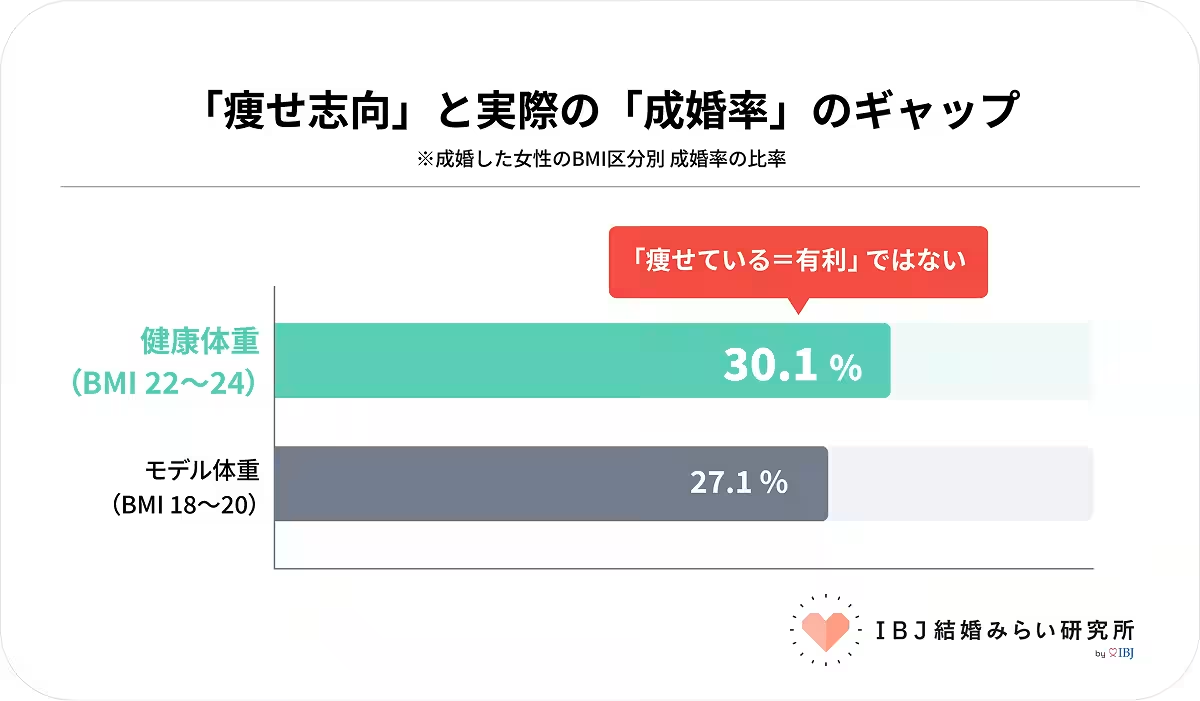
The research revealed surprising results regarding the marriage success rates of women with BMIs below 26. Contrary to the popular assumption that slimmer women are more likely to marry, the analysis found no significant differences in marriage rates across varying BMI categories among women. Instead, there was a wide distribution of weights among married women, ranging from those below 45 kg to those above 65 kg. This suggests a notable gap between societal perceptions of “thinness” and the actual assessment criteria in the marriage market.
Men vs. Women: Different Standards
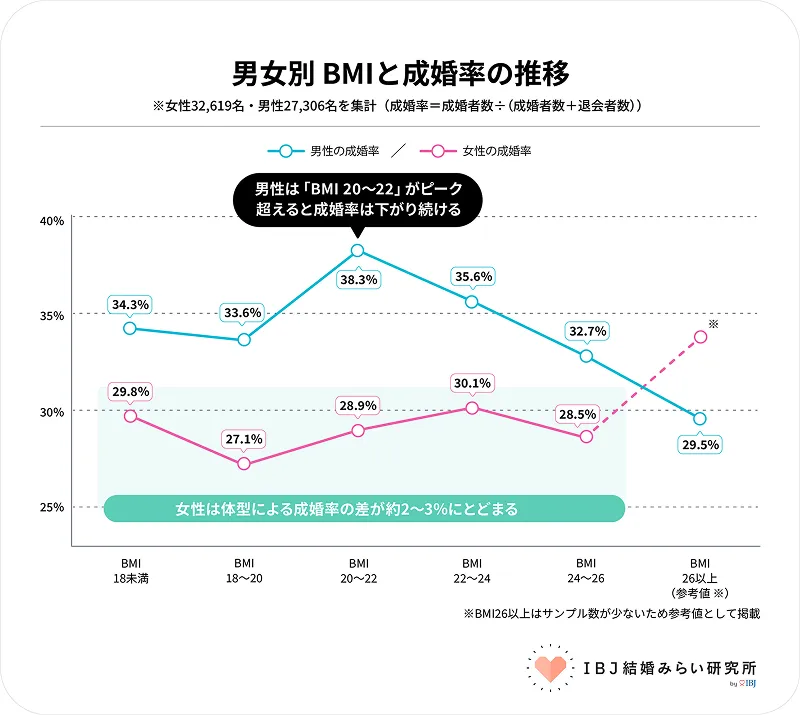
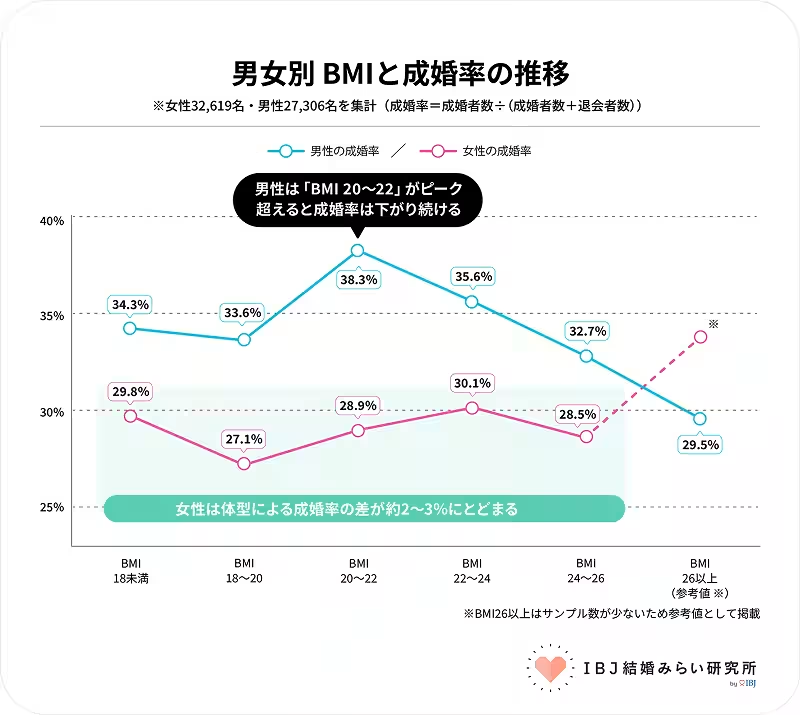
The study compared marriage rates based on BMI categories (ranging from under 18 to over 26) for both genders. For men, the highest marriage rate was observed in the BMI range of 20-22, and it declined as BMI increased thereafter. This indicates that body type does have a measurable impact on marriage rates for men. In stark contrast, the analysis for women indicated that BMIs considered ideal, particularly those between 18 and 20, did not correlate with high marriage rates. The difference in marriage rates among women in the BMI categories below 26 was only minimal—around 2-3 percentage points.
No Clear Weight Cutoff in the Marriage Market
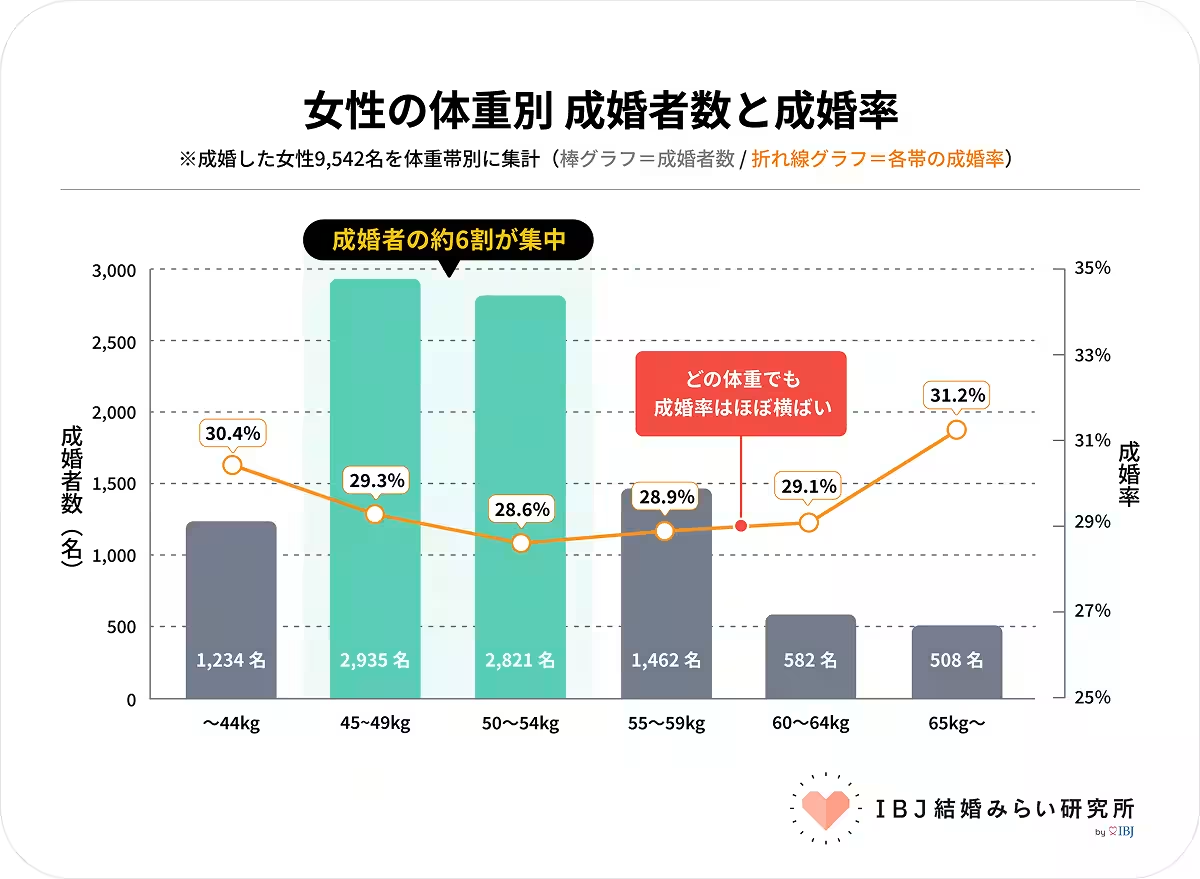
Further investigation into the weight distribution of successful brides revealed that approximately 60% were concentrated in the weight categories of 45-54 kg. Importantly, the marriage rate remained consistently around 30% across all weight groups, including those below 44 kg and above 65 kg. This finding clearly indicates that there is no strict “cutoff line” in the marriage market based on weight.
Navigating Perceptions and Realities
Despite the findings suggesting no significant influence of body type on marriage success, women's media and social networks often promote slender figures as ideal. The narrative frequently associates “thinning down” with personal fulfillment and enhanced attractiveness. This disparity leads to the presumption that being thinner provides women with a competitive advantage in marriage.
However, the study’s results indicate that the actual evaluation in the marriage market does not significantly prioritize women’s body type, challenging the widespread notion that being slim is advantageous. In contemporary society, where there is growing attention to appearance and aesthetics, this research offers a critical perspective on how societal beauty standards do not necessarily align with the realities experienced in the marriage market.
Looking Ahead: New Insights on Marriage Trends
IBJ plans to continue its research and will release more data in the future, including analysis on trends related to marriage rates across different regions and demographic factors, such as the likelihood of marriage among older women or those who consume alcoholic beverages. These insights can provide further understanding of the dynamics at play in the evolving marriage landscape.
For further details, IBJ's Marriage Future Research Institute offers additional resources and data, available on their official website.
Contacting IBJ for More Information
For inquiries related to this data, supplementary materials, or interviews, you may reach out to IBJ's public relations department at [email protected].
In conclusion, while society may hold certain beliefs about ideal body types, this analysis reveals a complex reality within the marriage market, emphasizing that success in marriage may not be solely linked to physical appearance.

Topics People & Culture)


【About Using Articles】
You can freely use the title and article content by linking to the page where the article is posted.
※ Images cannot be used.
【About Links】
Links are free to use.