



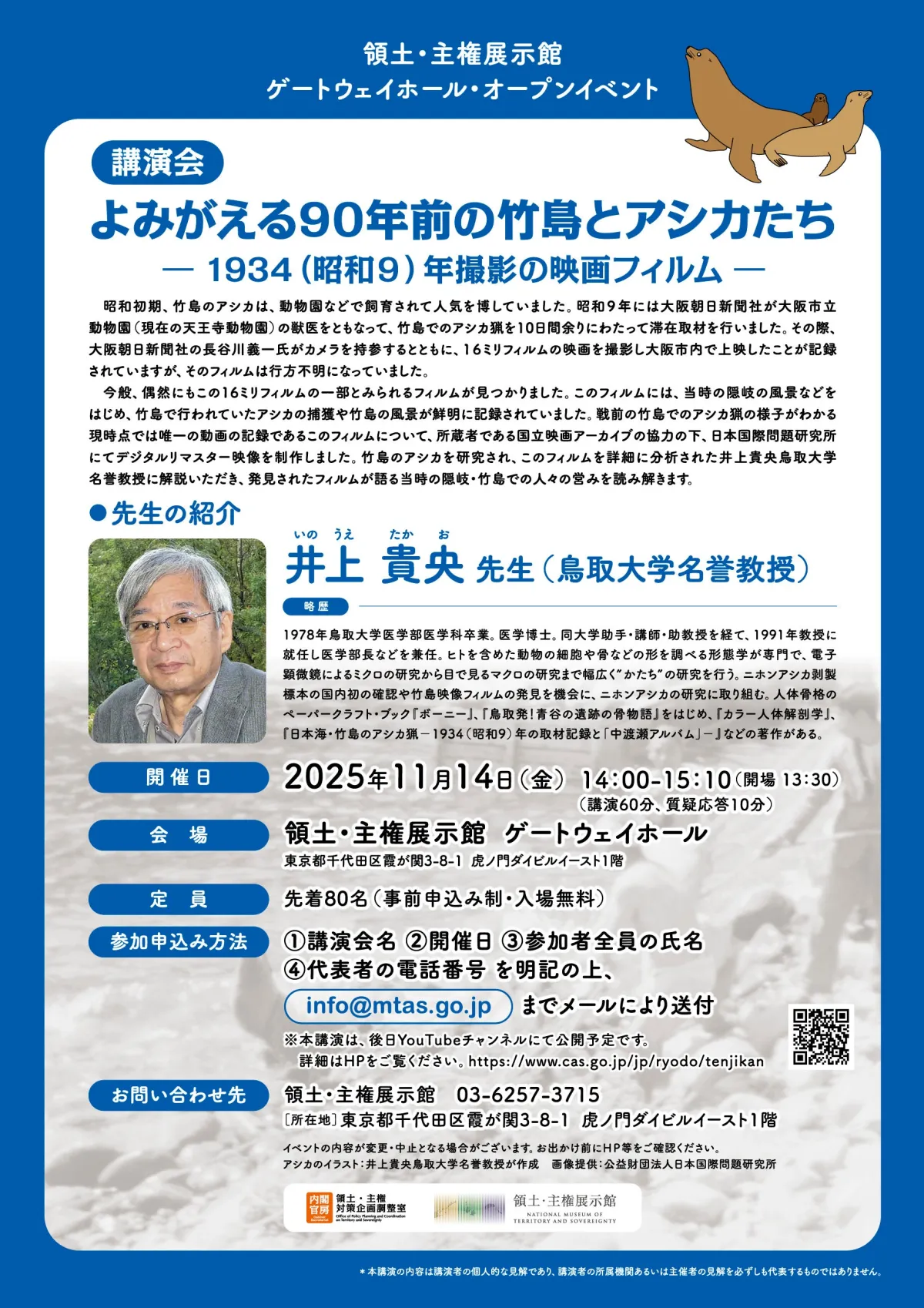
Rare Footage Revealed: The Sei Sea Lions of Takeshima from 90 Years Ago
Rare Footage of Sayū in 1934: Rediscovering the Sei Sea Lions of Takeshima
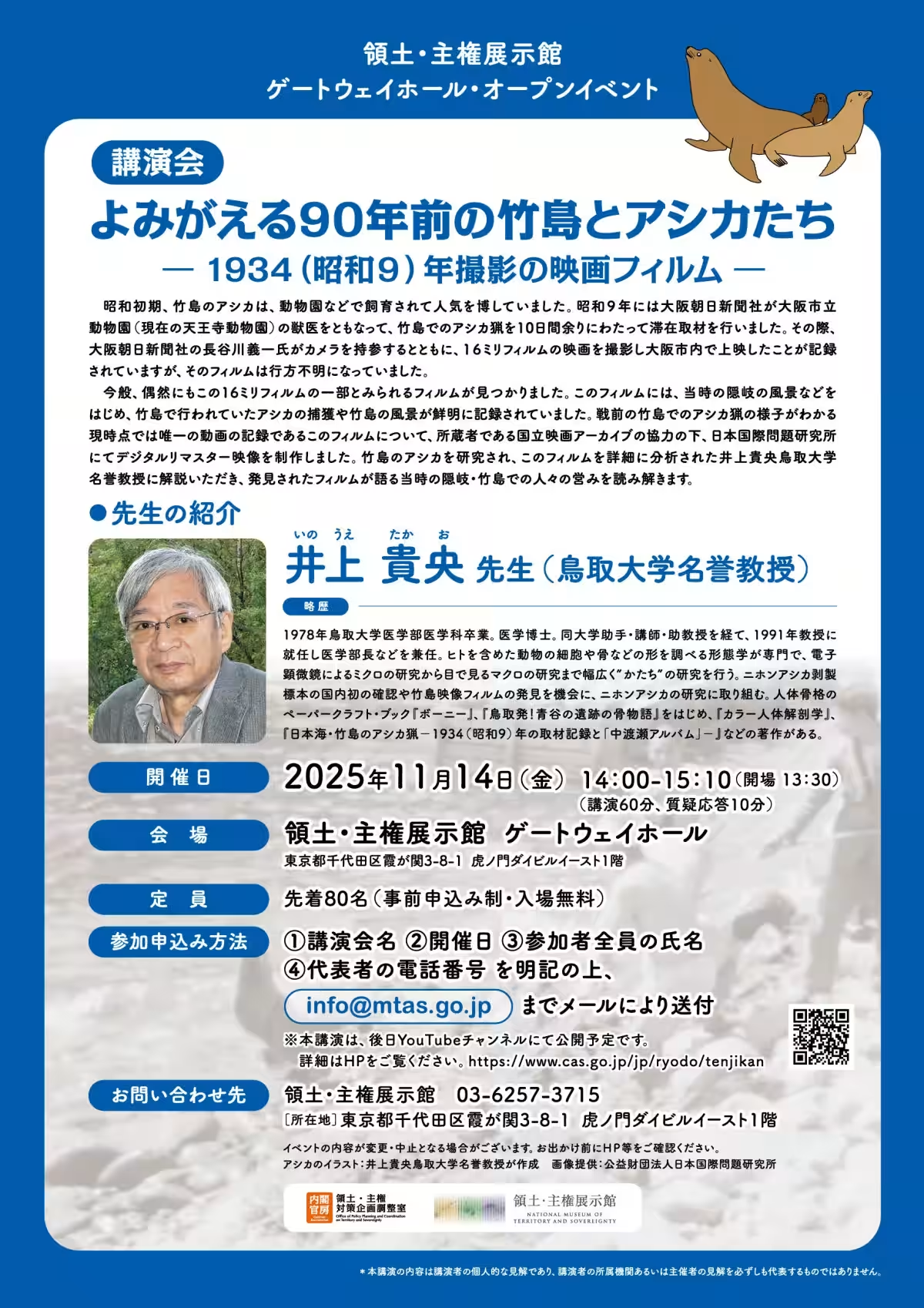
In a groundbreaking event, the Gateway Hall of the Territorial Sovereignty Museum will host a unique lecture titled "Reviving the Sea Lions of Takeshima from 90 Years Ago: Film Footage from 1934" on November 14, 2025. The event features prominent expert Takao Inoue, a professor emeritus from Tottori University who has dedicated his research to the Nihon Ashika, or Japanese sea lions. This rare opportunity will give attendees insight into historical events captured in recently discovered film footage.
The Significance of the Film
The film, produced by the Osaka Asahi Shimbun Company in 1934, documents a ten-day expedition in which a reporter and veterinarian captured the experience of sea lion hunting in Takeshima, an area rich in cultural and historical significance. This footage was considered lost for decades; however, a portion of it has been uncovered, illuminating the daily lives and environment of the people on the islands during that era.
Upon its discovery, the film underwent digital enhancement at the National Film Archive of Japan, resulting in a restored version that presents vivid details of the landscapes of Oki and the practices surrounding sea lion hunting.
A Journey Through History
During the early Showa era, Japanese sea lions were quite popular and frequently seen in animal parks, zoos, and aquariums. Despite their prevalence in public exhibits, scholarly research on the species was limited. Professor Inoue's contributions to this field are noteworthy as he is not only credited with the first confirmation of a Nihon Ashika taxidermy specimen but also the discovery of this invaluable film footage.
As Japan approaches the centenary of this film, the lecture will delve into the nuances of the Sei sea lions’ representation and significance in pre-war Japan. By analyzing the footage, Professor Inoue aims to unravel the historical interactions between humans and sea lions at that time.
About Takao Inoue
Takao Inoue stands out as a leading figure in the research of the Nihon Ashika. Completing his medical studies at Tottori University in 1978, he later undertook roles from assistant to full professor, also serving as the dean of the medical faculty. His research spans both micro and macro studies of animal structure, focusing on the morphological differences among specimens. His wide-ranging expertise is reflected in his writings, such as "The Story of the Human Skeleton Paper Craft Book" and "Color Human Anatomy."
Inoue has dedicated significant effort to studying the Japanese sea lions, ensuring they continue to be an important topic for future generations.
Free Admission Event
The lecture is free of charge, but space is limited to 80 attendees on a first-come, first-served basis. Interested participants are encouraged to email their details, including the name of the lecture, date, names of all attendees, and contact information, to [email protected].
Museum Details
- - Name: Territorial Sovereignty Museum
- - Location: 3-8-1 Kasumigaseki, Chiyoda-ku, Tokyo 100-0013, Japan
- - Opening Hours: 10:00 AM to 6:00 PM, Closed on Mondays and during the New Year holidays
- - Entrance Fee: Free
As we approach a significant moment in historical reflection, this event promises to be an incredible opportunity to learn more about the legacy of the sea lions in Takeshima and their role in Japan's ecological and cultural history. Don't miss the chance to witness this exhilarating presentation firsthand.
Topics Entertainment & Media)
【About Using Articles】
You can freely use the title and article content by linking to the page where the article is posted.
※ Images cannot be used.
【About Links】
Links are free to use.