




Decoding the Evolution of Lophophorata: A Resolution to a Century-Old Debate
Decoding the Evolution of Lophophorata
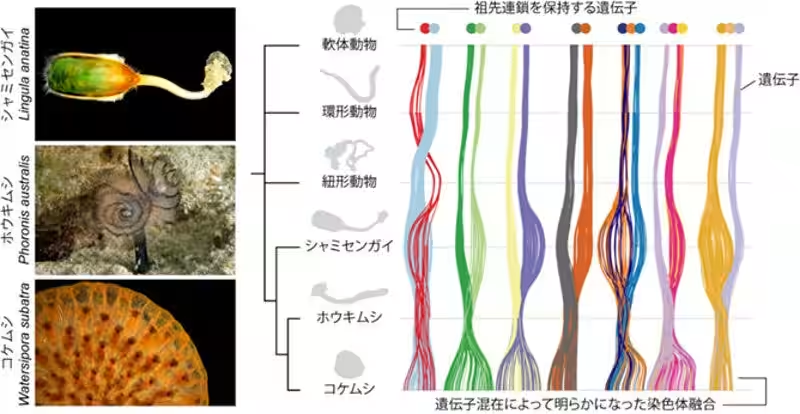
The genetics of animal evolution has long puzzled scientists, but new research from an international collaboration between Academia Sinica, Okayama University, and the University of Tokyo has made significant strides in this field. This landmark study presents the first genomic analysis of phoronids at the chromosome level, shedding light on the evolutionary relationships among the group known as Lophophorata, which includes phoronids and brachiopods.
Key Findings
One of the major breakthroughs of this study is the establishment of the monophyly of Lophophorata, suggesting that all members share a common ancestor. This discovery closes a century-long debate on the classification of these creatures, which has puzzled researchers since the late 19th century. The research reveals that the characteristic structure known as the lophophore—a specialized feeding organ—is homologous across all three groups within Lophophorata, further solidifying their evolutionary lineage.
The genomic comparisons utilized in this study provide a powerful framework for understanding animal evolution more broadly. Differences and similarities in genetic structure can highlight evolutionary pathways, and researchers expect that this approach will soon be applied to various other animal clades.
Research Background
The project was led by Dr. Yi-Jyun Luo from Academia Sinica, Professor Mayuko Hamada of Okayama University, and Professor Kazuki Endo from the University of Tokyo. The team successfully decoded the genome of phoronids, which were previously scrutinized but not thoroughly understood at a genomic level. The findings were published in the esteemed journal Current Biology on November 8, 2025.
Professor Mayuko Hamada shared her excitement about the research process. The initial stage of collecting phoronids at Ushimado was challenging due to rough waves; however, thanks to the keen eye of technical staff Kosuke Saito, they succeeded in the collection that would become pivotal to their research. Furthermore, collaboration came through the efforts of alumni Toshiro Sakagami, who worked as a special researcher at Academia Sinica, facilitating international research partnerships.
Implications of the Study
This breakthrough not only reflects on Lophophorata's evolutionary history but also illustrates the importance of genomic analysis in resolving long-standing biological questions. It is anticipated that this methodology will contribute to deeper understandings of other diverse animal lineages.
This research has been supported by several grants, including Taiwan's National Science and Technology Council and the Japan Society for the Promotion of Science. The collaboration between Okayama University and Academia Sinica was also backed by Japan's Ministry of Education, Culture, Sports, Science and Technology.
For more detailed information about this groundbreaking study, you can access the press release from Okayama University here or read the paper via Current Biology at this link01328-4).
Conclusion
As the field of evolutionary biology progresses, studies like this revolutionize our understanding of life's history on Earth. The decoding of the phoronid genome and the resolution of the Lophophorata classification represent significant milestones in our quest to unravel the complexities of evolution.
The future holds promise for further insights as these innovative genomic methods continue to be refined and applied to a broader spectrum of animal families.







Topics Other)

【About Using Articles】
You can freely use the title and article content by linking to the page where the article is posted.
※ Images cannot be used.
【About Links】
Links are free to use.