



Unveiling the Evolution of Brand Value: Kantar BrandZ's 20-Year Journey
Kantar BrandZ: A 20-Year Retrospective on Brand Value
In a significant revelation, Kantar, the global leader in marketing data and analytics based in London, has unveiled the latest edition of their prestigious ranking, the Kantar BrandZ Top 100 Most Valuable Global Brands. With 2025 seeing a remarkable total brand value of $10.7 trillion, growth since 2006 has surpassed $9.3 trillion. Notably, three Japanese brands, Toyota, Sony, and Uniqlo, have secured positions within this exclusive list, ranking at 77th, 92nd, and 97th respectively.
The Growing Presence of U.S. Brands
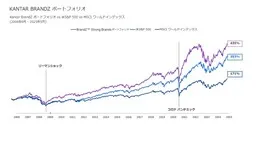
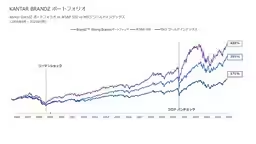
The proportion of U.S. brands within the Kantar BrandZ Global Top 100 has significantly increased from 63% in 2006 to a striking 82% today. This dominance, however, may face challenges in the future due to the rapid growth of Chinese brands and potential tariff increases. Over the past two decades, the value of Chinese brands has doubled, now accounting for 6% of the Top 100, a contrast to the 26% representation of European brands in 2006, which has now diminished to just 7%.
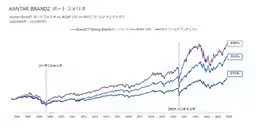
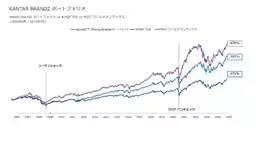
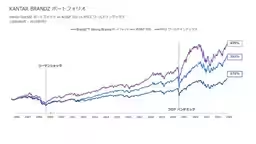
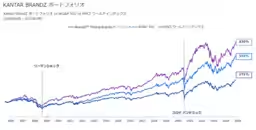
Martin Guerrera, head of Kantar BrandZ, highlights the resilience of these valuable brands throughout global economic crises. He asserts that strong marketing efforts are vital assets for companies, emphasizing the importance of sustained investment in marketing, especially during turbulent times. Brands are truly the most valuable assets for any organization, and cutting back on marketing investments during market volatility is a grave mistake.
Rising Brands Beyond the United States
Not limited to U.S. brands, notable names like Sweden's Spotify have risen impressively to rank 76th. India’s Airtel is becoming a formidable competitor in the global communication sector, while Argentina’s MercadoLibre stands out as the only Latin American brand to break into the Top 100. Spain's Zara has also made progress, climbing five ranks to 65th place. Canada’s Royal Bank of Canada (RBC) reported the highest year-over-year growth in brand value among international financial service brands at 43%.
Disruption Brands: A Catalyst for Long-Term Value
Kantar BrandZ illustrates that brands which have transformed categories represent about 71% of the total brand value growth of $9.3 trillion since 2006. Brands like Stripe and Chipotle, ranked 85th and 86th respectively in 2025, have brought fresh perspectives, while Aldi continues its longstanding presence among the Top 100. Guerrera posits that innovators capable of capturing or redefining consumer needs have been instrumental in reshaping the global branding landscape.
Increasing Brand Values Across Categories
Overall, the total brand value of the Global Top 100 has hit an all-time high, soaring 29% year-on-year to $10.7 trillion. The increase can be attributed to disruptive brands that leverage cutting-edge technology across all sectors.
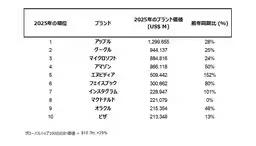
Apple retains its top position for the fourth consecutive year with a brand value of $1.3 trillion, reflecting a 28% increase. This makes Apple the only brand within the BrandZ ranking to surpass the trillion-dollar mark. ChatGPT made a notable debut at 60th place, presenting formidable competition to established brands like Google and Microsoft. Meanwhile, Amazon reported a remarkable 50% increase, reaching $866 billion, thanks to its strong positioning in convenience and affordability amidst tough economic times.
Social media platforms Instagram and TikTok have also witnessed explosive growth, reporting 101% and 25% increases in brand value respectively. These platforms have revolutionized consumer viewing habits and continue to directly influence sales for brands and influencers worldwide.
The Future of Branding
As digital saturation rises and consumer expectations heighten, Guerrera stresses that brands must fulfill people's needs while also fostering emotional connections and offering unique values. The success of brands like Apple, Instagram, and McDonald's hinges on their ability to provide consistent brand experiences that resonate with consumers. The meteoric rise of ChatGPT exemplifies how brands can gain prestige and affect societal change. However, as competition intensifies in the realm of generative AI, OpenAI will need to strategically invest to maintain its first-mover advantage.
Category Highlights
- - Retail: In an inflationary era, e-commerce and private labels provide consumers with value, leading to a 48% growth in brand value. In contrast, apparel brands stagnated, with food, beverage, and personal care sectors facing declines.
- - Alcohol: This sector is experiencing negative growth (-11%), primarily due to young consumers gravitating towards health and wellness trends, fostering demand for low-alcohol and non-alcoholic beverages.
- - Luxury: Although this sector grew during the pandemic, it faced a decline (-2%) in 2025, mainly because of reduced demand in China, where consumer preferences are shifting towards experiential over materialistic consumption.
Top 10 Brands of Kantar BrandZ 2025
In 2025, the following Japanese brands were among the top 10 of their respective categories:
- - Apparel: Uniqlo (3rd), Asics (8th)
- - Automotive: Toyota (2nd), Honda (10th)
- - Consumer Technology: Sony (9th)
- - Telecommunications: NTT (9th)
This comprehensive analysis underscores the dynamic nature of brand values and the ever-evolving relationship between consumers and brands. In this landscape, continual adaptation, innovation, and a genuine connection to consumers are key to long-term success.
Topics Consumer Products & Retail)






【About Using Articles】
You can freely use the title and article content by linking to the page where the article is posted.
※ Images cannot be used.
【About Links】
Links are free to use.